


Hiring a Healthcare Consultant in India — A Hospital Owner’s Complete Guide

Hiring a Healthcare Consultant in India — A Hospital Owner’s Complete Guide Many hospital owners reach out for consulting help only after a crisis — declining OPD numbers, a key doctor leaving, or a new competitor cutting into their patient base. By that point, the cost of delay has already compounded. Engaging the right healthcare consulting services for hospital owners in India at the right time can mean the difference between reactive damage control and proactive, sustainable growth. This guide will help you make that decision with clarity. Why Hospital Owners Struggle to Find the Right Consultant The Indian healthcare consulting market is fragmented and largely unregulated. Anyone with a management degree and a few hospital clients can position themselves as a consultant. For a hospital owner evaluating options, this creates a real problem. How do you distinguish between someone who understands Indian hospital economics, patient behaviour, and regulatory realities — versus someone offering generic frameworks that don’t translate to the ground? The gap is significant. A healthcare growth consultant in India with genuine domain depth will speak the language of NABH preparedness, doctor productivity ratios, outpatient conversion rates, and bed occupancy benchmarks. A generalist will not. Most hospital owners also underestimate how different healthcare consulting is from other business consulting verticals. Healthcare decisions are clinical, emotional, regulatory, and commercial — all at once. A consultant who has not worked inside or alongside Indian hospitals will struggle to offer advice that is actually implementable. What a Good Healthcare Consulting Engagement Actually Looks Like Chitra Baskar’s approach to healthcare consulting is built on one principle: diagnosis before prescription. No two hospitals have identical problems, even when the symptoms look the same. A structured engagement typically moves through three phases: Discovery and Audit — A thorough assessment of the hospital’s current state across patient acquisition, retention, operations, and revenue cycle. This is not a surface-level review. It involves conversations with department heads, analysis of patient data, and an honest look at what is and is not working. Strategy and Roadmap — Based on the audit, a clear, prioritised plan is developed. As a hospital CEO consultant, Chitra works directly with leadership to ensure the roadmap is aligned with the hospital’s capacity, culture, and growth targets. Implementation Support — Strategy without execution support is a report that collects dust. Ongoing advisory, team alignment, and milestone tracking are part of what converts insight into measurable outcomes. For hospital owners researching how to choose a hospital growth consultant in India, this structured approach is a useful benchmark. Ask any consultant you evaluate: do they audit before advising? If the answer is no, that tells you something important. How to Evaluate and Engage Healthcare Consulting Services If you are actively considering a consulting engagement, here is a practical checklist: Verify sector-specific experience. Ask for case studies or examples from hospitals of a similar size, type, or speciality. A consultant who has worked exclusively with corporate chains may not be the right fit for a 50-bed nursing home or a single-speciality clinic. Assess their understanding of Indian patient behaviour. Patient decision-making in India is influenced by family dynamics, cost sensitivity, doctor trust, and word-of-mouth in ways that are distinct from Western markets. Your consultant must understand this. Clarify the engagement model upfront. Is this a project-based engagement or a retainer? Who will you be working with directly — the senior consultant or a junior team? What does accountability look like? Look for a healthcare business consultant based in Chennai or your region. Proximity matters for site visits, team interactions, and understanding local competitive dynamics. A healthcare business consultant in Chennai brings awareness of South Indian healthcare market nuances that a Delhi or Mumbai-based consultant may not. Evaluate communication style. You will work closely with this person. They need to be direct, honest, and capable of delivering uncomfortable insights without damaging the relationship. Assess this in the first conversation. Mistakes Hospital Owners Make When Hiring Consultants Choosing on price alone. The cheapest option rarely delivers the fastest return. Consulting is an investment. Evaluate on fit, experience, and expected outcomes — not just the fee. Hiring a consultant without internal readiness. A consultant can only work with what your team can execute. If your hospital does not have a designated implementation owner on the inside, even the best strategy will stall. Expecting results without engagement. Consulting is collaborative. Hospitals that treat the consultant as an external vendor rather than a strategic partner consistently underperform on outcomes. The right consulting relationship accelerates growth, reduces costly trial-and-error, and brings an outside perspective that internal teams simply cannot replicate. Whether you run a nursing home, a multi-speciality hospital, or a growing clinic, investing in the right healthcare consulting services for hospital owners in India is a strategic decision — not an expense. If you are evaluating options and want to explore whether this is the right fit, connect with Chitra Baskar on LinkedIn or reach out to schedule a no-obligation discovery call. For those specifically looking for a healthcare consultant for nursing homes in India, that conversation is equally welcome.
Reasons Indian Hospitals Lose Patients to Competitors — And How to Stop It
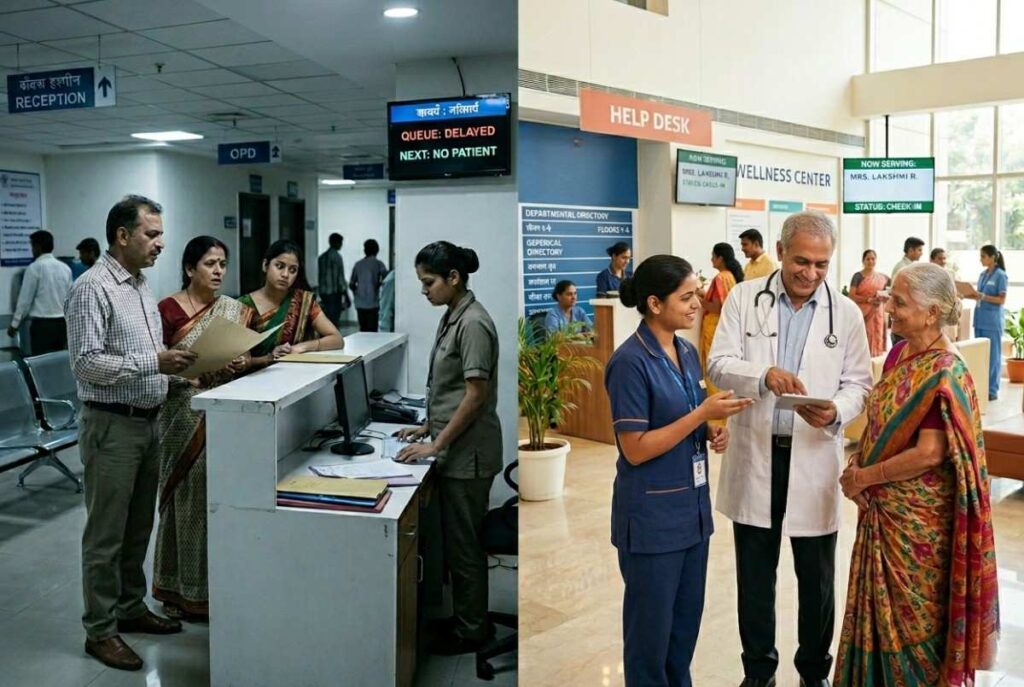
Reasons Indian Hospitals Lose Patients to Competitors — And How to Stop It A patient visits your hospital once, receives good clinical care — and never returns. They go to a competitor for their next consultation, their family member’s surgery, and every follow-up after that. This isn’t uncommon in Indian healthcare. For hospital owners and CEOs, it represents not just lost revenue but a broken relationship. Understanding and implementing effective patient retention strategies for hospitals is no longer optional — it is a business imperative. Why Indian Hospitals Are Losing Patients Without Realising It Most hospital leaders assume patient churn is about clinical outcomes. The reality is more uncomfortable — patients often leave for reasons that have nothing to do with medical quality. Long wait times, unclear billing, indifferent front-desk staff, and zero post-discharge follow-up are driving patients away quietly. They don’t complain. They simply don’t come back. In the current Indian healthcare landscape, patients have more choices than ever before. Tier-2 cities now have multi-speciality options. Corporate hospital chains are expanding aggressively. A poor experience at one touchpoint is enough to send a patient — and their network — to your competitor. This is the core challenge of patient acquisition strategy in India today: acquiring a patient is expensive, but losing them costs far more. The Retention Framework: Where Most Hospitals Get It Wrong Chitra Baskar’s work with hospital owners across India consistently reveals a fundamental gap — hospitals invest heavily in infrastructure and technology, but underinvest in the patient experience ecosystem. Retention is not a single intervention. It is the result of multiple touchpoints working together cohesively. Chitra identifies three layers where hospitals typically fail: The Entry Experience — First impressions at reception, OPD, and inquiry desks set the emotional tone. If patients feel like a number, they disengage immediately. The Clinical Journey — Patients notice how well departments communicate with each other, how clearly doctors explain treatment plans, and whether they feel heard. The Post-Discharge Relationship — This is where most hospitals go completely silent. No follow-up call. No discharge summary in plain language. No reminder for the next visit. As a patient experience consultant working across India, Chitra observes that hospitals which address all three layers consistently outperform competitors on repeat visits and referrals. For those exploring how to retain patients in private hospitals in India, the answer lies in systematising these touchpoints — not leaving them to individual staff initiative. Practical Strategies Hospitals Can Implement Now Closing the retention gap does not require a complete overhaul. It requires deliberate, structured action: Audit your patient journey end-to-end. Map every touchpoint from the first phone call to the third follow-up visit. Identify where patients drop off or report friction. Most hospitals have never done this exercise formally. Train frontline staff as relationship builders. Receptionists, ward attendants, and billing staff interact with patients more than doctors do. Their tone, clarity, and empathy directly influence whether a patient returns. Build a structured follow-up protocol. A call 48 hours post-discharge, a check-in at seven days, and a reminder at 30 days dramatically improves patient loyalty. Automate where possible, but keep the human element for high-value patients. Make billing transparent and explainable. Billing disputes are one of the top reasons patients switch hospitals in India. A dedicated billing counsellor who walks patients through their invoice reduces complaints and builds trust. Capture and act on feedback immediately. Post-visit surveys mean nothing if results sit in a spreadsheet. Assign accountability for resolving negative feedback within 48 hours. Mistakes That Quietly Undermine Retention Efforts Even hospitals that invest in patient experience make avoidable errors: Treating retention as a marketing function alone. Retention is an operations and culture challenge. Marketing can attract patients back, but only if the underlying experience justifies their return. Focusing only on inpatient satisfaction. The bulk of patient volume — and relationship-building — happens in OPD. Hospitals that neglect outpatient experience lose the majority of their potential loyal base. Measuring satisfaction without measuring loyalty. A patient can rate their experience 4 out of 5 and still never return. Track repeat visit rates, referral rates, and lapsed patient reactivation — not just satisfaction scores. Patients today choose hospitals the way they choose any service — based on experience, trust, and how valued they feel. Clinical excellence earns the first visit. Everything else determines whether they return. If your hospital is facing declining repeat visits or rising patient churn, the issue is rarely clinical. It is structural. Implementing focused patient loyalty strategies for Indian hospitals requires an honest look at your systems, your people, and your patient relationships. To explore what a retention audit could reveal about your hospital’s growth gaps, connect with Chitra Baskar on LinkedIn or reach out directly to schedule a discovery conversation.
Specialty Clinic Growth Strategy — What Indian Doctors Need to Know Before Scaling
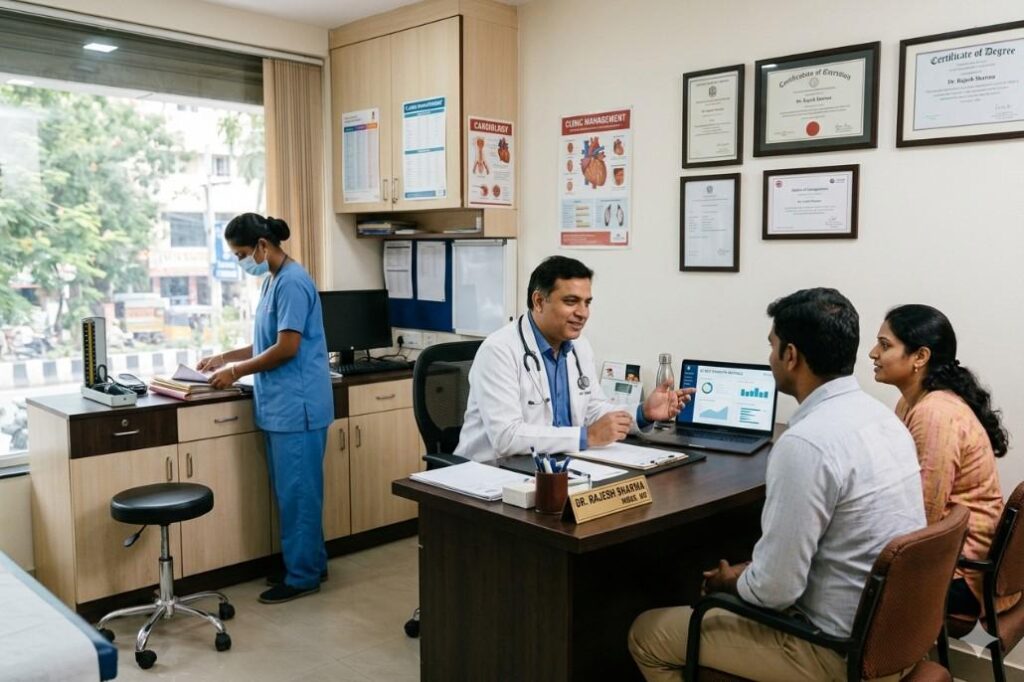
Specialty Clinic Growth Strategy — What Indian Doctors Need to Know Before Scaling Most specialty clinic owners in India reach a familiar ceiling. The practice is busy, patients are satisfied, and the doctor is respected in their field — yet revenue has plateaued, the waiting room is not growing, and scaling feels risky rather than exciting. The missing piece is rarely clinical skill. It is almost always a structured medical practice growth strategy that moves the clinic from personality-dependent to systems-driven growth. Why Specialty Clinics in India Stall After Initial Success The first few years of a specialty clinic often run on reputation, referrals, and the founder’s personal network. That is enough to build a viable practice. It is rarely enough to scale one. The core problem is that most specialist doctors are trained to deliver excellent clinical outcomes — not to build and manage a growing healthcare business. Marketing, patient acquisition, pricing, team development, and brand positioning are disciplines that receive almost no attention in medical education. This gap becomes painfully visible when a clinic growth consultant in India begins working with specialty practices. A dermatology clinic in Bengaluru, a fertility centre in Hyderabad, or an orthopaedic practice in Pune may all have outstanding clinical reputations, yet struggle to articulate what makes them different, how to convert inquiries into appointments, or how to retain patients beyond a single visit. Growth does not happen by working harder. It happens by working on the right things. A Medical Practice Growth Strategy Built for Indian Specialty Clinics Chitra Baskar’s approach to specialty clinic growth is built around three interconnected layers that address the real reasons clinics plateau. The first layer is positioning clarity. Before any marketing or expansion decision, the clinic must answer one question precisely: who is the ideal patient, and why should they choose this clinic over every alternative in the city? Vague answers produce vague results. Specific positioning drives targeted growth. The second layer is a structured patient acquisition system. Understanding how to grow a specialty clinic in India requires moving beyond passive referrals. This means building active referral networks with general practitioners and allied specialists, creating a credible digital presence that ranks for condition-specific searches, and having a defined process for converting inquiries — online and offline — into booked appointments. The third layer is revenue architecture. Many specialty clinics undercharge, over-deliver, and underinvest in retention. A revenue growth framework for Indian clinics examines pricing integrity, service packaging, follow-up protocols, and the lifetime value of each patient relationship. These three layers do not operate independently. A specialty clinic marketing strategy in India works only when positioning, acquisition, and revenue are aligned. Four Actions Specialty Clinic Founders Can Take Right Now Moving from insight to implementation is where most clinic owners struggle. Here are four concrete actions that create measurable momentum. First, audit your current patient acquisition sources. Write down exactly where your new patients come from today — GP referrals, Google searches, word of mouth, social media, or walk-ins. Most owners discover that 80% of their patients come from one or two sources. That is a vulnerability, not a strength. Second, define your clinic’s positioning in one sentence. It should name your specialty, your target patient, and your key differentiator. If it takes a paragraph to explain what makes your clinic different, the message is not yet clear enough to market. Third, build a referral activation plan. Patient acquisition for specialty clinics in India depends heavily on structured GP and specialist referral networks. Identify the top twenty referring doctors in your catchment area and create a deliberate engagement plan — not occasional visits, but consistent, value-driven communication. Fourth, review your follow-up system. How does your clinic engage a patient after their first visit? A structured follow-up protocol — appointment reminders, condition-specific content, satisfaction checks — significantly improves retention and generates organic referrals. Mistakes That Quietly Limit Specialty Clinic Growth Three patterns appear repeatedly among specialty clinics that remain stuck despite genuine clinical excellence. Waiting for word of mouth to do all the work is the first. Organic referrals are valuable but unpredictable. A clinic that has no active acquisition strategy is entirely dependent on variables it cannot control. Copying general hospital marketing is the second. Specialty clinics serve a specific patient segment with specific concerns. Generic healthcare marketing — health tips, festive posts, and awareness days — does not speak to the decision-making process of a patient choosing a fertility specialist or an orthopaedic surgeon. Underinvesting in the post-consultation experience is the third. The patient’s journey does not end when they leave the consultation room. How they are followed up, communicated with, and re-engaged determines whether they return, refer others, and become long-term advocates for the clinic. The Right Strategy Makes Scaling Feel Intentional, Not Accidental A medical practice growth strategy built around your specific specialty, city, and patient profile is the difference between growing on purpose and hoping growth happens. The frameworks exist — the challenge is applying them in the right sequence. If you are ready to build a revenue growth framework for your Indian clinic that is grounded in market reality rather than generic advice, connect with Chitra Baskar on LinkedIn or reach out for a focused strategy conversation. The right starting point is clarity — and that begins with one honest conversation.
Digital Marketing for Hospitals in India — What Actually Works in 2026
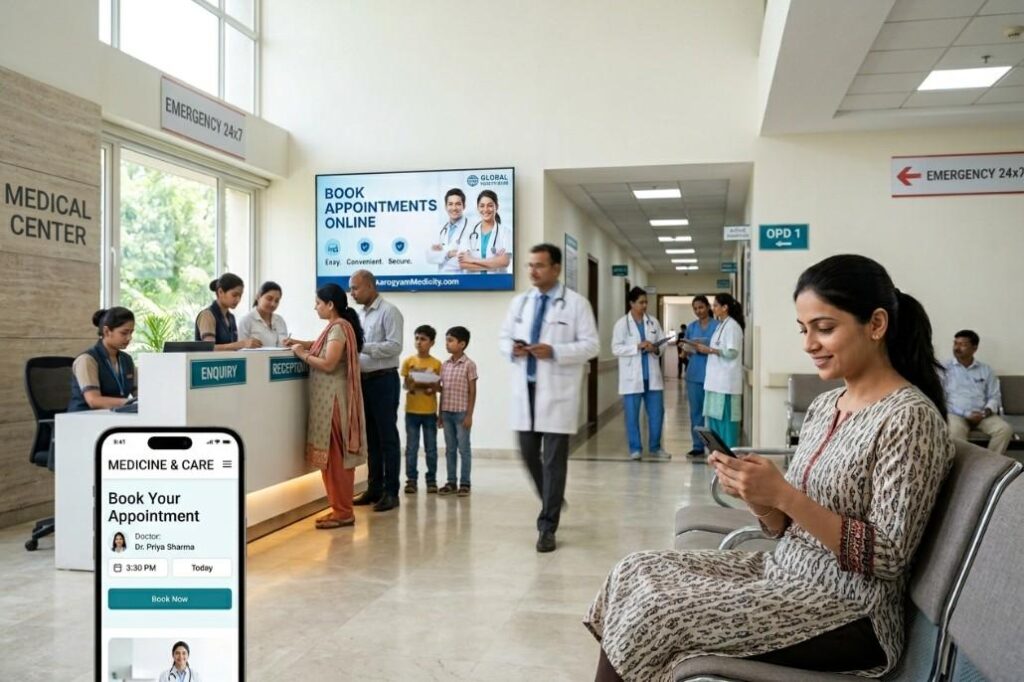
Digital Marketing for Hospitals in India — What Actually Works in 2026 Many private hospitals in India are spending between two and five lakhs a month on digital marketing and seeing little they can measure beyond likes and impressions. The agency sends reports. The numbers look busy. But OPD footfall stays flat. Hospital healthcare digital marketing India has matured significantly — and the gap between what works and what merely looks like work has never been wider. This post cuts through the noise and focuses on what is actually driving results. Why Most Hospital Digital Marketing Spends Underdeliver The core problem is not the channel — it is the strategy. Most digital marketing for doctors and clinics India is built around visibility metrics: followers, reach, and ad impressions. These are easy to report and difficult to connect to revenue. A hospital’s real digital marketing goal is straightforward: the right patient, searching for the right service, finds the hospital, trusts what they see, and books an appointment. Every rupee spent should be evaluated against that chain of events — not against vanity metrics that look good in a monthly slide deck. The secondary problem is generic execution. Hospitals running the same awareness content, the same health tip posts, and the same festive day creatives as every competitor in their city are indistinguishable in the feed. Patients scroll past. The brand registers nothing. The Framework for Digital Marketing That Actually Converts Chitra Baskar’s approach to hospital healthcare digital marketing India separates activity from outcomes. The framework is built on four questions that every hospital marketing team should answer before spending: Are you visible where patients search? Google search — specifically local search and condition-specific search — remains the highest-intent channel for patient acquisition. A well-optimised Google Business Profile and condition-specific landing pages outperform broad social media spend for most private hospitals. Does your digital presence build trust before the first visit? Social media marketing for hospitals India works best when it functions as a trust-building channel, not a promotional one. Specialist introductions, patient education content, and transparent communication about services create credibility that paid ads cannot manufacture. Can a patient book an appointment in under three clicks? If the answer is no, every marketing rupee is leaking at the conversion point. Website speed, mobile optimisation, and a clear appointment pathway are non-negotiable prerequisites for any digital spend. Are you tracking cost per appointment, not cost per click? Healthcare marketing ROI India must be measured at the outcome level. A digital marketing strategy for private hospitals India that cannot answer “how much did this campaign cost per confirmed appointment” is not a strategy — it is activity. How to generate leads for hospitals through digital marketing India is not a complex question once these four foundations are in place. Most hospitals are simply missing one or two of them. What Hospitals Can Do Right Now to Improve Digital Performance Audit your Google Business Profile this week. Confirm that your specialties, hours, photos, and contact details are accurate and complete. Enable messaging. Respond to every review. This single action improves local search visibility at zero cost. Build three to five condition-specific landing pages. Identify your top procedures or specialties and create dedicated pages optimised for how patients actually search — “orthopaedic surgeon Coimbatore” or “diabetic care clinic Chennai.” These pages convert far better than a generic homepage. Shift social media content from promotion to education. Healthcare content marketing India that answers real patient questions — what to expect before a procedure, how to manage a chronic condition, when to see a specialist — builds organic reach and positions specialists as credible voices. Set up a lead tracking system before the next campaign. Every inquiry from digital channels — form submissions, calls, WhatsApp messages — should be logged, tracked, and followed up within two hours. Without this, even well-performing campaigns generate leads that evaporate. Review your ad targeting quarterly. Healthcare audiences in India are highly localised. A campaign that worked in Q1 may be reaching the wrong demographic by Q3 due to audience saturation or seasonal shifts. Regular reviews prevent budget from being quietly wasted. Digital Marketing Mistakes That Cost Indian Hospitals the Most Running paid campaigns without fixing the website first. Paid traffic sent to a slow, unclear, or mobile-unfriendly website is wasted spend. The website must convert before any campaign scales. Outsourcing strategy entirely to a generalist agency. Most digital agencies serving hospitals in India are skilled at execution but not at healthcare strategy. The brief, the messaging, and the outcome definitions must come from within the hospital — or from a consultant who understands the sector. Measuring success monthly instead of quarterly. Digital marketing in healthcare has longer conversion cycles than e-commerce. A patient who sees a specialist introduction video in January may book in March. Monthly reporting creates false negatives that cause hospitals to abandon channels prematurely. Spend Smarter, Not More Hospital healthcare digital marketing India does not require a larger budget — it requires a clearer strategy. The hospitals seeing real returns in 2026 are those that have connected their digital activity to patient outcomes, not just platform metrics. If your current digital spend is not delivering measurable results, a structured review of your digital marketing strategy for private hospitals India could reveal exactly where the gap is. Connect with Chitra Baskar on LinkedIn or book a discovery call to explore what a focused digital strategy could look like for your hospital.
Why Patient Experience Is the #1 Revenue Lever Most Indian Hospitals Ignore
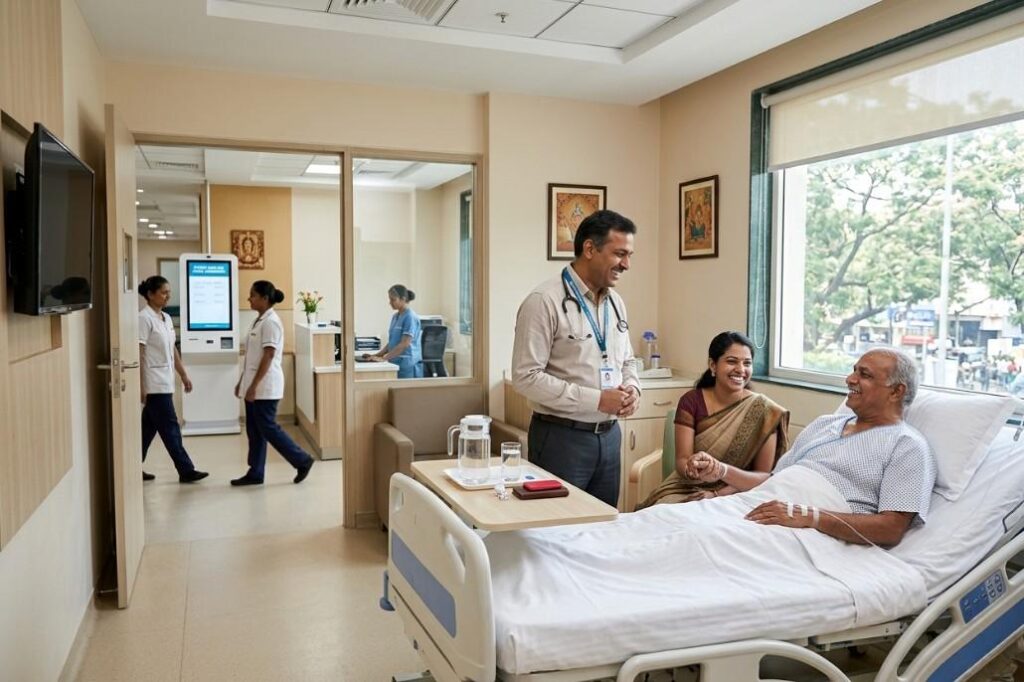
Why Patient Experience Is the #1 Revenue Lever Most Indian Hospitals Ignore A private hospital in Chennai recently invested heavily in a new OPD wing, upgraded equipment, and a digital marketing campaign. Footfall increased. But repeat visits did not. Neither did referrals. The missing variable was not clinical quality or visibility — it was hospital patient satisfaction India’s private sector continues to treat as a soft metric rather than a business driver. This post makes the case for why that thinking is costing hospitals revenue they cannot see on any balance sheet. The Gap Between Clinical Quality and Patient Loyalty Most hospital leaders in India measure success through bed occupancy, OPD numbers, and surgical volumes. Very few track patient loyalty rates, complaint resolution times, or net promoter scores with the same rigour. The result is a recurring pattern: a hospital delivers clinically sound care, yet patients do not return for follow-ups, do not refer family members, and occasionally leave negative reviews that nobody responds to. A patient experience consultant India engages with sees this gap constantly — not in hospitals that are performing poorly, but in hospitals that are performing well clinically and still not growing. The disconnect is structural. Clinical outcomes and patient experience are tracked by different people, reported in different formats, and rarely connected to the same revenue conversation. That separation is where growth stalls. The Framework That Connects Patient Experience to Revenue Chitra Baskar’s approach to hospital patient satisfaction India begins with a financial reframe: every dissatisfied patient who leaves silently represents not just a lost visit, but a lost referral chain. In Indian private healthcare, where word of mouth remains the most trusted channel of patient acquisition, a single dissatisfied patient who shares their experience with five family members or neighbours creates a ripple that no marketing campaign can easily counter. Patient retention strategies for hospitals must account for this multiplier effect — both positive and negative. The framework operates across three revenue-linked dimensions: Complaint capture and resolution speed. Complaints that are resolved within 24 hours have a statistically higher conversion to loyalty than those left unaddressed. Most Indian hospitals have no formal complaint capture system outside of discharge feedback forms — which patients rarely complete honestly. Staff communication quality. How to improve patient experience in Indian hospitals is not primarily a facility question. It is a communication question. The way nurses explain procedures, the way billing staff handle queries, and the way front desk teams greet patients — these micro-interactions determine whether a patient feels cared for or processed. Post-discharge engagement. A patient who receives a follow-up call within 48 hours of discharge is significantly more likely to return and refer. Patient engagement strategies for Indian hospitals that include structured post-visit communication consistently outperform those that do not. What Hospital Leaders Can Do to Turn Experience Into Revenue Install a real-time feedback mechanism. Move beyond discharge forms. A simple WhatsApp or SMS feedback link sent within two hours of a visit captures honest, actionable data while the experience is still fresh. Create a complaint ownership protocol. Every complaint must have a named owner and a resolution deadline. Patient complaint management hospital India consistently shows that patients who have complaints resolved promptly become more loyal than patients who never complained at all. Train clinical and non-clinical staff together. Experience is not just a front desk issue. Nurses, technicians, housekeeping, and billing staff all shape the patient’s perception. Cross-functional training on communication and empathy delivers faster results than siloed interventions. Track patient retention rates monthly. What percentage of your OPD patients return within 90 days? If this number is not being tracked, the hospital is managing revenue without understanding its largest growth lever. Build a structured referral acknowledgement system. When a patient refers someone, acknowledge it. A simple thank-you message or loyalty recognition creates a feedback loop that encourages more referrals — at zero acquisition cost. Mistakes That Quietly Drain Patient Loyalty Treating complaints as exceptions rather than data. Every complaint is a signal. Hospitals that handle complaints case by case, without analysing patterns, miss the systemic fixes that would prevent the same complaint from recurring across hundreds of patients. Measuring hospital patient satisfaction India through exit surveys alone. Exit surveys capture what patients are willing to say on their way out — which is rarely the full picture. Real satisfaction data comes from follow-up calls, online review patterns, and return visit rates combined. Assuming that good clinical outcomes guarantee loyalty. Patients cannot fully evaluate clinical quality. What they can evaluate — and do, consistently — is how they were treated, how long they waited, and whether anyone followed up. Hospitals that conflate clinical excellence with patient satisfaction miss the experience layer entirely. Experience Is Strategy, Not Service Hospital patient satisfaction India is not a hospitality initiative. It is a revenue strategy. The hospitals that understand this are building referral engines, reducing acquisition costs, and growing without proportional increases in marketing spend. If your hospital is experiencing stagnant repeat visits or declining referral volumes, patient trust building strategies India hospitals are using successfully may reveal exactly where the gap is. Connect with Chitra Baskar on LinkedIn or book a discovery call to explore where patient experience could be unlocking revenue your current metrics are not capturing.
How to Build a Healthcare Brand That Patients Trust — A Guide for Indian Hospital Owners
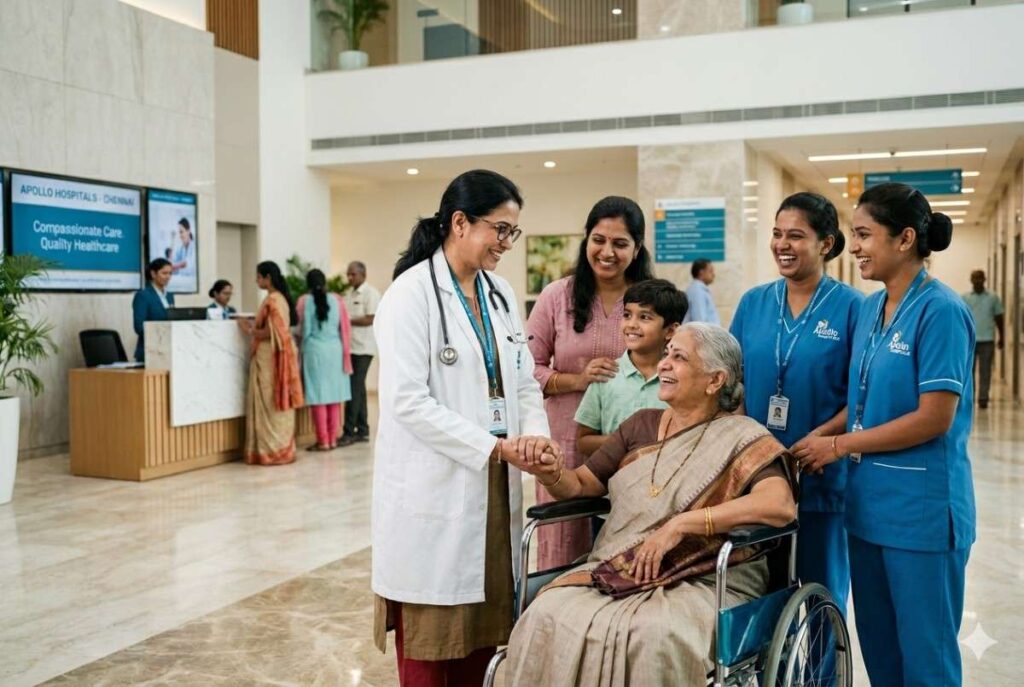
How to Build a Healthcare Brand That Patients Trust — A Guide for Indian Hospital Owners Two hospitals on the same street, with comparable doctors and similar facilities — one is consistently full, the other is not. The difference, more often than not, is brand. Not a logo. Not a tagline. But the accumulated trust a patient feels before they even walk through the door. Healthcare branding India is not a cosmetic exercise. It is the foundation on which patient relationships, referrals, and long-term growth are built. This guide breaks down how to build that foundation deliberately. Why Most New Hospitals and Clinics Struggle With Brand Identity When doctors transition from employment to private practice — or when a family-run hospital decides to grow — the instinct is to focus on clinical readiness first. That is correct. But brand identity is often left entirely to chance: a rushed logo, a basic website, and a Facebook page with irregular posts. The result is a facility that is clinically capable but visually and communicatively indistinct. In a competitive Indian city, where patients have three or four comparable options within a short distance, indistinct does not survive. A hospital branding consultant India engages at this exact juncture — before patterns are set, before the wrong positioning hardens into reputation. The gap between a clinic that fills up organically and one that struggles to retain patients is rarely clinical. It is almost always perceptual. The Framework for Building a Healthcare Brand That Earns Trust Chitra Baskar’s approach to healthcare branding India is built on three core pillars: positioning, consistency, and proof. Each one is necessary. None of them alone is sufficient. Positioning — Know exactly who you serve and what you stand for. A brand that tries to appeal to everyone appeals to no one. For Indian private hospitals, this means making a clear choice: Are you the accessible neighbourhood clinic? The specialist destination? The family healthcare partner? Each positioning requires a different communication strategy, different referral relationships, and different visual identity. Consistency — Every touchpoint must speak the same language. Doctor personal branding India often breaks down here. A well-qualified specialist with a strong online profile sends a completely different signal when their clinic’s reception area is chaotic and the front desk is undertrained. Patients read inconsistency as unreliability. The brand experience must hold across the website, the waiting area, the discharge process, and every digital interaction. Proof — Trust is built through evidence, not assertion. Patient testimonials, documented outcomes, community health initiatives, media visibility, and specialist credentials — these are the building blocks of a hospital branding strategy for Indian private hospitals that actually earns credibility over time. Telling patients you are trustworthy is far less effective than showing them why others already trust you. Practical Steps to Build Your Healthcare Brand in 2026 Define your positioning statement before any design work begins. One clear sentence: who you serve, what you offer, and why it matters to them. Every brand decision flows from this anchor. Audit your current patient touchpoints for consistency. Walk through your own facility and digital presence as a new patient would. Where does the experience feel disjointed? Where does the communication feel unclear? Fix those gaps before investing in brand promotion. Build a credibility layer around your specialists. How to position a hospital in a competitive Indian city often comes down to how well the specialists within it are known and trusted. LinkedIn profiles, published articles, community health talks, and media interviews all contribute to this layer. Invest in your physical environment as a brand signal. Cleanliness, wayfinding, lighting, and the behaviour of your front desk staff communicate far more than any advertisement. Healthcare brand identity for clinics India must account for the offline experience, not just the digital one. Create a content strategy that educates, not just promotes. Condition-specific blog posts, patient FAQs, and health awareness content build organic visibility while positioning your hospital as a credible, helpful resource — not just a service provider. Branding Mistakes That Undermine Patient Trust Changing brand elements too frequently. A new logo every two years, a renamed facility, or a redesigned website that looks completely different from the previous one signals instability. Patients associate consistency with reliability. Letting online reviews go unmanaged. Your Google and Practo reviews are part of your brand. An unresponded negative review is not neutral — it actively erodes trust. Brand management is reputation management. Confusing marketing spend with brand building. Paid ads can drive footfall. They do not build trust. Healthcare branding India is built through consistent experience, visible expertise, and accumulated proof — not campaign budgets. Brand Is What Patients Say When You Are Not in the Room Healthcare branding India, done well, creates a reputation that works independently of your marketing spend. It brings patients in through referrals, holds them through trust, and grows through consistency. If you are a clinic founder or hospital owner building your brand from the ground up, the clearest next step is to start with positioning — and healthcare brand identity for clinics India is exactly where Chitra Baskar’s consulting work begins. Connect with her on LinkedIn or book a discovery call to explore what a brand-first growth strategy could look like for your facility.
10 Patient Acquisition Strategies Every Private Hospital in India Must Implement in 2026
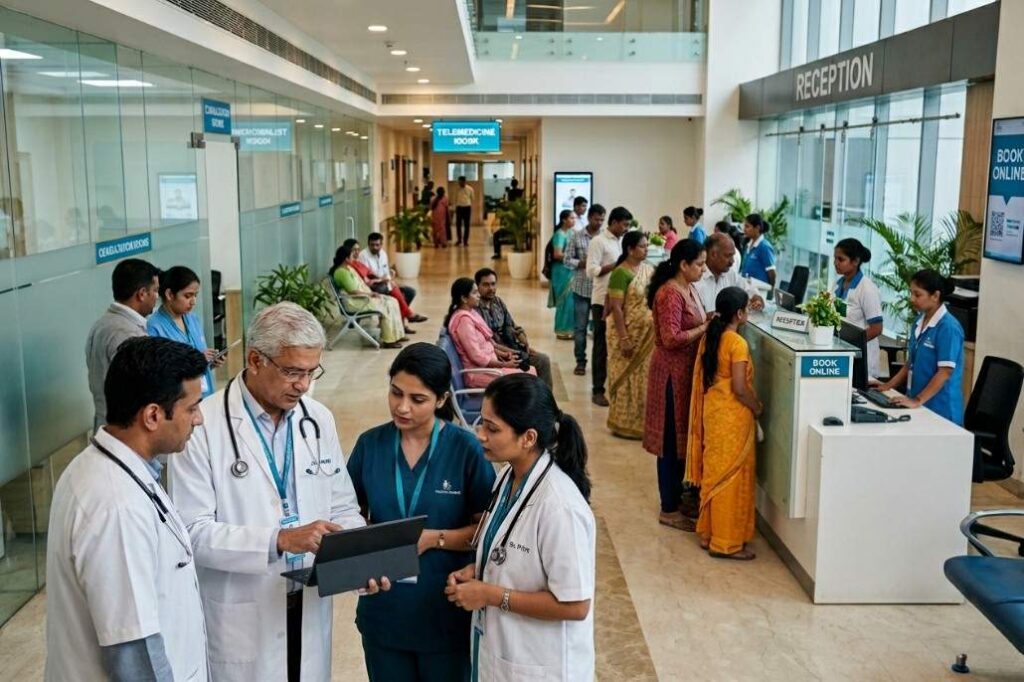
10 Patient Acquisition Strategies Every Private Hospital in India Must Implement in 2026 Private hospitals across India are spending more on marketing than ever before — and many are seeing diminishing returns. The problem is not the budget. It is the absence of a structured patient acquisition strategy India’s competitive healthcare market now demands. Paid ads without follow-through, websites without trust signals, and referral networks left unmaintained are quietly draining resources. This post outlines ten strategies that actually move the needle — built on what works in Indian healthcare, not imported theory. Why Patient Acquisition Has Become Harder for Private Hospitals A decade ago, a good location and a visible signboard were enough to sustain a private hospital. That era is over. Patients today research before they visit. They read Google reviews, compare specialists, check websites, and ask on WhatsApp groups before making an appointment. The patient acquisition cost hospital owners are absorbing has risen sharply — not because patients are harder to reach, but because more hospitals are chasing the same patient with similar messaging and no differentiation. The clinics and hospitals that are growing are the ones that have moved from random marketing activity to a deliberate, trackable acquisition system. The Strategic Framework Behind Effective Patient Acquisition Chitra Baskar’s approach to patient acquisition strategy India is built on a simple diagnostic: before adding new channels, audit what is already leaking. Most hospitals lose patients at three predictable points — during the first online search, during the first call or walk-in attempt, and after the first visit. Plugging these leaks before scaling acquisition spend is the highest-leverage move available to any hospital or clinic. The framework operates across four layers: Visibility — Can the right patients find you when they search? Credibility — When they find you, do they trust what they see? Conversion — Is booking an appointment frictionless? Retention — Are first-time patients becoming repeat visitors? How to reduce patient acquisition cost in India is not a media buying question. It is a systems question. Hospitals that fix conversion and retention reduce their dependence on paid acquisition over time — and that is where sustainable growth lives. Patient footfall increase hospital results follow naturally when all four layers are working together, not in isolation. 10 Patient Acquisition Strategies to Implement in 2026 Optimise your Google Business Profile. This is the single highest-return, zero-cost action most hospitals have not completed. Accurate hours, updated photos, and consistent responses to reviews directly influence local search rankings. Build condition-specific landing pages. Generic hospital websites do not convert. Pages built around specific conditions — “knee replacement Chennai” or “diabetic care Coimbatore” — attract patients with high intent. Create a structured referral programme with local GPs. Physician referral networks remain one of the strongest patient acquisition strategies for private doctors India has produced. A formal, maintained programme outperforms informal goodwill every time. Use WhatsApp for appointment reminders and follow-ups. The majority of your patients are reachable on WhatsApp. A simple, permission-based communication sequence for appointment reminders reduces no-shows and increases revisits. Publish condition-specific content regularly. Educational content — blog posts, short videos, health tips — builds organic search visibility and positions your specialists as credible voices before a patient even books. Respond to every online review within 48 hours. Review response rate and quality influence both patient trust and Google ranking. This takes ten minutes a day and compounds significantly over months. Train your front desk as a conversion team. The number of patients lost between a first phone inquiry and a confirmed appointment is consistently underestimated. Front desk training focused on communication and booking conversion is measurable and impactful. Run targeted local campaigns, not broad ones. Healthcare lead generation India works best when geographically precise. A 5-kilometre radius campaign targeting the right demographic outperforms a city-wide spend for most private hospitals. Implement a post-discharge follow-up call protocol. A structured call 48 to 72 hours after discharge improves patient satisfaction, generates referrals, and surfaces issues before they become negative reviews. Track acquisition by channel, not just total footfall. Without channel-level data, hospitals cannot identify what is working. Even a basic CRM or intake form asking “how did you hear about us” provides the insight needed to allocate spend intelligently. Mistakes That Make Acquisition More Expensive Than It Should Be Spending on ads before fixing the website. Paid traffic sent to a slow, unclear, or untrustworthy website is wasted spend. The website must convert before acquisition budgets are scaled. Ignoring existing patients as an acquisition channel. A satisfied patient who refers two family members costs far less than a cold lead from digital advertising. Most hospitals underinvest in the retention and referral layer entirely. Measuring footfall instead of revenue per patient. High footfall with low revenue per visit signals a case-mix or pricing problem, not an acquisition success. Track the right metrics. Build the System Before Scaling the Spend A patient acquisition strategy India’s private hospitals can rely on is not built in a campaign — it is built in a system. The ten strategies above are most effective when implemented in sequence, not simultaneously. If you are looking to build patient acquisition for clinics India that is measurable, cost-efficient, and sustainable, connect with Chitra Baskar on LinkedIn or book a discovery call. A focused conversation often reveals the two or three changes that unlock meaningful growth.
Patient Journey Optimization — The Framework Behind India’s Fastest-Growing Clinics
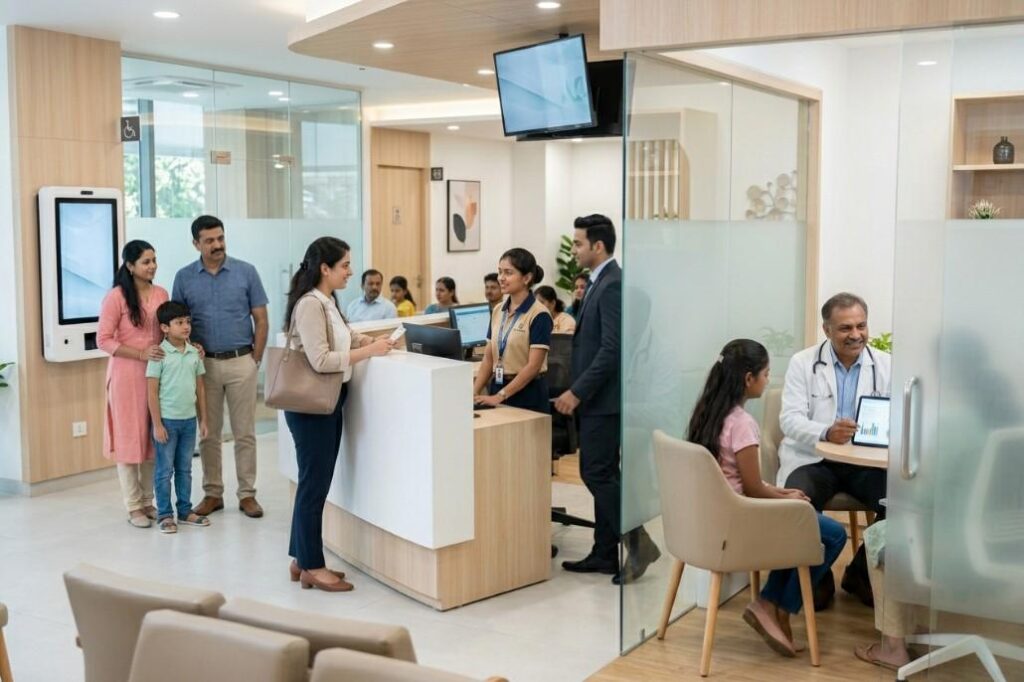
Patient Journey Optimization — The Framework Behind India’s Fastest-Growing Clinics A clinic can have excellent doctors, a clean facility, and a visible location — and still watch patients walk out without booking a follow-up. The gap is rarely clinical. It is experiential. Patient journey consulting exists precisely to close that gap: to map every touchpoint a patient encounters, identify where trust breaks down, and rebuild those moments into ones that convert first-time visitors into long-term patients. This post breaks down the framework that is quietly driving growth for private clinics across India. Why Clinics With Good Doctors Still Struggle to Grow The assumption most clinic founders make is that clinical quality drives growth. It does — but only up to a point. Beyond that point, growth is determined by experience, not expertise. A patient in Chennai or Coimbatore does not choose a specialist solely on credentials. They choose based on how easy it was to book an appointment, how long they waited, whether the front desk made them feel seen, and whether they received a follow-up call. Each of these is a patient acquisition strategy India’s growing clinics have quietly mastered — while others rely on word of mouth and hope. The hard truth is that most clinics lose patients not because of bad outcomes, but because of friction — small, fixable friction that nobody has mapped out or taken ownership of. The Patient Journey Framework Chitra Baskar Uses With Clients Effective patient journey consulting begins with a structured audit of five stages every patient moves through: Awareness — How did the patient first hear about the clinic? Was the online presence clear, credible, and easy to find? Consideration — What did they see when they searched? Reviews, website, social proof — all of this shapes trust before the first visit. First Visit — From parking to registration to consultation to billing, every step either builds or erodes confidence. Post-Visit — Did they receive discharge instructions clearly? Was there a follow-up call? Did someone check if they had questions? Retention and Referral — What brings them back, and what makes them recommend the clinic to family? Most clinics invest heavily in Stage 1 — marketing and visibility — while leaving Stages 3, 4, and 5 entirely to chance. Patient journey mapping for hospitals India must cover all five stages to deliver measurable results. An OPD footfall increase strategy India that focuses only on new patient acquisition without fixing the retention gap is like filling a leaking bucket. The numbers improve temporarily, then plateau. What Clinics Can Do to Improve Their Patient Journey Right Now Map your current journey before assuming what is broken. Walk through your clinic as a patient would — from Google search to post-visit follow-up. Document every step. Most clinic owners are surprised by what they find. Fix your front desk before you fix your marketing. The front desk is the highest-impact, lowest-investment improvement most clinics can make. Training on communication, empathy, and basic workflow management changes the patient experience immediately. Create a structured follow-up protocol. A simple call or WhatsApp message 48 hours after a visit dramatically improves patient satisfaction scores and return visit rates. Very few private clinics in India do this consistently. Audit your digital touchpoints. Your Google Business Profile, website contact page, and appointment booking process should require zero effort from the patient. If they have to call three times to book, many will not. Measure what matters. Track OPD revisit rates, referral sources, and patient feedback scores monthly. Without measurement, improvement is guesswork. Patient acquisition strategies for private doctors India that are data-informed consistently outperform those that are not. Mistakes That Undermine Patient Journey Efforts Treating patient experience as a one-time project. Journey optimisation is not a rebrand or a training day. It requires ongoing monitoring, quarterly reviews, and a designated owner within the clinic team. Investing in digital marketing before fixing offline experience. Bringing more patients through the door into a broken experience accelerates negative word of mouth. Fix the journey first, then scale the acquisition. Assuming all patients have the same journey. A new mother, a senior citizen managing a chronic condition, and a working professional in their thirties all move through a clinic differently. Segmenting the journey by patient profile reveals friction points that a generic audit misses entirely. The Clinics That Grow Are the Ones That Map First Patient journey consulting is not about making clinics feel warmer. It is about building systems that turn first visits into lifetime relationships — and lifetime relationships into a referral engine. If you want to understand how patient journey mapping for hospitals India could apply to your specific clinic context, connect with Chitra Baskar on LinkedIn or book a discovery call. The insight from a structured conversation often reveals more than months of internal guesswork.
Why Most Private Hospitals in India Struggle to Grow Beyond One Location

Why Most Private Hospitals in India Struggle to Grow Beyond One Location You built a hospital that works. Patients trust you. Your OPD is full, your staff is settled, and the numbers make sense. So why does the idea of opening a second location feel like stepping into fog? For most private hospital owners and clinic founders across India, multi-site clinic expansion India is not a question of ambition — it is a question of knowing exactly what breaks when you try to scale, and why so many get it wrong before they even open the second door. The Hidden Ceiling Most Hospital Owners Don’t See Coming India’s private healthcare sector is growing, but growth at one location and growth across locations are two entirely different disciplines. A 2023 report by FICCI noted that nearly 70% of private hospitals in India are single-location facilities, and a significant number that attempt expansion either stall mid-way or revert within three years. The reasons are rarely about money alone. The real ceiling is operational — built from systems, people, and processes that were never designed to be replicated. What works in your flagship location works because of you: your presence, your relationships, your judgment calls made daily. A hospital growth strategy India must account for this reality from day one. Most owners discover this only after signing a lease for the second site. The Framework That Actually Drives Sustainable Multi-Location Growth Chitra Baskar’s approach to healthcare growth strategy India begins with a question most consultants skip: Is your first location expansion-ready, or just operationally surviving? There is a meaningful difference between a hospital that runs well and one that is built to be replicated. Expansion readiness requires four pillars to be in place before a second site is considered: Documented clinical and operational protocols — not just practiced ones A leadership pipeline — middle managers who can make decisions independently A brand identity that patients associate with the system, not just the founder Revenue streams that are not founder-dependent — referrals, digital presence, and community trust built at an institutional level For healthcare growth consultants for multi-site expansion India, this diagnostic phase is non-negotiable. Skipping it is the single most common reason second locations underperform. The second part of the framework addresses market selection. Tier 2 cities in India present significant opportunity, but they come with distinct patient behaviour, payer patterns, and competitive dynamics. A clinic expansion strategy for Tier 2 cities India must be calibrated — not copied from the metro playbook. What Hospital Owners Can Do Right Now If you are planning your second or third location, here are concrete steps to take before committing capital: Run a replication audit on your first site. Document every process that currently lives in someone’s head. If your operations cannot be written down clearly, they cannot be taught to a new team. Identify your location-independent revenue drivers. What brings patients in without your personal referral network? If the answer is unclear, the second site will face the same vacuum. Build your second-site leadership team at least 12 months before launch. Training a new team inside an already-operating facility is far more effective than onboarding them into a new one under pressure. Commission a demand and competition study for each shortlisted location. In India, a 15-kilometre distance between two cities can mean entirely different patient expectations. Do not assume. Validate. 5. Create a phased expansion plan with defined go/no-go milestones. How to expand a hospital to multiple locations in India requires discipline — not just enthusiasm. Set measurable checkpoints and honour them. Mistakes That Cost Hospitals More Than Money Replicating the brand before replicating the systems. A second location with the same name but inconsistent patient experience damages both sites. Brand extension only works when operations are standardised first. Hiring for the new site without investing in the existing team. Expansion creates anxiety in your current staff. Ignored, that anxiety becomes attrition — at precisely the moment you need your strongest people. Underestimating regulatory and compliance timelines. In India, clinical establishment licences, fire NOCs, biomedical waste approvals, and NABH alignment vary by state and city. These timelines are longer than most owners budget for. The Right Move Is a Prepared Move Multi-site clinic expansion India is achievable — but only when the groundwork is honest, the systems are solid, and the strategy is built for Indian healthcare realities, not borrowed from a global playbook. If you are at the stage where expansion feels both necessary and uncertain, that is exactly the right time to pressure-test your plan with an experienced eye. Connect with Chitra Baskar on LinkedIn or book a discovery call to explore what a structured clinic expansion strategy could look like for your organisation.
Why Purpose-Driven Healthcare Consulting Is the Future of Hospital Growth in India

Dear Hospital Owner: Your Clinical Excellence Alone Won’t Grow Your Business — This Will India’s healthcare sector is at a critical inflection point. With rising competition, shifting patient behaviour, and accelerating digital adoption, hospital leaders are under more pressure than ever to scale — and to scale right. Yet, many institutions are growing without a clear direction, and the cracks are beginning to show. Healthcare consulting in India is evolving rapidly. The most forward-thinking hospitals are no longer asking, “How do we grow?” They are asking, “How do we grow with consistency, credibility, and long-term impact?” This article explores why a structured, values-led consulting approach is becoming the defining factor between hospitals that thrive — and those that merely survive. Section 1: The Real Challenges Facing Indian Hospitals Today The healthcare landscape in India has changed dramatically over the last decade. Urban markets are saturated. Tier-2 and Tier-3 cities are seeing a flood of new entrants. Meanwhile, patients are more informed, more discerning, and significantly harder to retain. The challenges hospital leaders face today are not just clinical — they are strategic: Overdependence on a handful of senior doctors for patient inflow Inconsistent brand presence across digital and offline channels Reactive decision-making driven by short-term revenue pressures Fragmented internal systems that don’t scale Difficulty attracting and retaining quality talent These are structural problems. And structural problems require structural solutions — not one-time fixes. Section 2: Why Traditional Hospital Growth Models Are Failing For decades, Indian hospitals grew on the strength of clinical reputation and word-of-mouth referrals. A reputed surgeon, a loyal GP network, and a well-located facility were enough to sustain a steady patient flow. That model is no longer sufficient. Today, over 75% of patients in India search online before choosing a doctor or hospital. They read reviews, compare facilities, check doctor profiles, and evaluate credibility — all before making a single phone call. If your hospital is not visible, credible, and consistent online, you are losing patients to competitors who are. Traditional growth models also tend to be reactive. Hospitals expand when occupancy is high, hire when departments are overwhelmed, and market when patient numbers drop. This cycle creates instability — and makes sustainable scaling nearly impossible. The shift required is from reactive management to proactive strategy. Section 3: What Purpose-Driven Healthcare Consulting Actually Means Purpose-driven consulting is not about philosophy. It is about precision. It means clearly defining what your hospital stands for, who it serves, and what makes it genuinely different — and then building every system, every team, and every patient touchpoint around that clarity. When a hospital operates with this kind of strategic alignment, the results are measurable: stronger patient trust, better staff retention, more consistent revenue, and a brand that stands out in a crowded market. Chitra Baskar, a healthcare business strategist with over 30 years of experience and engagements with 500+ hospitals across India, has developed a consulting framework built on exactly this principle — translating institutional values into operational velocity. Section 4: The 4-Pillar Framework for Sustainable Hospital Growth Pillar 1: Strategic Clarity Every high-performing hospital has a clear answer to three questions: What do we stand for? Who do we primarily serve? How are we meaningfully different from our nearest competitor? Without these answers, marketing becomes noise, hiring becomes inconsistent, and expansion becomes a gamble. Strategic clarity is the foundation on which everything else is built. Pillar 2: Trust-Led Patient Acquisition Modern patient acquisition is not about advertising spend — it is about trust architecture. This includes: A strong, search-optimized digital presence (website, Google Business Profile, local SEO) Individual doctor branding and thought leadership content Online reputation management through reviews and patient testimonials Community engagement that builds familiarity before a patient ever needs care Patients choose hospitals they recognise and trust. Building that trust systematically — not episodically — is what separates consistent performers from inconsistent ones. Pillar 3: Operational Structuring Growth without operational readiness leads to a poor patient experience — which directly damages reputation and retention. Scalable operational systems include structured patient flow protocols, internal coordination frameworks, performance dashboards, and service standardization across departments. These systems reduce dependence on individuals, improve consistency, and create the infrastructure that makes expansion viable. Pillar 4: Expansion Readiness Expansion — whether a new department, a second facility, or a corporate wellness vertical — must be planned, not improvised. Expansion readiness involves financial modelling, partnership structures, regulatory preparedness, and leadership bandwidth assessment. Hospitals that approach growth this way move faster and fail less often. Section 5: Digital Transformation and the New Patient Journey The patient journey no longer begins at your reception. It begins on Google. A patient experiencing chest discomfort does not immediately call a hospital. They search symptoms, read articles, check doctor credentials, and scan reviews. By the time they make contact, they have often already made a shortlist. This shift demands that hospitals invest in: Local SEO and Google Business optimization to appear in “near me” searches AI-driven content marketing that answers patient questions and builds search authority Doctor profile pages that are informative, credible, and regularly updated Social proof systems — reviews, case highlights, and patient education content Hospitals that understand the online-first decision-making behaviour of modern patients and build their digital presence accordingly will consistently outperform those that don’t. Section 6: Diagnostics and Accreditation — Underused Growth Drivers The diagnostics segment in India is growing rapidly, but competition is intensifying at the same pace. Sustainable differentiation here comes not from equipment alone, but from trust, quality, and structured partnerships with referring doctors and hospitals. Accreditations like NABH and NABL deserve particular attention. Most hospitals treat them as compliance exercises. The smarter approach is to position them as strategic assets — markers of quality that justify premium pricing, enable corporate and insurance tie-ups, and build institutional credibility that marketing alone cannot achieve. An accredited facility signals to patients, partners, and insurers: this institution holds itself to a standard. Section 7: Leadership Is the Ultimate Growth Variable Infrastructure can