


10 Patient Acquisition Strategies Every Private Hospital in India Must Implement in 2026
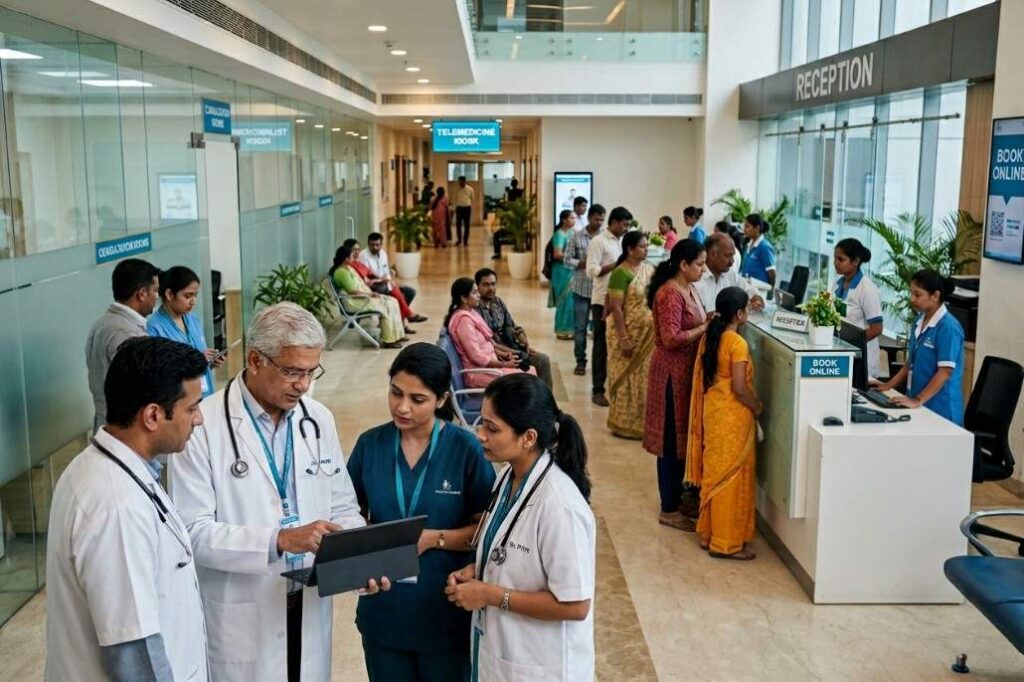
10 Patient Acquisition Strategies Every Private Hospital in India Must Implement in 2026 Private hospitals across India are spending more on marketing than ever before — and many are seeing diminishing returns. The problem is not the budget. It is the absence of a structured patient acquisition strategy India’s competitive healthcare market now demands. Paid ads without follow-through, websites without trust signals, and referral networks left unmaintained are quietly draining resources. This post outlines ten strategies that actually move the needle — built on what works in Indian healthcare, not imported theory. Why Patient Acquisition Has Become Harder for Private Hospitals A decade ago, a good location and a visible signboard were enough to sustain a private hospital. That era is over. Patients today research before they visit. They read Google reviews, compare specialists, check websites, and ask on WhatsApp groups before making an appointment. The patient acquisition cost hospital owners are absorbing has risen sharply — not because patients are harder to reach, but because more hospitals are chasing the same patient with similar messaging and no differentiation. The clinics and hospitals that are growing are the ones that have moved from random marketing activity to a deliberate, trackable acquisition system. The Strategic Framework Behind Effective Patient Acquisition Chitra Baskar’s approach to patient acquisition strategy India is built on a simple diagnostic: before adding new channels, audit what is already leaking. Most hospitals lose patients at three predictable points — during the first online search, during the first call or walk-in attempt, and after the first visit. Plugging these leaks before scaling acquisition spend is the highest-leverage move available to any hospital or clinic. The framework operates across four layers: Visibility — Can the right patients find you when they search? Credibility — When they find you, do they trust what they see? Conversion — Is booking an appointment frictionless? Retention — Are first-time patients becoming repeat visitors? How to reduce patient acquisition cost in India is not a media buying question. It is a systems question. Hospitals that fix conversion and retention reduce their dependence on paid acquisition over time — and that is where sustainable growth lives. Patient footfall increase hospital results follow naturally when all four layers are working together, not in isolation. 10 Patient Acquisition Strategies to Implement in 2026 Optimise your Google Business Profile. This is the single highest-return, zero-cost action most hospitals have not completed. Accurate hours, updated photos, and consistent responses to reviews directly influence local search rankings. Build condition-specific landing pages. Generic hospital websites do not convert. Pages built around specific conditions — “knee replacement Chennai” or “diabetic care Coimbatore” — attract patients with high intent. Create a structured referral programme with local GPs. Physician referral networks remain one of the strongest patient acquisition strategies for private doctors India has produced. A formal, maintained programme outperforms informal goodwill every time. Use WhatsApp for appointment reminders and follow-ups. The majority of your patients are reachable on WhatsApp. A simple, permission-based communication sequence for appointment reminders reduces no-shows and increases revisits. Publish condition-specific content regularly. Educational content — blog posts, short videos, health tips — builds organic search visibility and positions your specialists as credible voices before a patient even books. Respond to every online review within 48 hours. Review response rate and quality influence both patient trust and Google ranking. This takes ten minutes a day and compounds significantly over months. Train your front desk as a conversion team. The number of patients lost between a first phone inquiry and a confirmed appointment is consistently underestimated. Front desk training focused on communication and booking conversion is measurable and impactful. Run targeted local campaigns, not broad ones. Healthcare lead generation India works best when geographically precise. A 5-kilometre radius campaign targeting the right demographic outperforms a city-wide spend for most private hospitals. Implement a post-discharge follow-up call protocol. A structured call 48 to 72 hours after discharge improves patient satisfaction, generates referrals, and surfaces issues before they become negative reviews. Track acquisition by channel, not just total footfall. Without channel-level data, hospitals cannot identify what is working. Even a basic CRM or intake form asking “how did you hear about us” provides the insight needed to allocate spend intelligently. Mistakes That Make Acquisition More Expensive Than It Should Be Spending on ads before fixing the website. Paid traffic sent to a slow, unclear, or untrustworthy website is wasted spend. The website must convert before acquisition budgets are scaled. Ignoring existing patients as an acquisition channel. A satisfied patient who refers two family members costs far less than a cold lead from digital advertising. Most hospitals underinvest in the retention and referral layer entirely. Measuring footfall instead of revenue per patient. High footfall with low revenue per visit signals a case-mix or pricing problem, not an acquisition success. Track the right metrics. Build the System Before Scaling the Spend A patient acquisition strategy India’s private hospitals can rely on is not built in a campaign — it is built in a system. The ten strategies above are most effective when implemented in sequence, not simultaneously. If you are looking to build patient acquisition for clinics India that is measurable, cost-efficient, and sustainable, connect with Chitra Baskar on LinkedIn or book a discovery call. A focused conversation often reveals the two or three changes that unlock meaningful growth.
Patient Journey Optimization — The Framework Behind India’s Fastest-Growing Clinics
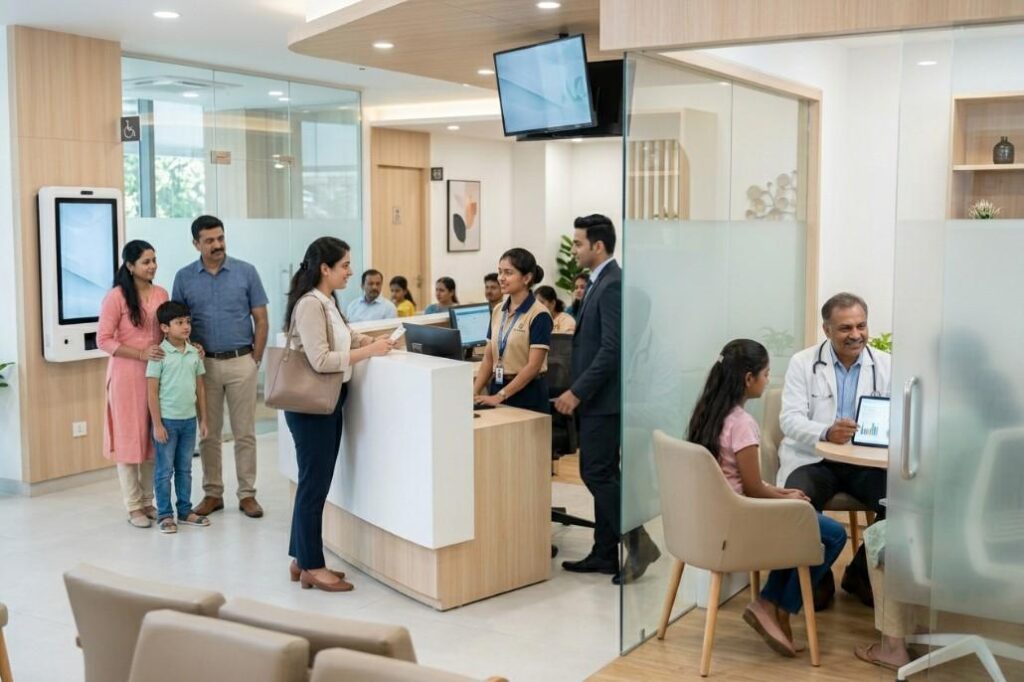
Patient Journey Optimization — The Framework Behind India’s Fastest-Growing Clinics A clinic can have excellent doctors, a clean facility, and a visible location — and still watch patients walk out without booking a follow-up. The gap is rarely clinical. It is experiential. Patient journey consulting exists precisely to close that gap: to map every touchpoint a patient encounters, identify where trust breaks down, and rebuild those moments into ones that convert first-time visitors into long-term patients. This post breaks down the framework that is quietly driving growth for private clinics across India. Why Clinics With Good Doctors Still Struggle to Grow The assumption most clinic founders make is that clinical quality drives growth. It does — but only up to a point. Beyond that point, growth is determined by experience, not expertise. A patient in Chennai or Coimbatore does not choose a specialist solely on credentials. They choose based on how easy it was to book an appointment, how long they waited, whether the front desk made them feel seen, and whether they received a follow-up call. Each of these is a patient acquisition strategy India’s growing clinics have quietly mastered — while others rely on word of mouth and hope. The hard truth is that most clinics lose patients not because of bad outcomes, but because of friction — small, fixable friction that nobody has mapped out or taken ownership of. The Patient Journey Framework Chitra Baskar Uses With Clients Effective patient journey consulting begins with a structured audit of five stages every patient moves through: Awareness — How did the patient first hear about the clinic? Was the online presence clear, credible, and easy to find? Consideration — What did they see when they searched? Reviews, website, social proof — all of this shapes trust before the first visit. First Visit — From parking to registration to consultation to billing, every step either builds or erodes confidence. Post-Visit — Did they receive discharge instructions clearly? Was there a follow-up call? Did someone check if they had questions? Retention and Referral — What brings them back, and what makes them recommend the clinic to family? Most clinics invest heavily in Stage 1 — marketing and visibility — while leaving Stages 3, 4, and 5 entirely to chance. Patient journey mapping for hospitals India must cover all five stages to deliver measurable results. An OPD footfall increase strategy India that focuses only on new patient acquisition without fixing the retention gap is like filling a leaking bucket. The numbers improve temporarily, then plateau. What Clinics Can Do to Improve Their Patient Journey Right Now Map your current journey before assuming what is broken. Walk through your clinic as a patient would — from Google search to post-visit follow-up. Document every step. Most clinic owners are surprised by what they find. Fix your front desk before you fix your marketing. The front desk is the highest-impact, lowest-investment improvement most clinics can make. Training on communication, empathy, and basic workflow management changes the patient experience immediately. Create a structured follow-up protocol. A simple call or WhatsApp message 48 hours after a visit dramatically improves patient satisfaction scores and return visit rates. Very few private clinics in India do this consistently. Audit your digital touchpoints. Your Google Business Profile, website contact page, and appointment booking process should require zero effort from the patient. If they have to call three times to book, many will not. Measure what matters. Track OPD revisit rates, referral sources, and patient feedback scores monthly. Without measurement, improvement is guesswork. Patient acquisition strategies for private doctors India that are data-informed consistently outperform those that are not. Mistakes That Undermine Patient Journey Efforts Treating patient experience as a one-time project. Journey optimisation is not a rebrand or a training day. It requires ongoing monitoring, quarterly reviews, and a designated owner within the clinic team. Investing in digital marketing before fixing offline experience. Bringing more patients through the door into a broken experience accelerates negative word of mouth. Fix the journey first, then scale the acquisition. Assuming all patients have the same journey. A new mother, a senior citizen managing a chronic condition, and a working professional in their thirties all move through a clinic differently. Segmenting the journey by patient profile reveals friction points that a generic audit misses entirely. The Clinics That Grow Are the Ones That Map First Patient journey consulting is not about making clinics feel warmer. It is about building systems that turn first visits into lifetime relationships — and lifetime relationships into a referral engine. If you want to understand how patient journey mapping for hospitals India could apply to your specific clinic context, connect with Chitra Baskar on LinkedIn or book a discovery call. The insight from a structured conversation often reveals more than months of internal guesswork.
Why Most Private Hospitals in India Struggle to Grow Beyond One Location
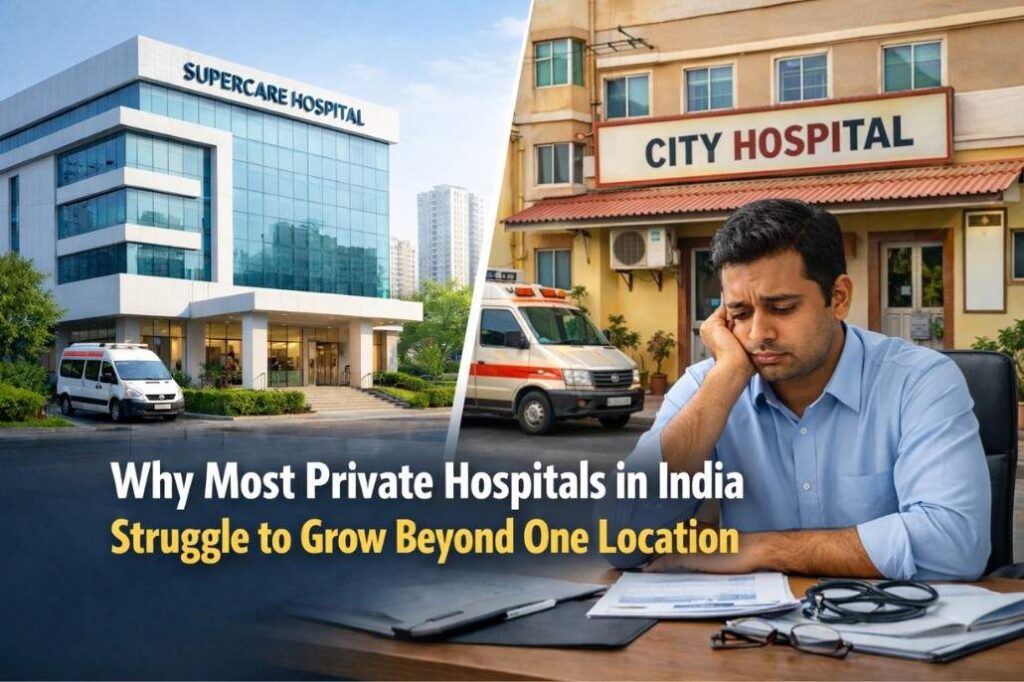
Why Most Private Hospitals in India Struggle to Grow Beyond One Location You built a hospital that works. Patients trust you. Your OPD is full, your staff is settled, and the numbers make sense. So why does the idea of opening a second location feel like stepping into fog? For most private hospital owners and clinic founders across India, multi-site clinic expansion India is not a question of ambition — it is a question of knowing exactly what breaks when you try to scale, and why so many get it wrong before they even open the second door. The Hidden Ceiling Most Hospital Owners Don’t See Coming India’s private healthcare sector is growing, but growth at one location and growth across locations are two entirely different disciplines. A 2023 report by FICCI noted that nearly 70% of private hospitals in India are single-location facilities, and a significant number that attempt expansion either stall mid-way or revert within three years. The reasons are rarely about money alone. The real ceiling is operational — built from systems, people, and processes that were never designed to be replicated. What works in your flagship location works because of you: your presence, your relationships, your judgment calls made daily. A hospital growth strategy India must account for this reality from day one. Most owners discover this only after signing a lease for the second site. The Framework That Actually Drives Sustainable Multi-Location Growth Chitra Baskar’s approach to healthcare growth strategy India begins with a question most consultants skip: Is your first location expansion-ready, or just operationally surviving? There is a meaningful difference between a hospital that runs well and one that is built to be replicated. Expansion readiness requires four pillars to be in place before a second site is considered: Documented clinical and operational protocols — not just practiced ones A leadership pipeline — middle managers who can make decisions independently A brand identity that patients associate with the system, not just the founder Revenue streams that are not founder-dependent — referrals, digital presence, and community trust built at an institutional level For healthcare growth consultants for multi-site expansion India, this diagnostic phase is non-negotiable. Skipping it is the single most common reason second locations underperform. The second part of the framework addresses market selection. Tier 2 cities in India present significant opportunity, but they come with distinct patient behaviour, payer patterns, and competitive dynamics. A clinic expansion strategy for Tier 2 cities India must be calibrated — not copied from the metro playbook. What Hospital Owners Can Do Right Now If you are planning your second or third location, here are concrete steps to take before committing capital: Run a replication audit on your first site. Document every process that currently lives in someone’s head. If your operations cannot be written down clearly, they cannot be taught to a new team. Identify your location-independent revenue drivers. What brings patients in without your personal referral network? If the answer is unclear, the second site will face the same vacuum. Build your second-site leadership team at least 12 months before launch. Training a new team inside an already-operating facility is far more effective than onboarding them into a new one under pressure. Commission a demand and competition study for each shortlisted location. In India, a 15-kilometre distance between two cities can mean entirely different patient expectations. Do not assume. Validate. 5. Create a phased expansion plan with defined go/no-go milestones. How to expand a hospital to multiple locations in India requires discipline — not just enthusiasm. Set measurable checkpoints and honour them. Mistakes That Cost Hospitals More Than Money Replicating the brand before replicating the systems. A second location with the same name but inconsistent patient experience damages both sites. Brand extension only works when operations are standardised first. Hiring for the new site without investing in the existing team. Expansion creates anxiety in your current staff. Ignored, that anxiety becomes attrition — at precisely the moment you need your strongest people. Underestimating regulatory and compliance timelines. In India, clinical establishment licences, fire NOCs, biomedical waste approvals, and NABH alignment vary by state and city. These timelines are longer than most owners budget for. The Right Move Is a Prepared Move Multi-site clinic expansion India is achievable — but only when the groundwork is honest, the systems are solid, and the strategy is built for Indian healthcare realities, not borrowed from a global playbook. If you are at the stage where expansion feels both necessary and uncertain, that is exactly the right time to pressure-test your plan with an experienced eye. Connect with Chitra Baskar on LinkedIn or book a discovery call to explore what a structured clinic expansion strategy could look like for your organisation.
Why Purpose-Driven Healthcare Consulting Is the Future of Hospital Growth in India
Dear Hospital Owner: Your Clinical Excellence Alone Won’t Grow Your Business — This Will India’s healthcare sector is at a critical inflection point. With rising competition, shifting patient behaviour, and accelerating digital adoption, hospital leaders are under more pressure than ever to scale — and to scale right. Yet, many institutions are growing without a clear direction, and the cracks are beginning to show. Healthcare consulting in India is evolving rapidly. The most forward-thinking hospitals are no longer asking, “How do we grow?” They are asking, “How do we grow with consistency, credibility, and long-term impact?” This article explores why a structured, values-led consulting approach is becoming the defining factor between hospitals that thrive — and those that merely survive. Section 1: The Real Challenges Facing Indian Hospitals Today The healthcare landscape in India has changed dramatically over the last decade. Urban markets are saturated. Tier-2 and Tier-3 cities are seeing a flood of new entrants. Meanwhile, patients are more informed, more discerning, and significantly harder to retain. The challenges hospital leaders face today are not just clinical — they are strategic: Overdependence on a handful of senior doctors for patient inflow Inconsistent brand presence across digital and offline channels Reactive decision-making driven by short-term revenue pressures Fragmented internal systems that don’t scale Difficulty attracting and retaining quality talent These are structural problems. And structural problems require structural solutions — not one-time fixes. Section 2: Why Traditional Hospital Growth Models Are Failing For decades, Indian hospitals grew on the strength of clinical reputation and word-of-mouth referrals. A reputed surgeon, a loyal GP network, and a well-located facility were enough to sustain a steady patient flow. That model is no longer sufficient. Today, over 75% of patients in India search online before choosing a doctor or hospital. They read reviews, compare facilities, check doctor profiles, and evaluate credibility — all before making a single phone call. If your hospital is not visible, credible, and consistent online, you are losing patients to competitors who are. Traditional growth models also tend to be reactive. Hospitals expand when occupancy is high, hire when departments are overwhelmed, and market when patient numbers drop. This cycle creates instability — and makes sustainable scaling nearly impossible. The shift required is from reactive management to proactive strategy. Section 3: What Purpose-Driven Healthcare Consulting Actually Means Purpose-driven consulting is not about philosophy. It is about precision. It means clearly defining what your hospital stands for, who it serves, and what makes it genuinely different — and then building every system, every team, and every patient touchpoint around that clarity. When a hospital operates with this kind of strategic alignment, the results are measurable: stronger patient trust, better staff retention, more consistent revenue, and a brand that stands out in a crowded market. Chitra Baskar, a healthcare business strategist with over 30 years of experience and engagements with 500+ hospitals across India, has developed a consulting framework built on exactly this principle — translating institutional values into operational velocity. Section 4: The 4-Pillar Framework for Sustainable Hospital Growth Pillar 1: Strategic Clarity Every high-performing hospital has a clear answer to three questions: What do we stand for? Who do we primarily serve? How are we meaningfully different from our nearest competitor? Without these answers, marketing becomes noise, hiring becomes inconsistent, and expansion becomes a gamble. Strategic clarity is the foundation on which everything else is built. Pillar 2: Trust-Led Patient Acquisition Modern patient acquisition is not about advertising spend — it is about trust architecture. This includes: A strong, search-optimized digital presence (website, Google Business Profile, local SEO) Individual doctor branding and thought leadership content Online reputation management through reviews and patient testimonials Community engagement that builds familiarity before a patient ever needs care Patients choose hospitals they recognise and trust. Building that trust systematically — not episodically — is what separates consistent performers from inconsistent ones. Pillar 3: Operational Structuring Growth without operational readiness leads to a poor patient experience — which directly damages reputation and retention. Scalable operational systems include structured patient flow protocols, internal coordination frameworks, performance dashboards, and service standardization across departments. These systems reduce dependence on individuals, improve consistency, and create the infrastructure that makes expansion viable. Pillar 4: Expansion Readiness Expansion — whether a new department, a second facility, or a corporate wellness vertical — must be planned, not improvised. Expansion readiness involves financial modelling, partnership structures, regulatory preparedness, and leadership bandwidth assessment. Hospitals that approach growth this way move faster and fail less often. Section 5: Digital Transformation and the New Patient Journey The patient journey no longer begins at your reception. It begins on Google. A patient experiencing chest discomfort does not immediately call a hospital. They search symptoms, read articles, check doctor credentials, and scan reviews. By the time they make contact, they have often already made a shortlist. This shift demands that hospitals invest in: Local SEO and Google Business optimization to appear in “near me” searches AI-driven content marketing that answers patient questions and builds search authority Doctor profile pages that are informative, credible, and regularly updated Social proof systems — reviews, case highlights, and patient education content Hospitals that understand the online-first decision-making behaviour of modern patients and build their digital presence accordingly will consistently outperform those that don’t. Section 6: Diagnostics and Accreditation — Underused Growth Drivers The diagnostics segment in India is growing rapidly, but competition is intensifying at the same pace. Sustainable differentiation here comes not from equipment alone, but from trust, quality, and structured partnerships with referring doctors and hospitals. Accreditations like NABH and NABL deserve particular attention. Most hospitals treat them as compliance exercises. The smarter approach is to position them as strategic assets — markers of quality that justify premium pricing, enable corporate and insurance tie-ups, and build institutional credibility that marketing alone cannot achieve. An accredited facility signals to patients, partners, and insurers: this institution holds itself to a standard. Section 7: Leadership Is the Ultimate Growth Variable Infrastructure can
Strategic CSR Partnership Facilitation for Sankara Eye Hospital
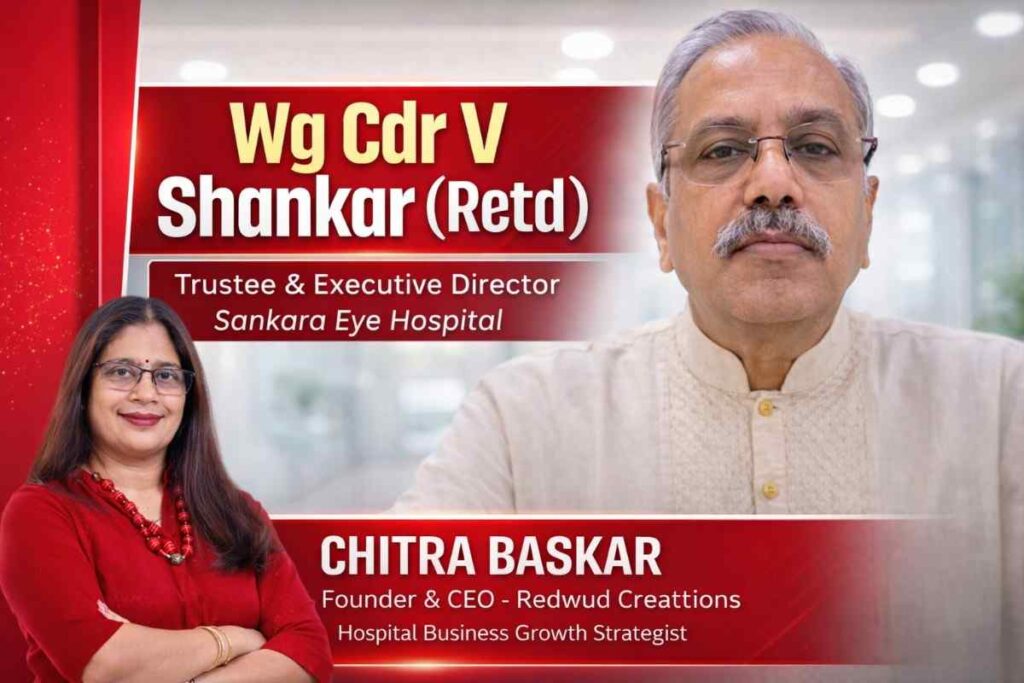
Strategic CSR Partnership Facilitation for Sankara Eye Hospital CLIENT: Sankara Eye Hospital CORPORATE PARTNER: Indian Oil Corporation Limited (IOCL) INVESTMENT SECURED: ₹60+ Lakh Equipment Grant CONSULTANT: Chitra Baskar, Founder & CEO, Red Wud Creations EXECUTIVE SUMMARY Sankara Eye Hospital needed critical equipment funding exceeding available capital. Through strategic corporate partnership facilitation, I connected the hospital with IOCL’s CSR program, securing ₹60+ lakhs in equipment grants. This demonstrates how 30 years of healthcare expertise, corporate network access, and PSU navigation create funding opportunities traditional approaches miss. KEY RESULTS: ₹60+ Lakh equipment grant secured | 100% approval success | Fast-tracked implementation | Zero financial burden | Enhanced patient care capacity THE CHALLENGE Sankara Eye Hospital identified essential equipment needs to expand patient care capabilities, but capital requirements exceeded available reserves. The hospital needed a strategic corporate partner willing to invest through CSR initiatives—specifically requiring navigation of PSU bureaucracy and approval processes. IOCL, one of India’s largest PSUs, maintains CSR commitments aligned with healthcare infrastructure. However, accessing PSU funding requires understanding complex processes, rigorous evaluation criteria, and established decision-maker relationships. STRATEGIC APPROACH PROACTIVE ENGAGEMENT: I initiated conversation with Sankara leadership asking, “Do you have any requirement for any equipment?” This proactive approach enabled rapid proposal development and demonstrated genuine partnership mentality. STRATEGIC MATCHING: Drawing on three decades of corporate relationships, I identified IOCL as an ideal partner. My network provided direct access to decision-makers, bypassing typical PSU barriers. PARTNERSHIP FACILITATION: I connected Sankara leadership with IOCL CSR decision-makers, positioning this as strategic partnership creating measurable community health impact. I clarified evaluation criteria, explained PSU processes, and maintained momentum through approval stages. PROPOSAL EXCELLENCE: We developed comprehensive proposals meeting IOCL’s criteria while articulating patient care impact, emphasizing community health outcomes and strategic infrastructure investment. APPROVAL NAVIGATION: Hospital leadership initially expressed skepticism about PSU approval: “I was rather skeptical that IOCL being a PSU, whether CSR would be forthcoming very easily.” My PSU expertise and IOCL relationships enabled faster approval than expected. https://www.youtube.com/shorts/3iJV-ypDv24 EXPERTISE DEMONSTRATED Six distinctive competencies drove this success: CORPORATE NETWORK ACCESS: 30 years building PSU relationships created direct access to IOCL decision-makers impossible through standard channels. STRATEGIC ALIGNMENT: Understanding both healthcare operations and corporate CSR frameworks enabled identifying partnership opportunities others miss. PSU NAVIGATION: Experience with bureaucracy transformed obstacles into milestones, surprising hospital leadership with approval speed. PROACTIVE CREATION: Active engagement identified funding before crises emerged, creating unexpected value. PROPOSAL EXCELLENCE: Crafting compelling proposals aligning healthcare needs with corporate objectives while meeting rigorous criteria. INFRASTRUCTURE KNOWLEDGE: Three decades with hospitals provides understanding of equipment needs and strategic priorities. CLIENT TESTIMONIAL “I want to place on record my sincere acknowledgement and appreciation for the help rendered by Chitra Baskar, who introduced us to IOCL and that resulted in CSR support of equipment worth 60 plus lakhs. This came out of the blue because I was not expecting anything and it was Chitra who asked me whether we have any requirement for any equipment. I was rather skeptical that IOCL being a PSU, whether CSR would be forthcoming very easily, but I was rather pleasantly surprised when the proposal was not only accepted but has moved forward to approval and the equipment is being procured as we speak. It was great assistance from her side and I truly on behalf of Sankara Eye Hospital, would like to say a sincere thank you.” — Wg Cdr V Shankar (Retd), Trustee & Executive Director, Sankara Eye Hospital MEASURABLE IMPACT FINANCIAL: ₹60+ lakh secured without depleting operational reserves—exceptional ROI on consulting investment. OPERATIONAL: Enhanced patient care through improved diagnostics, treatment effectiveness, and throughput. STRATEGIC: Template established for future corporate partnerships, creating sustainable funding pathway. PROCESS: Fast-tracked approval despite bureaucratic complexity, reducing administrative burden. RELATIONSHIPS: Strengthened organizational credibility and consultant reputation for measurable results. THE CHITRA BASKAR DIFFERENCE Unlike typical healthcare marketing consultants focused on patient acquisition and digital campaigns, my expertise creates strategic value through corporate partnership facilitation, infrastructure funding, and PSU navigation. Thirty years of relationship capital provides decision-maker access and credibility that accelerates partnerships. My proactive approach creates unexpected opportunities rather than reactive solutions—delivering tangible results: ₹60+ lakh secured, approved, and implemented. ABOUT CHITRA BASKAR Founder & CEO, Red Wud Creations | Healthcare Marketing Expert | Hospital Growth & Turnaround Specialist With 30 years transforming healthcare brands and facilitating strategic growth, Chitra Baskar combines vision with implementation expertise. Her corporate network, healthcare operations understanding, and proven partnership track record help organizations access funding and achieve growth traditional marketing cannot address. Areas of Expertise: Strategic CSR Partnership Facilitation & Corporate Relationship Development Hospital Equipment Funding & Capital Acquisition Strategy PSU Navigation & Government Healthcare Program Engagement Healthcare Brand Development & Market Leadership Positioning Hospital Turnaround Strategy & Operational Excellence Contact : 98408 29042 © 2026 Chitra Baskar. All rights reserved. This case study represents actual results achieved through strategic consulting services. Testimonial provided voluntarily without compensation.
The Survival Blueprint: How Marketing Innovation and Financial Discipline Shape SHCO Sustainability
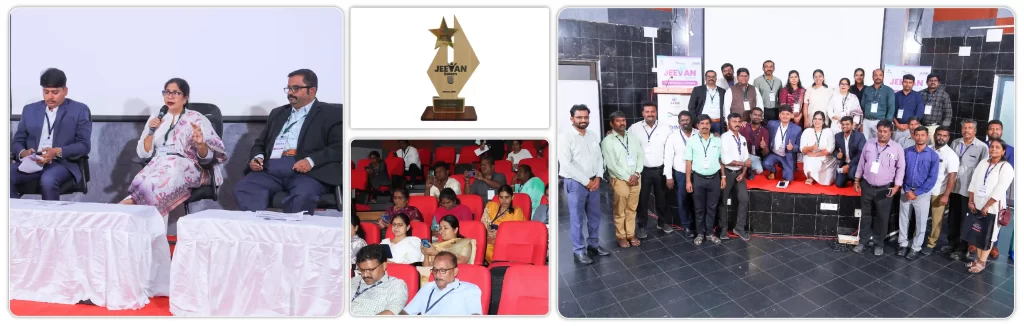
When I stepped onto the stage at VIMS Hospital in Salem on January 24th as the moderator for the panel discussion on “Marketing Nuances and Financial Management Shape SHCO’s Sustainability,” I was acutely aware of the weight this topic carries. Standalone Healthcare Organizations across India are facing what I’d call an existential paradox—they’re needed more than ever, yet their survival has never been more uncertain. After three decades of working with healthcare organizations through periods of growth, crisis, and transformation, I’ve witnessed firsthand how the right combination of strategic marketing and financial acumen can mean the difference between thriving and merely surviving. This panel discussion, featuring distinguished healthcare leaders R. Srinivasan Ramachandran from BCC Healthcare Branding and Venkatesh K K from VIMS Salem, brought these critical issues into sharp focus. The SHCO Crisis Nobody Talks About Enough Let’s be direct about something the healthcare industry often discusses in hushed tones: standalone healthcare organizations are struggling. While corporate hospital chains expand aggressively and capture headlines with multi-billion dollar valuations, smaller independent hospitals face mounting pressures that threaten their very existence. The numbers tell a sobering story. India’s healthcare market continues explosive growth, projected to reach over six hundred thirty-eight billion dollars by the end of this fiscal year. Yet this growth isn’t distributed evenly. Private hospitals are adding over four thousand beds with investments exceeding eleven thousand five hundred crore rupees—but the majority of this expansion comes from large corporate chains targeting tier-two and tier-three cities, the very markets where standalone hospitals have traditionally dominated. For standalone facilities, the challenge isn’t simply competing with larger organizations on resources or brand recognition. It’s navigating a fundamentally transformed healthcare landscape where patient expectations, regulatory requirements, technology adoption, and financial pressures have all intensified simultaneously. These organizations often lack the corporate infrastructure, capital reserves, and economies of scale that their larger competitors leverage as competitive advantages. Where Marketing Meets Financial Reality The central question our panel explored cuts to the heart of healthcare management: Can strategic marketing and disciplined financial management create a sustainable pathway for standalone healthcare organizations? The answer, I’ve learned through decades of experience, is an unequivocal yes—but only when both functions work in genuine integration rather than operating as separate departmental silos. Too often, I encounter healthcare organizations where marketing operates as a cost center focused primarily on promotional activities, while finance functions as a gatekeeper restricting spending. This adversarial dynamic creates organizational paralysis precisely when agility and strategic alignment matter most. Effective healthcare marketing isn’t about glossy advertisements or expensive campaigns. It’s about understanding your patient population deeply, communicating genuine value propositions clearly, and building trust that translates into patient loyalty and advocacy. For standalone hospitals, these marketing fundamentals become even more critical because their competitive advantage rarely comes from superior technology or infrastructure—it comes from relationships, accessibility, and personalized care that larger institutions struggle to replicate. The Patient Has Evolved—Have We? One of the most striking transformations in healthcare over the past decade involves how patients make decisions about where to seek care. The traditional model where patients passively accepted doctor referrals or relied solely on proximity has given way to healthcare consumerism, where informed patients actively research, compare, and select providers based on multiple criteria. Recent data shows that over seventy-five percent of urban internet users in India will access online health services by this year. Patients are reading online reviews, comparing treatment costs, evaluating facility amenities, and seeking transparency about outcomes before ever walking through hospital doors. This shift fundamentally changes what effective marketing means for healthcare organizations. For standalone hospitals, this evolution presents both challenge and opportunity. The challenge comes from limited digital infrastructure and marketing expertise compared to corporate chains with dedicated digital teams. The opportunity lies in the authentic patient relationships and community trust that smaller organizations build more naturally than large institutional brands. During our panel discussion, we explored how standalone facilities can leverage these inherent advantages through strategic marketing that emphasizes what makes them distinctive: personalized physician relationships, faster service delivery, flexibility in care approaches, and genuine community engagement. These aren’t just marketing messages—they’re authentic value propositions that resonate deeply with patients who feel like numbers in larger hospital systems. Financial Sustainability Beyond Survival Mode While marketing attracts patients, financial management determines whether an organization can deliver on its promises while remaining viable. The financial pressures facing standalone healthcare organizations in India have intensified dramatically in recent years. Research examining private hospitals operating under government insurance schemes reveals that facilities can achieve breakeven within four years and sustain profitability thereafter—but only with strategic financial planning, operational efficiency, and appropriate revenue diversification. The initial years require careful capital management, as profit margins may not meet expectations while infrastructure investments are amortized. The challenge becomes more complex when considering reimbursement rates from insurance schemes that often fall below the actual cost of care. Many standalone hospitals initially priced their packages well below cost, and while subsequent revisions have addressed some gaps, the decentralized nature of healthcare governance limits uniform application of these corrections across states. For standalone organizations, financial sustainability requires moving beyond reactive cost-cutting toward proactive revenue optimization. This means strategic service line development based on community needs and institutional capabilities, disciplined pricing strategies that reflect value rather than simply undercutting competitors, and operational excellence that reduces waste without compromising quality. The Integration Imperative What emerged most powerfully from our panel discussion was the recognition that marketing and financial management cannot function effectively in isolation. Sustainable healthcare organizations integrate these functions into a cohesive strategic framework where marketing decisions inform financial planning and financial realities shape marketing strategies. Consider a common scenario: A standalone hospital identifies an opportunity to develop a specialized cardiology program. The marketing perspective might focus on competitive gaps and patient demand in the catchment area. The financial perspective examines capital requirements, reimbursement rates, and expected patient volumes needed for profitability. Neither perspective alone provides sufficient basis for decision-making. True integration means analyzing this opportunity through a unified
Navigating the Future: Key Takeaways from the National Conference on Healthcare and Hospital Management Trends
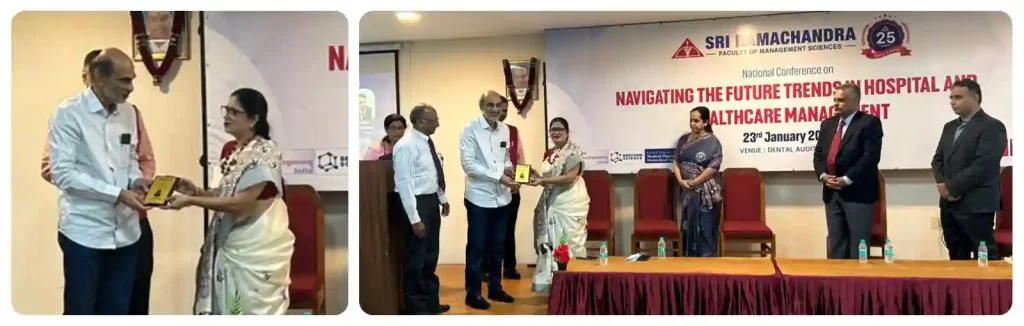
The healthcare landscape is undergoing unprecedented transformation. As I recently had the honor of attending the National Conference on “Navigating the Future Trends in Hospital and Healthcare Management” at Sri Ramachandra Faculty of Management Sciences, I was struck by the convergence of visionary thinking, practical innovation, and collaborative leadership that defined the event. This gathering of academicians, industry leaders, and healthcare professionals illuminated the path forward for healthcare delivery in an era defined by technological disruption, evolving patient expectations, and systemic challenges. Here are the critical insights and trends that emerged from this transformative conference. The Digital Transformation Imperative Healthcare organizations can no longer treat digital transformation as a future consideration—it has become an immediate necessity. During the conference, discussions consistently highlighted how healthcare lags behind industries like retail and finance in adopting digital technologies. Many systems still rely on outdated workflows, fax machines, and manual processes that compromise both efficiency and patient care quality. The integration of artificial intelligence and machine learning represents perhaps the most transformative shift in healthcare management. Current implementations demonstrate AI’s capacity to enhance diagnostic accuracy, optimize resource allocation, and predict patient outcomes with remarkable precision. Healthcare administrators now face the challenge of governing AI implementation while balancing innovation with risk management and data security. Remote patient monitoring through wearables and digital health platforms emerged as a permanent fixture in care delivery models. These technologies enable continuous tracking of vital signs and health indicators, particularly beneficial for patients managing chronic conditions like diabetes and hypertension. The global telehealth market continues expanding at approximately twenty-five percent annually, driven by patient demand for convenient, accessible healthcare services. Value-Based Care: Redefining Healthcare Delivery The transition from volume-based to value-based care models represents a fundamental shift in how healthcare organizations operate and how leaders must think strategically. This model emphasizes quality outcomes over service quantity, promoting preventive care, early intervention, and wellness initiatives that ultimately reduce total healthcare expenditures while improving patient satisfaction. For healthcare managers and administrators, this shift requires sophisticated data analytics capabilities to measure patient outcomes accurately, track performance metrics, and demonstrate value delivery. Organizations must develop comprehensive data management systems that capture real-time patient information while ensuring regulatory compliance and data security. Leadership in Crisis: Addressing Workforce Challenges One of the most pressing concerns discussed at the conference centered on workforce sustainability and leadership retention. Current data reveals that approximately forty-six percent of healthcare executives plan to leave their organizations within twelve months—a staggering statistic that demands immediate attention from healthcare leaders. The root causes extend beyond compensation issues. Organizational culture emerged as the primary factor influencing leadership retention, cited by forty-four percent of respondents overall and fifty-two percent of C-suite executives. Healthcare organizations must prioritize creating positive work environments, fostering strong colleague relationships, and providing clear career advancement pathways. Clinician burnout and staff shortages continue challenging healthcare systems globally. Forward-thinking leaders are implementing innovative approaches including mental health support programs, flexible work arrangements, and virtual nursing models that enable remote clinical work possibilities. Generative AI and automation technologies offer promising solutions, potentially reducing revenue cycle staff workload by half and giving bedside nurses twenty percent more time for direct patient care. https://www.youtube.com/watch?v=q2T3COg5YRM Interoperability and Data Excellence The conference emphasized that seamless data exchange across healthcare systems has become critical for improving patient access and care quality. Healthcare administrators must focus on creating unified patient records accessible across care settings, enhancing real-time data sharing for faster decision-making, and implementing patient portals with integrated scheduling, billing, and medical history access. Organizations that excel in data analytics can identify performance gaps, strengthen risk stratification, and enable proactive interventions that reduce costs while improving outcomes. Predictive analytics helps healthcare leaders spot high-risk patients earlier, allocate resources more effectively, and make evidence-based strategic decisions. Patient-Centric Innovation and Consumerism The healthcare consumer landscape is fragmenting into distinct segments requiring tailored approaches. Organizations must deliver personalized, technology-enabled experiences for tech-savvy consumers while ensuring affordable digital care for mainstream populations and partnering with communities to support under-resourced patients. Younger generations are leading the shift toward nontraditional care delivery models. More than forty percent of millennials and Gen Z individuals now utilize virtual visits, reflecting changing expectations around healthcare accessibility and convenience. Healthcare leaders must adapt their strategies to meet these evolving preferences while maintaining care quality and accessibility across all patient demographics. Cybersecurity: The Non-Negotiable Priority Recent high-profile cyberattacks have underscored the critical importance of robust digital security measures. Healthcare systems must invest in proactive security infrastructure, real-time monitoring capabilities, and comprehensive regulatory compliance to protect sensitive patient data and maintain uninterrupted care delivery. Strong cybersecurity implementations not only protect organizations from devastating breaches but also increase patient trust and engagement. Healthcare leaders must view cybersecurity as a foundational element of operational excellence rather than a technical afterthought. The Path Forward: Strategic Imperatives for Healthcare Leaders As we navigate these transformative trends, several strategic imperatives emerged from the conference discussions: Embrace Continuous Learning: Healthcare management requires leaders who proactively expand their knowledge and skills, staying current with emerging trends and innovations. This commitment to ongoing education enables leaders to anticipate future changes and prepare their organizations effectively. Foster Adaptive Leadership: The ability to respond swiftly to regulatory changes, public health crises, and shifting patient needs defines successful healthcare leadership in 2025. Adaptive leaders encourage innovation cultures where experimentation and learning from failure are valued. Invest in Technology Thoughtfully: While technology offers transformative possibilities, implementation requires careful governance, staff training, and alignment with organizational goals. Leaders must balance enthusiasm for innovation with practical considerations around integration, compliance, and user adoption. Prioritize Organizational Culture: The most successful healthcare organizations will be those that create environments where staff feel valued, supported, and connected to meaningful work. Culture cannot be an afterthought—it must be a strategic priority for retention and performance. Build Strategic Partnerships: The complexity of modern healthcare demands collaboration across traditional boundaries. Partnerships with technology companies, pharmaceutical firms, academic institutions, and community organizations will be essential for delivering comprehensive, coordinated care. Reflections on