


Patient Referral Programs That Work for Indian Hospitals — A Practical Guide
Patient Referral Programs That Work for Indian Hospitals — A Practical Guide Word-of-mouth has always driven patient decisions in India — but most hospitals leave it entirely to chance. A well-designed patient referral program for hospitals India can transform an informal trust network into a structured, measurable growth channel. Yet the majority of hospital owners and clinic founders have no formal system in place. This guide breaks down what an effective referral program looks like, why most attempts fail, and what it takes to build one that consistently delivers new patients. Why Most Indian Hospitals Do Not Have a Working Referral System Referrals happen at every hospital — the problem is that they are untracked, unmanaged, and unrecognised. A patient recommends a specialist to a neighbour. A general physician sends cases to a surgeon. Neither interaction is recorded, acknowledged, or nurtured. This is a significant gap in patient acquisition strategy India hospitals cannot afford to ignore. In Tier 1 cities, digital advertising costs are rising sharply. In Tier 2 cities, trust still drives decisions more than search rankings. In both markets, a referral from a known source carries more conversion weight than any paid campaign. The challenge is not that referrals do not exist — it is that hospitals have no infrastructure to capture, track, or grow them. Chitra Baskar’s Framework for Building a Referral Program That Holds A referral program is not a WhatsApp group for doctors or a discount coupon for patients. It is a structured system with defined pathways, clear communication, and consistent follow-through. Chitra Baskar’s approach separates referral strategy into two distinct channels — each requiring its own design. Channel 1: Doctor-to-Doctor Referrals This is the highest-value referral channel for most Indian hospitals, particularly for surgical specialties and tertiary care. Building it requires: Identifying the top 20 general physicians and specialists in your catchment area who are already referring — and those who should be. Creating a formal engagement programme — not just visits, but value exchange. CMEs, clinical updates, and case discussion forums build trust over time. Establishing a feedback loop. Referring doctors need timely updates on patients they send. When that loop breaks, referrals stop. A structured doctor referral program strategy India hospitals implement must go beyond relationship management — it needs accountability and tracking built in. Channel 2: Patient-to-Patient Referrals Satisfied patients are an underutilised asset. Building a healthcare lead generation India channel through patient referrals requires a different approach — one focused on experience, not incentives alone. Hospitals that perform well here do three things consistently: they follow up with patients post-discharge, they make sharing easy (through digital reviews or direct referral prompts), and they recognise and acknowledge patients who refer others. How to build a patient referral network for hospitals in India starts with identifying your highest-satisfaction touchpoints and creating structured moments to ask for referrals at those points. Four Steps to Launch Your Referral Programme Step 1: Audit your current referral sources. Before building anything new, map where your existing patients come from. What percentage arrived through a doctor referral? A patient recommendation? This baseline shapes your strategy. Step 2: Assign referral ownership. Referral programmes fail when no one owns them. Designate a specific person — a marketing manager, patient relations executive, or business development lead — responsible for programme execution and reporting. Step 3: Build the tracking infrastructure. Every referral must be recorded at registration. Whether through your HMS, a CRM, or a simple structured register, data capture is non-negotiable. You cannot grow what you cannot measure. Step 4: Create a recognition system. For doctors, timely clinical communication and professional acknowledgement matter more than gifts. For patients, a simple thank-you call or a note goes further than most hospitals expect. To increase hospital footfall through referrals India-based hospitals must move from transactional thinking to relationship thinking. Mistakes That Undermine Referral Programmes Launching without a tracking system. Many hospitals announce a referral initiative, distribute materials, and then have no way to measure outcomes. Without data, the programme quietly dies. Treating all referral sources the same. A general physician referring 15 patients a month needs a different engagement approach than a patient who referred one friend. Segmenting by referral value allows for proportionate effort and investment. Focusing only on acquisition, not retention. A referred patient who has a poor experience does not refer others — they actively warn people away. Referral strategy and patient experience strategy are inseparable. Referrals Are a System, Not a Coincidence A strong patient referral program for hospitals India does not build itself — it requires design, ownership, and consistent execution across both clinical and operational teams. The hospitals that get this right create a compounding growth channel that paid marketing cannot replicate. If you are ready to build or strengthen your referral network and want a practical implementation plan, Chitra Baskar works with hospital owners and clinic founders across India to design referral systems that generate measurable patient footfall. Connect with her on LinkedIn or book a discovery call — and take the first step toward a structured approach to how to build a patient referral network for hospitals in India. What does a healthcare business growth consultant do? A healthcare business growth consultant helps hospitals, clinics, and healthcare entrepreneurs identify revenue gaps, streamline operations, build leadership capacity, and create clear, actionable strategies to grow their organisation sustainably and profitably. Why do healthcare businesses in India need a growth consultant? India’s healthcare sector is competitive and rapidly evolving. Many providers have clinical excellence but lack the business strategy, systems, and leadership structures to scale. A specialist consultant bridges that gap — delivering growth without compromising patient care quality. Who is Chitra Baskar? Chitra Baskar is a healthcare business growth consultant based in India, working with hospitals, clinic owners, and healthcare entrepreneurs to scale revenue, build strong teams, and create future-ready healthcare organisations through personalised strategy and executive coaching. What services does Chitra Baskar offer? Chitra Baskar offers revenue growth strategy, hospital business consulting, brand positioning,
The Hospital Revenue Growth Checklist — 12 Areas Every Indian Hospital CEO Must Audit
The Hospital Revenue Growth Checklist — 12 Areas Every Indian Hospital CEO Must Audit Revenue does not always disappear through a single large gap — it leaks quietly, across departments, through systems that were never designed to retain it. For most private hospitals in India, a structured hospital revenue growth strategy is not a luxury; it is an overdue operational necessity. This checklist identifies the 12 areas where revenue is most commonly lost, and what every hospital CEO needs to examine before the next financial quarter begins. Indian Private Hospitals Are Growing — But Profitability Is Not Keeping Pace Patient volumes at Indian private hospitals have increased steadily over the past decade. Yet many CEOs, managing directors, and CFOs report that margins remain under pressure despite higher footfall. The disconnect is not accidental. It reflects structural gaps in how revenue is tracked, managed, and protected across the hospital system. Billing delays, underutilised departments, poor payer mix, and fragmented patient pathways collectively drain millions in recoverable revenue each year. A seasoned hospital operations consultant India-based leadership teams rely on will confirm this pattern consistently — the problem is rarely clinical. It is architectural. The 12-Point Hospital Revenue Growth Framework Chitra Baskar, a Chennai-based healthcare growth consultant India hospitals have trusted for over 30 years, uses a structured 12-point audit to identify and close revenue gaps. The framework cuts across clinical operations, commercial strategy, and financial management. Here are the 12 areas every CEO must audit: OPD Revenue Utilisation — Slot efficiency, follow-up conversion, and no-show rates. Inpatient Bed Occupancy — Occupancy percentage, average length of stay, and payor mix balance. Specialty Department Profitability — Which departments generate profit and which consume it without returns. Revenue Cycle Management — Claim submission speed, rejection rates, and collections lag. Tariff and Pricing Alignment — Are procedure rates benchmarked against comparable Indian private hospitals? Surgical and Wellness Package Design — Are bundles structured to drive volume without margin erosion? Pharmacy and Diagnostics Contribution — In-house revenue centres tracked separately for net contribution. TPA and Empanelment Profitability — Which corporate and insurance tie-ups are net positive after costs? Specialist Productivity Tracking — Individual consultant revenue contribution reviewed monthly. Digital Booking and No-Show Management — Appointment conversion and reminder systems audited. Patient Retention Metrics — Returning patient ratio and chronic care programme engagement. Referral Ecosystem Strength — GP, specialist, and community referral channels systematically nurtured. This is the foundation of hospital revenue optimization strategies for private hospitals — not a cost-cutting exercise, but a structured value recovery effort. Working with a hospital revenue cycle consultant India-based teams engage can accelerate results significantly when internal bandwidth is limited. How to Apply This Audit Without Disrupting Operations Knowing the 12 areas is one thing. Acting on them within a functioning hospital is another. Here is how to begin without overwhelming your leadership team. Start with your top three revenue gaps. Run a quick internal assessment across all 12 areas. Identify the three with the highest potential revenue recovery and address those first. Momentum matters more than perfection. Assign a named owner to each area. Without ownership, audit findings sit in reports. Each of the 12 areas should have a designated lead responsible for monthly updates. Set a 90-day review cycle. This framework is not a one-time project. Quarterly reviews keep revenue performance visible at the leadership level and create accountability across departments. Separate revenue growth from cost reduction. Understanding how to increase hospital revenue in India requires a different mindset than managing expenses. Both matter, but conflating them leads to decisions that cut capacity rather than build it. Three Mistakes That Undermine Hospital Revenue Audits Treating revenue cycle as the only problem. Billing and collections are important — but they are downstream. If pricing, package design, or occupancy management is broken, fixing billing alone delivers limited results. Leaving revenue strategy to finance alone. A hospital revenue growth strategy must involve clinical leadership, department heads, and operations — not just the CFO. Siloed reviews produce incomplete findings. Auditing once and moving on. A single audit creates a snapshot. Without a regular review cadence and leadership accountability, most findings are forgotten within 60 days. Revenue gaps reopen quickly. The Gap Is Recoverable — With the Right Lens Most Indian private hospitals have significant revenue sitting in plain sight, recoverable with the right structure and leadership focus. A 12-point audit is the starting point — not the finish line. If your hospital is ready to apply a focused hospital revenue growth strategy tailored to your specific context, Chitra Baskar offers strategic consulting for CEOs, MDs, and CFOs at private hospitals across India. Connect with her on LinkedIn or book a discovery call — and begin the conversation that closes your hospital’s revenue gap with a trusted hospital revenue cycle consultant India healthcare leaders rely on. What does a healthcare business growth consultant do? A healthcare business growth consultant helps hospitals, clinics, and healthcare entrepreneurs identify revenue gaps, streamline operations, build leadership capacity, and create clear, actionable strategies to grow their organisation sustainably and profitably. Why do healthcare businesses in India need a growth consultant? India’s healthcare sector is competitive and rapidly evolving. Many providers have clinical excellence but lack the business strategy, systems, and leadership structures to scale. A specialist consultant bridges that gap — delivering growth without compromising patient care quality. Who is Chitra Baskar? Chitra Baskar is a healthcare business growth consultant based in India, working with hospitals, clinic owners, and healthcare entrepreneurs to scale revenue, build strong teams, and create future-ready healthcare organisations through personalised strategy and executive coaching. What services does Chitra Baskar offer? Chitra Baskar offers revenue growth strategy, hospital business consulting, brand positioning, leadership and executive coaching, operational excellence frameworks, strategic business planning, and healthcare startup mentoring for clients across India. A healthcare business growth consultant helps hospitals, clinics, and healthcare entrepreneurs identify revenue gaps, streamline operations, build leadership capacity, and create clear, actionable strategies to grow their organisation sustainably and profitably. India’s healthcare sector
Is Your Healthcare Business Growing as Fast as It Should Be?

Is Your Healthcare Business Growing as Fast as It Should Be? India’s healthcare industry is projected to reach $638 billion by 2026 — making it one of the largest and fastest-growing sectors in the world. Hospitals are expanding. New clinics are launching every week. Healthcare startups are attracting serious investment. And yet, a large number of healthcare businesses across India are quietly struggling with the same challenge: they’re clinically excellent but operationally stuck. Great doctors don’t always make great business leaders. And that’s not a criticism — it’s simply a gap that the right guidance can close. As a dedicated healthcare business growth consultant in India, I work with hospitals, clinics, and healthcare entrepreneurs to bridge exactly that gap — turning strong clinical practices into thriving, scalable businesses. The Real Reason Healthcare Businesses Stop Growing Most healthcare businesses don’t stall because of poor patient care. They stall because of avoidable business problems — unclear positioning, revenue leakages, weak leadership pipelines, unscalable processes, and a complete absence of a structured growth strategy. 68% of Indian hospitals lack a formal business growth strategy 3x faster revenue growth with structured business consulting The healthcare leaders I work with across India — from solo practitioners in Tier 2 cities to CMOs of large hospital groups — share a common realisation: clinical skill alone doesn’t scale a business. Strategy does. “Most healthcare entrepreneurs are so deep in patient care that they never get the time — or the outside perspective — to work on their business instead of just in it.” How I Help Healthcare Businesses Grow My consulting approach is built on one principle: growth that is sustainable, ethical, and rooted in your unique strengths. No cookie-cutter frameworks — every engagement is built around your specific challenges, market position, and goals. Revenue Growth Strategy Hospital Business Consulting Brand Positioning & Differentiation Leadership Coaching & Team Building Operational Excellence Healthcare Startup Mentoring Strategic Business Planning Executive 1-on-1 Coaching Whether you need a complete business growth roadmap, a revenue audit to plug leakages, or hands-on leadership coaching to build a high-performing team — I bring both the strategic frameworks and the healthcare industry depth to make it happen. Who This Is For My clients span the full spectrum of India’s healthcare landscape — and they all share one thing: the ambition to grow, and the wisdom to know they need the right partner to do it faster. I work with hospital founders and CMDs looking to scale from single-unit to multi-location; clinic owners and specialist practitioners building beyond their personal brand; healthcare entrepreneurs and startups navigating their first serious scale-up; and senior healthcare executives preparing for their next leadership leap. If you’re anywhere in that spectrum and you’re based in Chennai, Mumbai, Bangalore, Hyderabad, Delhi — or anywhere across India — this conversation is for you. Your Growth Partner in India’s Healthcare Sector Healthcare in India is at an inflection point. The opportunity has never been bigger — but neither has the complexity. The leaders who will win the next decade aren’t just the best clinicians. They’re the ones who combine clinical credibility with sharp business thinking, strong teams, and a clear strategy for growth. That’s exactly what I help you build. If your healthcare business is ready to move from survival mode to scale mode — let’s start that conversation today. Ready to Scale Your Healthcare Business? Book a free discovery call with Chitra Baskar and get clarity on your single biggest growth opportunity — in 30 minutes. Book Your Free Discovery Call → Frequently Asked Questions What does a healthcare business growth consultant do? A healthcare business growth consultant helps hospitals, clinics, and healthcare entrepreneurs identify revenue gaps, streamline operations, build leadership capacity, and create clear, actionable strategies to grow their organisation sustainably and profitably. Why do healthcare businesses in India need a growth consultant? India’s healthcare sector is competitive and rapidly evolving. Many providers have clinical excellence but lack the business strategy, systems, and leadership structures to scale. A specialist consultant bridges that gap — delivering growth without compromising patient care quality. Who is Chitra Baskar? Chitra Baskar is a healthcare business growth consultant based in India, working with hospitals, clinic owners, and healthcare entrepreneurs to scale revenue, build strong teams, and create future-ready healthcare organisations through personalised strategy and executive coaching. What services does Chitra Baskar offer? Chitra Baskar offers revenue growth strategy, hospital business consulting, brand positioning, leadership and executive coaching, operational excellence frameworks, strategic business planning, and healthcare startup mentoring for clients across India. A healthcare business growth consultant helps hospitals, clinics, and healthcare entrepreneurs identify revenue gaps, streamline operations, build leadership capacity, and create clear, actionable strategies to grow their organisation sustainably and profitably. India’s healthcare sector is competitive and rapidly evolving. Many providers have clinical excellence but lack the business strategy, systems, and leadership structures to scale. A specialist consultant bridges that gap — delivering growth without compromising patient care quality. Chitra Baskar is a healthcare business growth consultant based in India, working with hospitals, clinic owners, and healthcare entrepreneurs to scale revenue, build strong teams, and create future-ready healthcare organisations through personalised strategy and executive coaching. Chitra Baskar offers revenue growth strategy, hospital business consulting, brand positioning, leadership and executive coaching, operational excellence frameworks, strategic business planning, and healthcare startup mentoring for clients across India.
Lessons in Healthcare Branding from India’s Largest Hospital Network
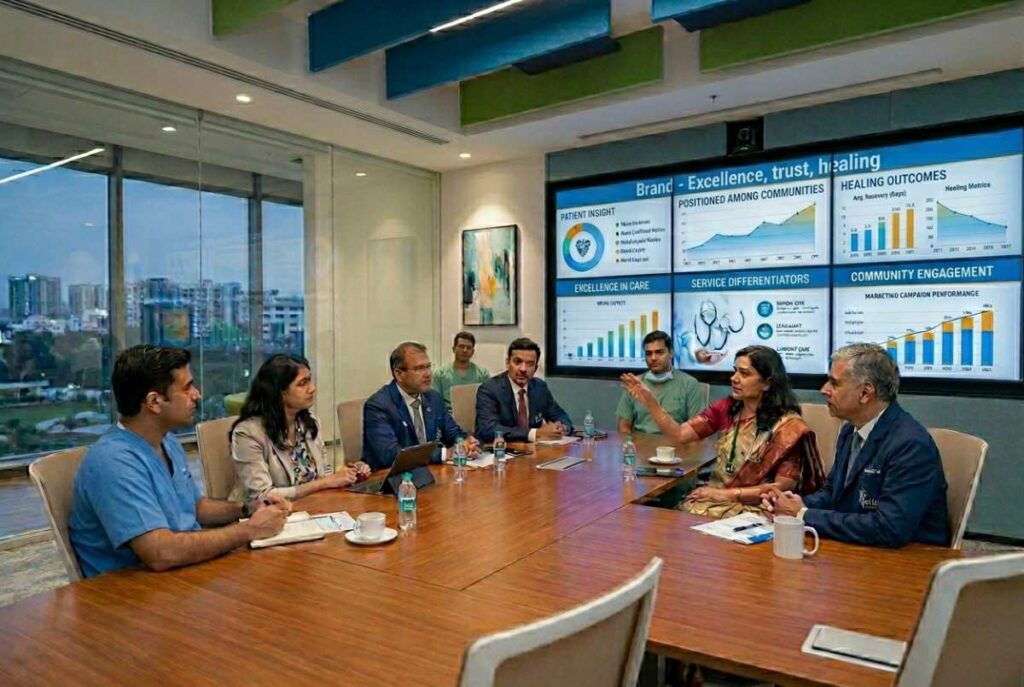
Lessons in Healthcare Branding from India’s Largest Hospital Network Most private hospital owners think of branding as a logo, a tagline, or a social media page. Apollo Hospitals built something far more powerful — a name that patients trust before they walk through the door. That gap between a visual identity and a brand that commands trust is precisely where most mid-size Indian hospitals lose ground. Understanding what drives that gap — and how to close it — is the work of a skilled hospital branding consultant in India. Why Healthcare Branding Remains Misunderstood in India Despite years of growth in private healthcare, healthcare branding in India is still largely cosmetic. Hospitals invest in new websites and hoardings, but the underlying brand — what patients feel, expect, and say about you — is left to chance. The result is a market where clinical quality is often comparable across competing hospitals, but patient preference is wildly uneven. Patients travel further, pay more, and wait longer for a brand they trust. For hospitals that have not built that trust deliberately, every new competitor is a threat. This is not a problem unique to smaller hospitals. Even well-established regional players find themselves losing patients to newer facilities that have invested in brand positioning from day one. What Apollo Got Right — And What It Really Means for Your Hospital Chitra Baskar spent years working within the Apollo ecosystem, observing how brand decisions were made at scale. The lessons are transferable — but only if understood correctly. Apollo did not build its brand through advertising alone. It built it through consistency across four dimensions: Clinical credibility made visible. Apollo invested in technology, specialists, and accreditations — and then communicated those investments clearly. Patients did not have to guess whether the hospital was serious. The evidence was everywhere. A unified patient experience. From the first phone call to post-discharge follow-up, the experience felt considered. Staff behaviour, signage, billing clarity, and communication all reflected the same standard. This is what private hospital marketing in India rarely addresses — the experience behind the message. A clear promise, consistently kept. Apollo’s brand promise around advanced care and expert specialists was not just a headline. It was operationalised. Patients who came expecting that promise received it, and they told others. Local trust within a national framework. Each Apollo facility served its local market while drawing on the credibility of the national brand. For independent hospitals, the equivalent is building deep community trust through consistency — not scale. For those developing a hospital branding strategy for Indian private hospitals, these four dimensions are the framework. Not all of them require large budgets. Most require discipline and strategic clarity. How Mid-Size Hospitals Can Apply These Principles Translating Apollo-level brand thinking into a 100-bed or 200-bed private hospital requires adaptation, not imitation. Here is what that looks like practically: Define your brand promise with specificity. “Quality care” is not a brand promise — it is a baseline expectation. What does your hospital do better than anyone else in your catchment area? That answer is the foundation of your positioning. Audit the experience against the promise. Walk through your hospital as a patient would. Does the experience match what your marketing communicates? Gaps between promise and delivery are where brands erode quietly. Train staff as brand ambassadors. Every interaction a patient has — with a nurse, a billing executive, a security guard — is a brand moment. Hospital marketing strategy in India that ignores frontline staff behaviour will always underperform. Build visible proof of clinical credibility. Accreditations, specialist credentials, outcomes data, and patient testimonials all signal trustworthiness. Make this information easy to find, both online and inside your facility. Be consistent over time. Brands are built through repetition. A campaign that runs for three months and stops does less than a modest but consistent presence over three years. Mistakes That Undermine Hospital Branding Efforts Confusing marketing spend with brand building. Paid advertising generates awareness. Brand building generates trust. They are not the same, and one cannot substitute for the other. Rebranding without fixing the underlying experience. A new logo on top of a poor patient experience accelerates distrust, not recovery. Brand work must begin on the inside. Trying to appeal to everyone. Hospitals that position themselves as everything to everyone end up meaning nothing to anyone. The most effective brands in Indian healthcare own a specific space in the patient’s mind — whether that is affordability, specialisation, or community care. Brand trust is not built in a quarter. It is built through hundreds of consistent decisions made over time — about how patients are treated, how care is communicated, and how promises are kept. For hospital owners looking to understand how to position a hospital in a local market the way Apollo does nationally, the starting point is always clarity — on who you serve, what you stand for, and whether your daily operations reflect that. If you are ready to explore what that looks like for your hospital, connect with Chitra Baskar on LinkedIn or reach out to schedule a conversation.
Hiring a Healthcare Consultant in India — A Hospital Owner’s Complete Guide

Hiring a Healthcare Consultant in India — A Hospital Owner’s Complete Guide Many hospital owners reach out for consulting help only after a crisis — declining OPD numbers, a key doctor leaving, or a new competitor cutting into their patient base. By that point, the cost of delay has already compounded. Engaging the right healthcare consulting services for hospital owners in India at the right time can mean the difference between reactive damage control and proactive, sustainable growth. This guide will help you make that decision with clarity. Why Hospital Owners Struggle to Find the Right Consultant The Indian healthcare consulting market is fragmented and largely unregulated. Anyone with a management degree and a few hospital clients can position themselves as a consultant. For a hospital owner evaluating options, this creates a real problem. How do you distinguish between someone who understands Indian hospital economics, patient behaviour, and regulatory realities — versus someone offering generic frameworks that don’t translate to the ground? The gap is significant. A healthcare growth consultant in India with genuine domain depth will speak the language of NABH preparedness, doctor productivity ratios, outpatient conversion rates, and bed occupancy benchmarks. A generalist will not. Most hospital owners also underestimate how different healthcare consulting is from other business consulting verticals. Healthcare decisions are clinical, emotional, regulatory, and commercial — all at once. A consultant who has not worked inside or alongside Indian hospitals will struggle to offer advice that is actually implementable. What a Good Healthcare Consulting Engagement Actually Looks Like Chitra Baskar’s approach to healthcare consulting is built on one principle: diagnosis before prescription. No two hospitals have identical problems, even when the symptoms look the same. A structured engagement typically moves through three phases: Discovery and Audit — A thorough assessment of the hospital’s current state across patient acquisition, retention, operations, and revenue cycle. This is not a surface-level review. It involves conversations with department heads, analysis of patient data, and an honest look at what is and is not working. Strategy and Roadmap — Based on the audit, a clear, prioritised plan is developed. As a hospital CEO consultant, Chitra works directly with leadership to ensure the roadmap is aligned with the hospital’s capacity, culture, and growth targets. Implementation Support — Strategy without execution support is a report that collects dust. Ongoing advisory, team alignment, and milestone tracking are part of what converts insight into measurable outcomes. For hospital owners researching how to choose a hospital growth consultant in India, this structured approach is a useful benchmark. Ask any consultant you evaluate: do they audit before advising? If the answer is no, that tells you something important. How to Evaluate and Engage Healthcare Consulting Services If you are actively considering a consulting engagement, here is a practical checklist: Verify sector-specific experience. Ask for case studies or examples from hospitals of a similar size, type, or speciality. A consultant who has worked exclusively with corporate chains may not be the right fit for a 50-bed nursing home or a single-speciality clinic. Assess their understanding of Indian patient behaviour. Patient decision-making in India is influenced by family dynamics, cost sensitivity, doctor trust, and word-of-mouth in ways that are distinct from Western markets. Your consultant must understand this. Clarify the engagement model upfront. Is this a project-based engagement or a retainer? Who will you be working with directly — the senior consultant or a junior team? What does accountability look like? Look for a healthcare business consultant based in Chennai or your region. Proximity matters for site visits, team interactions, and understanding local competitive dynamics. A healthcare business consultant in Chennai brings awareness of South Indian healthcare market nuances that a Delhi or Mumbai-based consultant may not. Evaluate communication style. You will work closely with this person. They need to be direct, honest, and capable of delivering uncomfortable insights without damaging the relationship. Assess this in the first conversation. Mistakes Hospital Owners Make When Hiring Consultants Choosing on price alone. The cheapest option rarely delivers the fastest return. Consulting is an investment. Evaluate on fit, experience, and expected outcomes — not just the fee. Hiring a consultant without internal readiness. A consultant can only work with what your team can execute. If your hospital does not have a designated implementation owner on the inside, even the best strategy will stall. Expecting results without engagement. Consulting is collaborative. Hospitals that treat the consultant as an external vendor rather than a strategic partner consistently underperform on outcomes. The right consulting relationship accelerates growth, reduces costly trial-and-error, and brings an outside perspective that internal teams simply cannot replicate. Whether you run a nursing home, a multi-speciality hospital, or a growing clinic, investing in the right healthcare consulting services for hospital owners in India is a strategic decision — not an expense. If you are evaluating options and want to explore whether this is the right fit, connect with Chitra Baskar on LinkedIn or reach out to schedule a no-obligation discovery call. For those specifically looking for a healthcare consultant for nursing homes in India, that conversation is equally welcome.
Reasons Indian Hospitals Lose Patients to Competitors — And How to Stop It
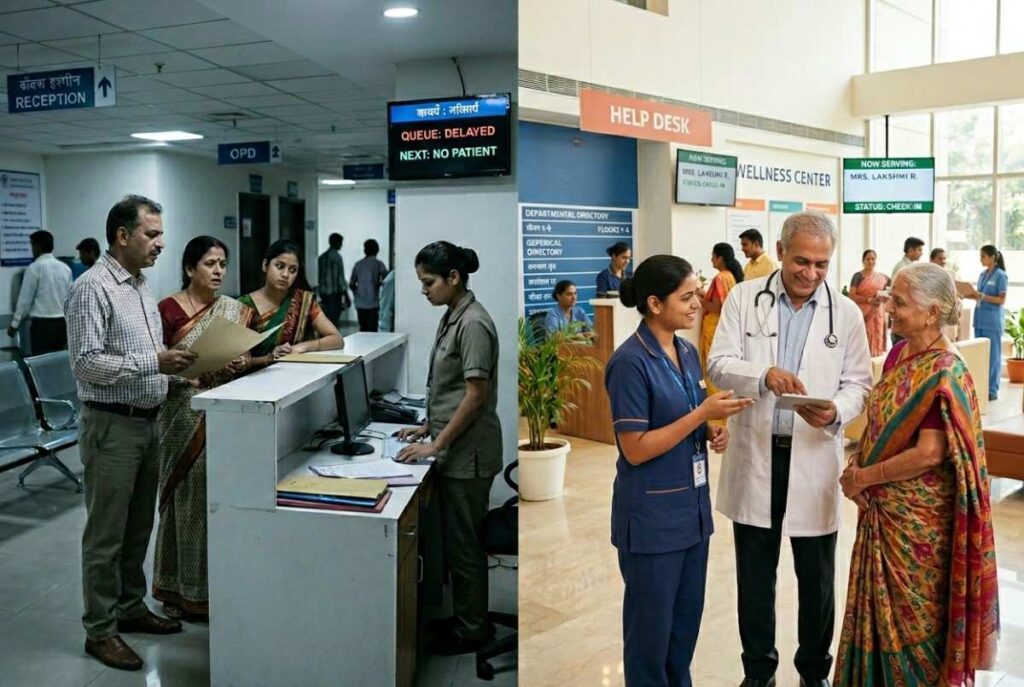
Reasons Indian Hospitals Lose Patients to Competitors — And How to Stop It A patient visits your hospital once, receives good clinical care — and never returns. They go to a competitor for their next consultation, their family member’s surgery, and every follow-up after that. This isn’t uncommon in Indian healthcare. For hospital owners and CEOs, it represents not just lost revenue but a broken relationship. Understanding and implementing effective patient retention strategies for hospitals is no longer optional — it is a business imperative. Why Indian Hospitals Are Losing Patients Without Realising It Most hospital leaders assume patient churn is about clinical outcomes. The reality is more uncomfortable — patients often leave for reasons that have nothing to do with medical quality. Long wait times, unclear billing, indifferent front-desk staff, and zero post-discharge follow-up are driving patients away quietly. They don’t complain. They simply don’t come back. In the current Indian healthcare landscape, patients have more choices than ever before. Tier-2 cities now have multi-speciality options. Corporate hospital chains are expanding aggressively. A poor experience at one touchpoint is enough to send a patient — and their network — to your competitor. This is the core challenge of patient acquisition strategy in India today: acquiring a patient is expensive, but losing them costs far more. The Retention Framework: Where Most Hospitals Get It Wrong Chitra Baskar’s work with hospital owners across India consistently reveals a fundamental gap — hospitals invest heavily in infrastructure and technology, but underinvest in the patient experience ecosystem. Retention is not a single intervention. It is the result of multiple touchpoints working together cohesively. Chitra identifies three layers where hospitals typically fail: The Entry Experience — First impressions at reception, OPD, and inquiry desks set the emotional tone. If patients feel like a number, they disengage immediately. The Clinical Journey — Patients notice how well departments communicate with each other, how clearly doctors explain treatment plans, and whether they feel heard. The Post-Discharge Relationship — This is where most hospitals go completely silent. No follow-up call. No discharge summary in plain language. No reminder for the next visit. As a patient experience consultant working across India, Chitra observes that hospitals which address all three layers consistently outperform competitors on repeat visits and referrals. For those exploring how to retain patients in private hospitals in India, the answer lies in systematising these touchpoints — not leaving them to individual staff initiative. Practical Strategies Hospitals Can Implement Now Closing the retention gap does not require a complete overhaul. It requires deliberate, structured action: Audit your patient journey end-to-end. Map every touchpoint from the first phone call to the third follow-up visit. Identify where patients drop off or report friction. Most hospitals have never done this exercise formally. Train frontline staff as relationship builders. Receptionists, ward attendants, and billing staff interact with patients more than doctors do. Their tone, clarity, and empathy directly influence whether a patient returns. Build a structured follow-up protocol. A call 48 hours post-discharge, a check-in at seven days, and a reminder at 30 days dramatically improves patient loyalty. Automate where possible, but keep the human element for high-value patients. Make billing transparent and explainable. Billing disputes are one of the top reasons patients switch hospitals in India. A dedicated billing counsellor who walks patients through their invoice reduces complaints and builds trust. Capture and act on feedback immediately. Post-visit surveys mean nothing if results sit in a spreadsheet. Assign accountability for resolving negative feedback within 48 hours. Mistakes That Quietly Undermine Retention Efforts Even hospitals that invest in patient experience make avoidable errors: Treating retention as a marketing function alone. Retention is an operations and culture challenge. Marketing can attract patients back, but only if the underlying experience justifies their return. Focusing only on inpatient satisfaction. The bulk of patient volume — and relationship-building — happens in OPD. Hospitals that neglect outpatient experience lose the majority of their potential loyal base. Measuring satisfaction without measuring loyalty. A patient can rate their experience 4 out of 5 and still never return. Track repeat visit rates, referral rates, and lapsed patient reactivation — not just satisfaction scores. Patients today choose hospitals the way they choose any service — based on experience, trust, and how valued they feel. Clinical excellence earns the first visit. Everything else determines whether they return. If your hospital is facing declining repeat visits or rising patient churn, the issue is rarely clinical. It is structural. Implementing focused patient loyalty strategies for Indian hospitals requires an honest look at your systems, your people, and your patient relationships. To explore what a retention audit could reveal about your hospital’s growth gaps, connect with Chitra Baskar on LinkedIn or reach out directly to schedule a discovery conversation.
Specialty Clinic Growth Strategy — What Indian Doctors Need to Know Before Scaling
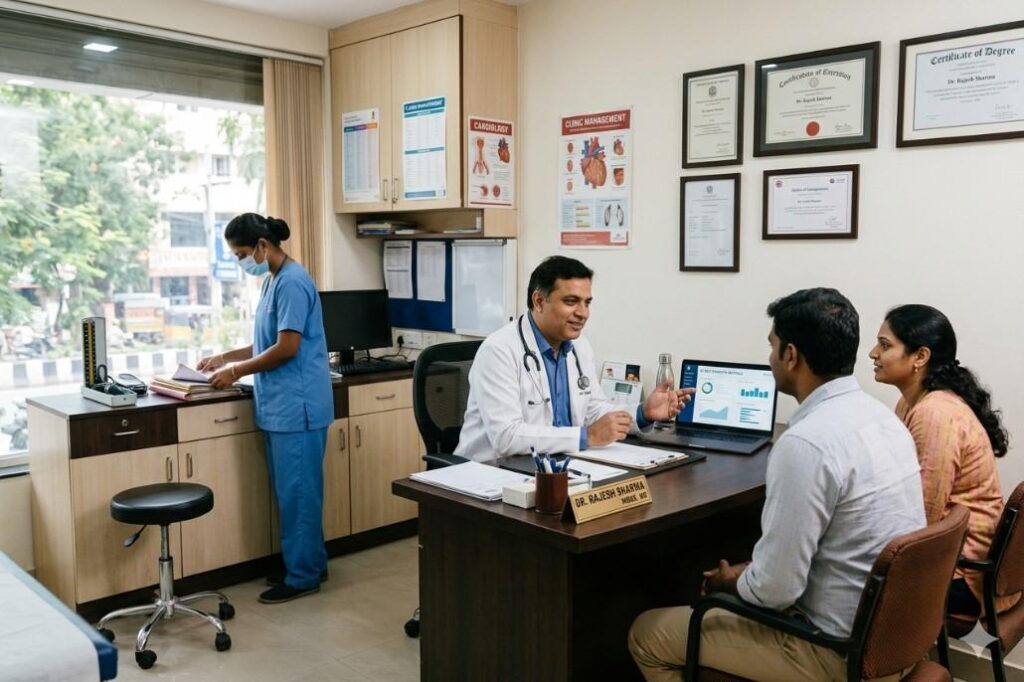
Specialty Clinic Growth Strategy — What Indian Doctors Need to Know Before Scaling Most specialty clinic owners in India reach a familiar ceiling. The practice is busy, patients are satisfied, and the doctor is respected in their field — yet revenue has plateaued, the waiting room is not growing, and scaling feels risky rather than exciting. The missing piece is rarely clinical skill. It is almost always a structured medical practice growth strategy that moves the clinic from personality-dependent to systems-driven growth. Why Specialty Clinics in India Stall After Initial Success The first few years of a specialty clinic often run on reputation, referrals, and the founder’s personal network. That is enough to build a viable practice. It is rarely enough to scale one. The core problem is that most specialist doctors are trained to deliver excellent clinical outcomes — not to build and manage a growing healthcare business. Marketing, patient acquisition, pricing, team development, and brand positioning are disciplines that receive almost no attention in medical education. This gap becomes painfully visible when a clinic growth consultant in India begins working with specialty practices. A dermatology clinic in Bengaluru, a fertility centre in Hyderabad, or an orthopaedic practice in Pune may all have outstanding clinical reputations, yet struggle to articulate what makes them different, how to convert inquiries into appointments, or how to retain patients beyond a single visit. Growth does not happen by working harder. It happens by working on the right things. A Medical Practice Growth Strategy Built for Indian Specialty Clinics Chitra Baskar’s approach to specialty clinic growth is built around three interconnected layers that address the real reasons clinics plateau. The first layer is positioning clarity. Before any marketing or expansion decision, the clinic must answer one question precisely: who is the ideal patient, and why should they choose this clinic over every alternative in the city? Vague answers produce vague results. Specific positioning drives targeted growth. The second layer is a structured patient acquisition system. Understanding how to grow a specialty clinic in India requires moving beyond passive referrals. This means building active referral networks with general practitioners and allied specialists, creating a credible digital presence that ranks for condition-specific searches, and having a defined process for converting inquiries — online and offline — into booked appointments. The third layer is revenue architecture. Many specialty clinics undercharge, over-deliver, and underinvest in retention. A revenue growth framework for Indian clinics examines pricing integrity, service packaging, follow-up protocols, and the lifetime value of each patient relationship. These three layers do not operate independently. A specialty clinic marketing strategy in India works only when positioning, acquisition, and revenue are aligned. Four Actions Specialty Clinic Founders Can Take Right Now Moving from insight to implementation is where most clinic owners struggle. Here are four concrete actions that create measurable momentum. First, audit your current patient acquisition sources. Write down exactly where your new patients come from today — GP referrals, Google searches, word of mouth, social media, or walk-ins. Most owners discover that 80% of their patients come from one or two sources. That is a vulnerability, not a strength. Second, define your clinic’s positioning in one sentence. It should name your specialty, your target patient, and your key differentiator. If it takes a paragraph to explain what makes your clinic different, the message is not yet clear enough to market. Third, build a referral activation plan. Patient acquisition for specialty clinics in India depends heavily on structured GP and specialist referral networks. Identify the top twenty referring doctors in your catchment area and create a deliberate engagement plan — not occasional visits, but consistent, value-driven communication. Fourth, review your follow-up system. How does your clinic engage a patient after their first visit? A structured follow-up protocol — appointment reminders, condition-specific content, satisfaction checks — significantly improves retention and generates organic referrals. Mistakes That Quietly Limit Specialty Clinic Growth Three patterns appear repeatedly among specialty clinics that remain stuck despite genuine clinical excellence. Waiting for word of mouth to do all the work is the first. Organic referrals are valuable but unpredictable. A clinic that has no active acquisition strategy is entirely dependent on variables it cannot control. Copying general hospital marketing is the second. Specialty clinics serve a specific patient segment with specific concerns. Generic healthcare marketing — health tips, festive posts, and awareness days — does not speak to the decision-making process of a patient choosing a fertility specialist or an orthopaedic surgeon. Underinvesting in the post-consultation experience is the third. The patient’s journey does not end when they leave the consultation room. How they are followed up, communicated with, and re-engaged determines whether they return, refer others, and become long-term advocates for the clinic. The Right Strategy Makes Scaling Feel Intentional, Not Accidental A medical practice growth strategy built around your specific specialty, city, and patient profile is the difference between growing on purpose and hoping growth happens. The frameworks exist — the challenge is applying them in the right sequence. If you are ready to build a revenue growth framework for your Indian clinic that is grounded in market reality rather than generic advice, connect with Chitra Baskar on LinkedIn or reach out for a focused strategy conversation. The right starting point is clarity — and that begins with one honest conversation.
Digital Marketing for Hospitals in India — What Actually Works in 2026
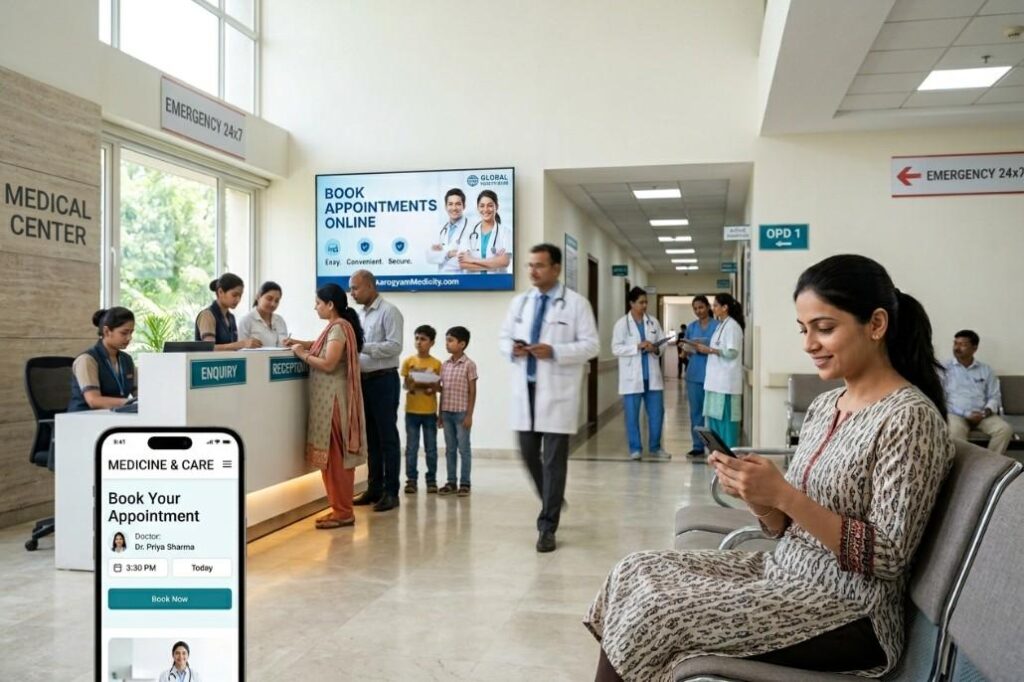
Digital Marketing for Hospitals in India — What Actually Works in 2026 Many private hospitals in India are spending between two and five lakhs a month on digital marketing and seeing little they can measure beyond likes and impressions. The agency sends reports. The numbers look busy. But OPD footfall stays flat. Hospital healthcare digital marketing India has matured significantly — and the gap between what works and what merely looks like work has never been wider. This post cuts through the noise and focuses on what is actually driving results. Why Most Hospital Digital Marketing Spends Underdeliver The core problem is not the channel — it is the strategy. Most digital marketing for doctors and clinics India is built around visibility metrics: followers, reach, and ad impressions. These are easy to report and difficult to connect to revenue. A hospital’s real digital marketing goal is straightforward: the right patient, searching for the right service, finds the hospital, trusts what they see, and books an appointment. Every rupee spent should be evaluated against that chain of events — not against vanity metrics that look good in a monthly slide deck. The secondary problem is generic execution. Hospitals running the same awareness content, the same health tip posts, and the same festive day creatives as every competitor in their city are indistinguishable in the feed. Patients scroll past. The brand registers nothing. The Framework for Digital Marketing That Actually Converts Chitra Baskar’s approach to hospital healthcare digital marketing India separates activity from outcomes. The framework is built on four questions that every hospital marketing team should answer before spending: Are you visible where patients search? Google search — specifically local search and condition-specific search — remains the highest-intent channel for patient acquisition. A well-optimised Google Business Profile and condition-specific landing pages outperform broad social media spend for most private hospitals. Does your digital presence build trust before the first visit? Social media marketing for hospitals India works best when it functions as a trust-building channel, not a promotional one. Specialist introductions, patient education content, and transparent communication about services create credibility that paid ads cannot manufacture. Can a patient book an appointment in under three clicks? If the answer is no, every marketing rupee is leaking at the conversion point. Website speed, mobile optimisation, and a clear appointment pathway are non-negotiable prerequisites for any digital spend. Are you tracking cost per appointment, not cost per click? Healthcare marketing ROI India must be measured at the outcome level. A digital marketing strategy for private hospitals India that cannot answer “how much did this campaign cost per confirmed appointment” is not a strategy — it is activity. How to generate leads for hospitals through digital marketing India is not a complex question once these four foundations are in place. Most hospitals are simply missing one or two of them. What Hospitals Can Do Right Now to Improve Digital Performance Audit your Google Business Profile this week. Confirm that your specialties, hours, photos, and contact details are accurate and complete. Enable messaging. Respond to every review. This single action improves local search visibility at zero cost. Build three to five condition-specific landing pages. Identify your top procedures or specialties and create dedicated pages optimised for how patients actually search — “orthopaedic surgeon Coimbatore” or “diabetic care clinic Chennai.” These pages convert far better than a generic homepage. Shift social media content from promotion to education. Healthcare content marketing India that answers real patient questions — what to expect before a procedure, how to manage a chronic condition, when to see a specialist — builds organic reach and positions specialists as credible voices. Set up a lead tracking system before the next campaign. Every inquiry from digital channels — form submissions, calls, WhatsApp messages — should be logged, tracked, and followed up within two hours. Without this, even well-performing campaigns generate leads that evaporate. Review your ad targeting quarterly. Healthcare audiences in India are highly localised. A campaign that worked in Q1 may be reaching the wrong demographic by Q3 due to audience saturation or seasonal shifts. Regular reviews prevent budget from being quietly wasted. Digital Marketing Mistakes That Cost Indian Hospitals the Most Running paid campaigns without fixing the website first. Paid traffic sent to a slow, unclear, or mobile-unfriendly website is wasted spend. The website must convert before any campaign scales. Outsourcing strategy entirely to a generalist agency. Most digital agencies serving hospitals in India are skilled at execution but not at healthcare strategy. The brief, the messaging, and the outcome definitions must come from within the hospital — or from a consultant who understands the sector. Measuring success monthly instead of quarterly. Digital marketing in healthcare has longer conversion cycles than e-commerce. A patient who sees a specialist introduction video in January may book in March. Monthly reporting creates false negatives that cause hospitals to abandon channels prematurely. Spend Smarter, Not More Hospital healthcare digital marketing India does not require a larger budget — it requires a clearer strategy. The hospitals seeing real returns in 2026 are those that have connected their digital activity to patient outcomes, not just platform metrics. If your current digital spend is not delivering measurable results, a structured review of your digital marketing strategy for private hospitals India could reveal exactly where the gap is. Connect with Chitra Baskar on LinkedIn or book a discovery call to explore what a focused digital strategy could look like for your hospital.
Why Patient Experience Is the #1 Revenue Lever Most Indian Hospitals Ignore
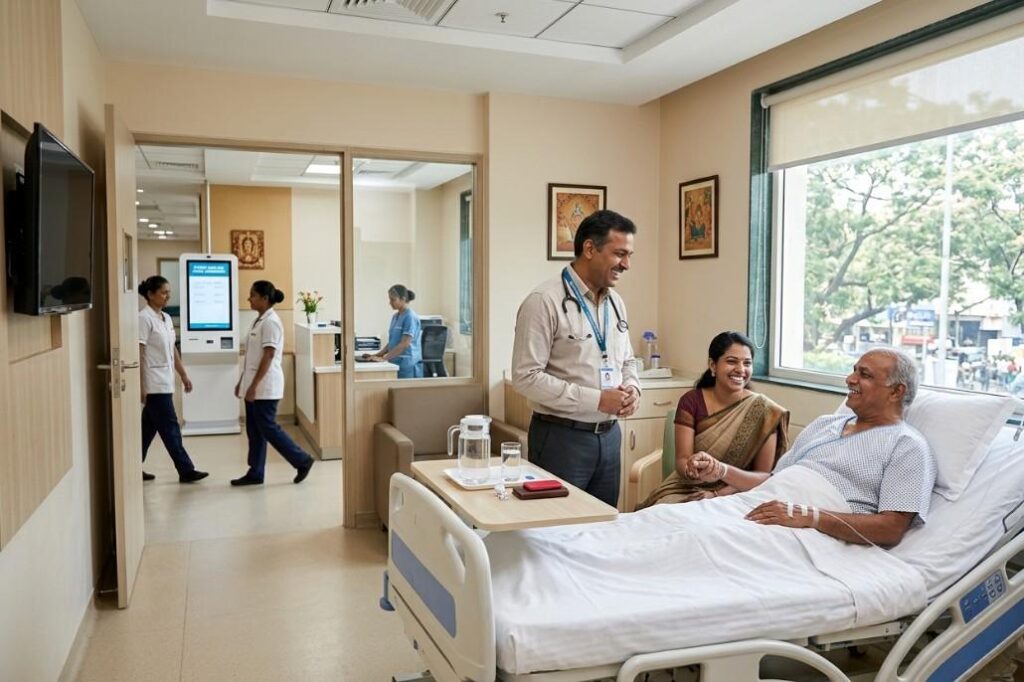
Why Patient Experience Is the #1 Revenue Lever Most Indian Hospitals Ignore A private hospital in Chennai recently invested heavily in a new OPD wing, upgraded equipment, and a digital marketing campaign. Footfall increased. But repeat visits did not. Neither did referrals. The missing variable was not clinical quality or visibility — it was hospital patient satisfaction India’s private sector continues to treat as a soft metric rather than a business driver. This post makes the case for why that thinking is costing hospitals revenue they cannot see on any balance sheet. The Gap Between Clinical Quality and Patient Loyalty Most hospital leaders in India measure success through bed occupancy, OPD numbers, and surgical volumes. Very few track patient loyalty rates, complaint resolution times, or net promoter scores with the same rigour. The result is a recurring pattern: a hospital delivers clinically sound care, yet patients do not return for follow-ups, do not refer family members, and occasionally leave negative reviews that nobody responds to. A patient experience consultant India engages with sees this gap constantly — not in hospitals that are performing poorly, but in hospitals that are performing well clinically and still not growing. The disconnect is structural. Clinical outcomes and patient experience are tracked by different people, reported in different formats, and rarely connected to the same revenue conversation. That separation is where growth stalls. The Framework That Connects Patient Experience to Revenue Chitra Baskar’s approach to hospital patient satisfaction India begins with a financial reframe: every dissatisfied patient who leaves silently represents not just a lost visit, but a lost referral chain. In Indian private healthcare, where word of mouth remains the most trusted channel of patient acquisition, a single dissatisfied patient who shares their experience with five family members or neighbours creates a ripple that no marketing campaign can easily counter. Patient retention strategies for hospitals must account for this multiplier effect — both positive and negative. The framework operates across three revenue-linked dimensions: Complaint capture and resolution speed. Complaints that are resolved within 24 hours have a statistically higher conversion to loyalty than those left unaddressed. Most Indian hospitals have no formal complaint capture system outside of discharge feedback forms — which patients rarely complete honestly. Staff communication quality. How to improve patient experience in Indian hospitals is not primarily a facility question. It is a communication question. The way nurses explain procedures, the way billing staff handle queries, and the way front desk teams greet patients — these micro-interactions determine whether a patient feels cared for or processed. Post-discharge engagement. A patient who receives a follow-up call within 48 hours of discharge is significantly more likely to return and refer. Patient engagement strategies for Indian hospitals that include structured post-visit communication consistently outperform those that do not. What Hospital Leaders Can Do to Turn Experience Into Revenue Install a real-time feedback mechanism. Move beyond discharge forms. A simple WhatsApp or SMS feedback link sent within two hours of a visit captures honest, actionable data while the experience is still fresh. Create a complaint ownership protocol. Every complaint must have a named owner and a resolution deadline. Patient complaint management hospital India consistently shows that patients who have complaints resolved promptly become more loyal than patients who never complained at all. Train clinical and non-clinical staff together. Experience is not just a front desk issue. Nurses, technicians, housekeeping, and billing staff all shape the patient’s perception. Cross-functional training on communication and empathy delivers faster results than siloed interventions. Track patient retention rates monthly. What percentage of your OPD patients return within 90 days? If this number is not being tracked, the hospital is managing revenue without understanding its largest growth lever. Build a structured referral acknowledgement system. When a patient refers someone, acknowledge it. A simple thank-you message or loyalty recognition creates a feedback loop that encourages more referrals — at zero acquisition cost. Mistakes That Quietly Drain Patient Loyalty Treating complaints as exceptions rather than data. Every complaint is a signal. Hospitals that handle complaints case by case, without analysing patterns, miss the systemic fixes that would prevent the same complaint from recurring across hundreds of patients. Measuring hospital patient satisfaction India through exit surveys alone. Exit surveys capture what patients are willing to say on their way out — which is rarely the full picture. Real satisfaction data comes from follow-up calls, online review patterns, and return visit rates combined. Assuming that good clinical outcomes guarantee loyalty. Patients cannot fully evaluate clinical quality. What they can evaluate — and do, consistently — is how they were treated, how long they waited, and whether anyone followed up. Hospitals that conflate clinical excellence with patient satisfaction miss the experience layer entirely. Experience Is Strategy, Not Service Hospital patient satisfaction India is not a hospitality initiative. It is a revenue strategy. The hospitals that understand this are building referral engines, reducing acquisition costs, and growing without proportional increases in marketing spend. If your hospital is experiencing stagnant repeat visits or declining referral volumes, patient trust building strategies India hospitals are using successfully may reveal exactly where the gap is. Connect with Chitra Baskar on LinkedIn or book a discovery call to explore where patient experience could be unlocking revenue your current metrics are not capturing.
How to Build a Healthcare Brand That Patients Trust — A Guide for Indian Hospital Owners
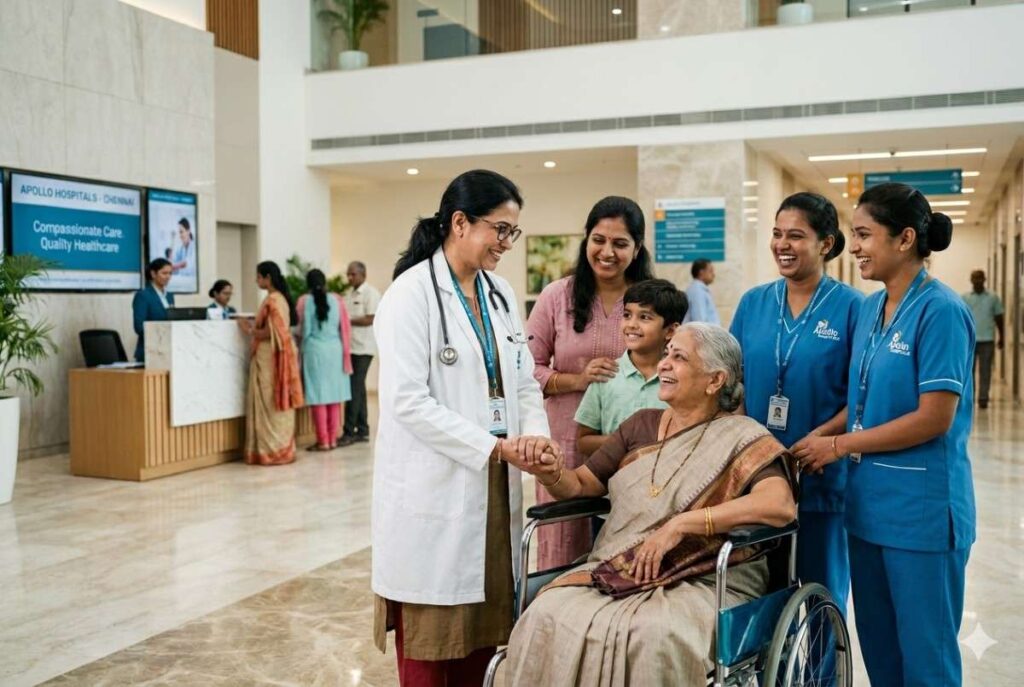
How to Build a Healthcare Brand That Patients Trust — A Guide for Indian Hospital Owners Two hospitals on the same street, with comparable doctors and similar facilities — one is consistently full, the other is not. The difference, more often than not, is brand. Not a logo. Not a tagline. But the accumulated trust a patient feels before they even walk through the door. Healthcare branding India is not a cosmetic exercise. It is the foundation on which patient relationships, referrals, and long-term growth are built. This guide breaks down how to build that foundation deliberately. Why Most New Hospitals and Clinics Struggle With Brand Identity When doctors transition from employment to private practice — or when a family-run hospital decides to grow — the instinct is to focus on clinical readiness first. That is correct. But brand identity is often left entirely to chance: a rushed logo, a basic website, and a Facebook page with irregular posts. The result is a facility that is clinically capable but visually and communicatively indistinct. In a competitive Indian city, where patients have three or four comparable options within a short distance, indistinct does not survive. A hospital branding consultant India engages at this exact juncture — before patterns are set, before the wrong positioning hardens into reputation. The gap between a clinic that fills up organically and one that struggles to retain patients is rarely clinical. It is almost always perceptual. The Framework for Building a Healthcare Brand That Earns Trust Chitra Baskar’s approach to healthcare branding India is built on three core pillars: positioning, consistency, and proof. Each one is necessary. None of them alone is sufficient. Positioning — Know exactly who you serve and what you stand for. A brand that tries to appeal to everyone appeals to no one. For Indian private hospitals, this means making a clear choice: Are you the accessible neighbourhood clinic? The specialist destination? The family healthcare partner? Each positioning requires a different communication strategy, different referral relationships, and different visual identity. Consistency — Every touchpoint must speak the same language. Doctor personal branding India often breaks down here. A well-qualified specialist with a strong online profile sends a completely different signal when their clinic’s reception area is chaotic and the front desk is undertrained. Patients read inconsistency as unreliability. The brand experience must hold across the website, the waiting area, the discharge process, and every digital interaction. Proof — Trust is built through evidence, not assertion. Patient testimonials, documented outcomes, community health initiatives, media visibility, and specialist credentials — these are the building blocks of a hospital branding strategy for Indian private hospitals that actually earns credibility over time. Telling patients you are trustworthy is far less effective than showing them why others already trust you. Practical Steps to Build Your Healthcare Brand in 2026 Define your positioning statement before any design work begins. One clear sentence: who you serve, what you offer, and why it matters to them. Every brand decision flows from this anchor. Audit your current patient touchpoints for consistency. Walk through your own facility and digital presence as a new patient would. Where does the experience feel disjointed? Where does the communication feel unclear? Fix those gaps before investing in brand promotion. Build a credibility layer around your specialists. How to position a hospital in a competitive Indian city often comes down to how well the specialists within it are known and trusted. LinkedIn profiles, published articles, community health talks, and media interviews all contribute to this layer. Invest in your physical environment as a brand signal. Cleanliness, wayfinding, lighting, and the behaviour of your front desk staff communicate far more than any advertisement. Healthcare brand identity for clinics India must account for the offline experience, not just the digital one. Create a content strategy that educates, not just promotes. Condition-specific blog posts, patient FAQs, and health awareness content build organic visibility while positioning your hospital as a credible, helpful resource — not just a service provider. Branding Mistakes That Undermine Patient Trust Changing brand elements too frequently. A new logo every two years, a renamed facility, or a redesigned website that looks completely different from the previous one signals instability. Patients associate consistency with reliability. Letting online reviews go unmanaged. Your Google and Practo reviews are part of your brand. An unresponded negative review is not neutral — it actively erodes trust. Brand management is reputation management. Confusing marketing spend with brand building. Paid ads can drive footfall. They do not build trust. Healthcare branding India is built through consistent experience, visible expertise, and accumulated proof — not campaign budgets. Brand Is What Patients Say When You Are Not in the Room Healthcare branding India, done well, creates a reputation that works independently of your marketing spend. It brings patients in through referrals, holds them through trust, and grows through consistency. If you are a clinic founder or hospital owner building your brand from the ground up, the clearest next step is to start with positioning — and healthcare brand identity for clinics India is exactly where Chitra Baskar’s consulting work begins. Connect with her on LinkedIn or book a discovery call to explore what a brand-first growth strategy could look like for your facility.