Need help now? Call for a same-day consultation



Why Patient Experience Is the #1 Revenue Lever Most Indian Hospitals Ignore
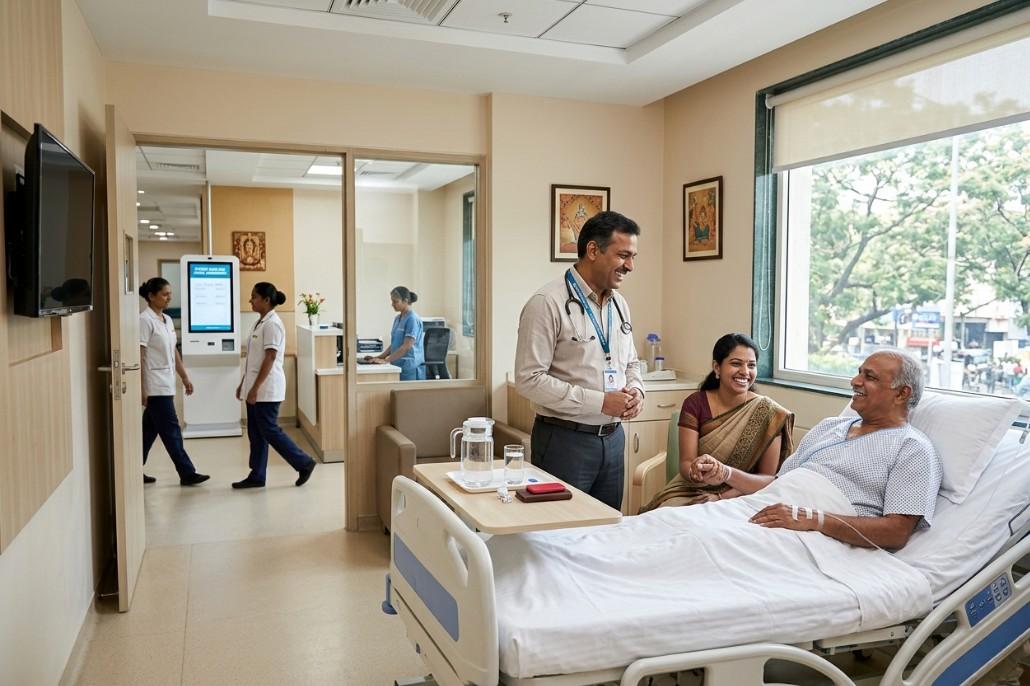
A private hospital in Chennai recently invested heavily in a new OPD wing, upgraded equipment, and a digital marketing campaign. Footfall increased. But repeat visits did not. Neither did referrals. The missing variable was not clinical quality or visibility — it was hospital patient satisfaction India’s private sector continues to treat as a soft metric rather than a business driver. This post makes the case for why that thinking is costing hospitals revenue they cannot see on any balance sheet.
The Gap Between Clinical Quality and Patient Loyalty
Most hospital leaders in India measure success through bed occupancy, OPD numbers, and surgical volumes. Very few track patient loyalty rates, complaint resolution times, or net promoter scores with the same rigour.
The result is a recurring pattern: a hospital delivers clinically sound care, yet patients do not return for follow-ups, do not refer family members, and occasionally leave negative reviews that nobody responds to. A patient experience consultant India engages with sees this gap constantly — not in hospitals that are performing poorly, but in hospitals that are performing well clinically and still not growing.
The disconnect is structural. Clinical outcomes and patient experience are tracked by different people, reported in different formats, and rarely connected to the same revenue conversation. That separation is where growth stalls.
The Framework That Connects Patient Experience to Revenue
Chitra Baskar’s approach to hospital patient satisfaction India begins with a financial reframe: every dissatisfied patient who leaves silently represents not just a lost visit, but a lost referral chain.
In Indian private healthcare, where word of mouth remains the most trusted channel of patient acquisition, a single dissatisfied patient who shares their experience with five family members or neighbours creates a ripple that no marketing campaign can easily counter. Patient retention strategies for hospitals must account for this multiplier effect — both positive and negative.
The framework operates across three revenue-linked dimensions:
- Complaint capture and resolution speed. Complaints that are resolved within 24 hours have a statistically higher conversion to loyalty than those left unaddressed. Most Indian hospitals have no formal complaint capture system outside of discharge feedback forms — which patients rarely complete honestly.
- Staff communication quality. How to improve patient experience in Indian hospitals is not primarily a facility question. It is a communication question. The way nurses explain procedures, the way billing staff handle queries, and the way front desk teams greet patients — these micro-interactions determine whether a patient feels cared for or processed.
- Post-discharge engagement. A patient who receives a follow-up call within 48 hours of discharge is significantly more likely to return and refer. Patient engagement strategies for Indian hospitals that include structured post-visit communication consistently outperform those that do not.
What Hospital Leaders Can Do to Turn Experience Into Revenue
- Install a real-time feedback mechanism. Move beyond discharge forms. A simple WhatsApp or SMS feedback link sent within two hours of a visit captures honest, actionable data while the experience is still fresh.
- Create a complaint ownership protocol. Every complaint must have a named owner and a resolution deadline. Patient complaint management hospital India consistently shows that patients who have complaints resolved promptly become more loyal than patients who never complained at all.
- Train clinical and non-clinical staff together. Experience is not just a front desk issue. Nurses, technicians, housekeeping, and billing staff all shape the patient’s perception. Cross-functional training on communication and empathy delivers faster results than siloed interventions.
- Track patient retention rates monthly. What percentage of your OPD patients return within 90 days? If this number is not being tracked, the hospital is managing revenue without understanding its largest growth lever.
- Build a structured referral acknowledgement system. When a patient refers someone, acknowledge it. A simple thank-you message or loyalty recognition creates a feedback loop that encourages more referrals — at zero acquisition cost.
Mistakes That Quietly Drain Patient Loyalty
Treating complaints as exceptions rather than data. Every complaint is a signal. Hospitals that handle complaints case by case, without analysing patterns, miss the systemic fixes that would prevent the same complaint from recurring across hundreds of patients.
Measuring hospital patient satisfaction India through exit surveys alone. Exit surveys capture what patients are willing to say on their way out — which is rarely the full picture. Real satisfaction data comes from follow-up calls, online review patterns, and return visit rates combined.
Assuming that good clinical outcomes guarantee loyalty. Patients cannot fully evaluate clinical quality. What they can evaluate — and do, consistently — is how they were treated, how long they waited, and whether anyone followed up. Hospitals that conflate clinical excellence with patient satisfaction miss the experience layer entirely.
Experience Is Strategy, Not Service
Hospital patient satisfaction India is not a hospitality initiative. It is a revenue strategy. The hospitals that understand this are building referral engines, reducing acquisition costs, and growing without proportional increases in marketing spend.
If your hospital is experiencing stagnant repeat visits or declining referral volumes, patient trust building strategies India hospitals are using successfully may reveal exactly where the gap is. Connect with Chitra Baskar on LinkedIn or book a discovery call to explore where patient experience could be unlocking revenue your current metrics are not capturing.