Need help now? Call for a same-day consultation



10 Patient Acquisition Strategies Every Private Hospital in India Must Implement in 2026
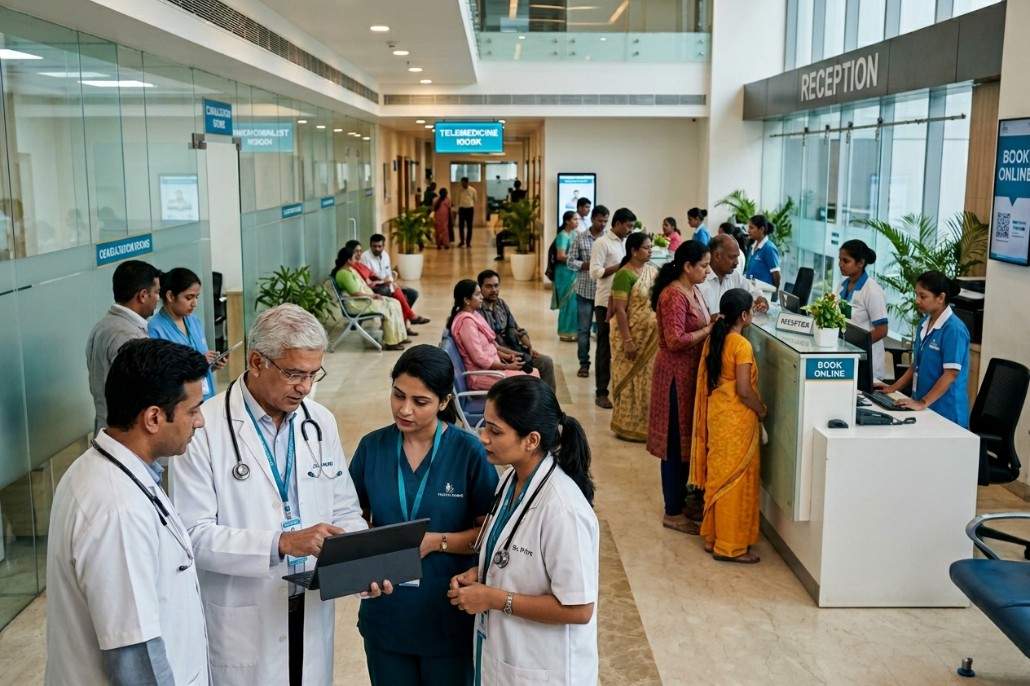
Private hospitals across India are spending more on marketing than ever before — and many are seeing diminishing returns. The problem is not the budget. It is the absence of a structured patient acquisition strategy India’s competitive healthcare market now demands. Paid ads without follow-through, websites without trust signals, and referral networks left unmaintained are quietly draining resources. This post outlines ten strategies that actually move the needle — built on what works in Indian healthcare, not imported theory.
Why Patient Acquisition Has Become Harder for Private Hospitals
A decade ago, a good location and a visible signboard were enough to sustain a private hospital. That era is over. Patients today research before they visit. They read Google reviews, compare specialists, check websites, and ask on WhatsApp groups before making an appointment.
The patient acquisition cost hospital owners are absorbing has risen sharply — not because patients are harder to reach, but because more hospitals are chasing the same patient with similar messaging and no differentiation. The clinics and hospitals that are growing are the ones that have moved from random marketing activity to a deliberate, trackable acquisition system.
The Strategic Framework Behind Effective Patient Acquisition
Chitra Baskar’s approach to patient acquisition strategy India is built on a simple diagnostic: before adding new channels, audit what is already leaking.
Most hospitals lose patients at three predictable points — during the first online search, during the first call or walk-in attempt, and after the first visit. Plugging these leaks before scaling acquisition spend is the highest-leverage move available to any hospital or clinic.
The framework operates across four layers:
- Visibility — Can the right patients find you when they search?
- Credibility — When they find you, do they trust what they see?
- Conversion — Is booking an appointment frictionless?
- Retention — Are first-time patients becoming repeat visitors?
How to reduce patient acquisition cost in India is not a media buying question. It is a systems question. Hospitals that fix conversion and retention reduce their dependence on paid acquisition over time — and that is where sustainable growth lives.
Patient footfall increase hospital results follow naturally when all four layers are working together, not in isolation.
10 Patient Acquisition Strategies to Implement in 2026
- Optimise your Google Business Profile. This is the single highest-return, zero-cost action most hospitals have not completed. Accurate hours, updated photos, and consistent responses to reviews directly influence local search rankings.
- Build condition-specific landing pages. Generic hospital websites do not convert. Pages built around specific conditions — “knee replacement Chennai” or “diabetic care Coimbatore” — attract patients with high intent.
- Create a structured referral programme with local GPs. Physician referral networks remain one of the strongest patient acquisition strategies for private doctors India has produced. A formal, maintained programme outperforms informal goodwill every time.
- Use WhatsApp for appointment reminders and follow-ups. The majority of your patients are reachable on WhatsApp. A simple, permission-based communication sequence for appointment reminders reduces no-shows and increases revisits.
- Publish condition-specific content regularly. Educational content — blog posts, short videos, health tips — builds organic search visibility and positions your specialists as credible voices before a patient even books.
- Respond to every online review within 48 hours. Review response rate and quality influence both patient trust and Google ranking. This takes ten minutes a day and compounds significantly over months.
- Train your front desk as a conversion team. The number of patients lost between a first phone inquiry and a confirmed appointment is consistently underestimated. Front desk training focused on communication and booking conversion is measurable and impactful.
- Run targeted local campaigns, not broad ones. Healthcare lead generation India works best when geographically precise. A 5-kilometre radius campaign targeting the right demographic outperforms a city-wide spend for most private hospitals.
- Implement a post-discharge follow-up call protocol. A structured call 48 to 72 hours after discharge improves patient satisfaction, generates referrals, and surfaces issues before they become negative reviews.
- Track acquisition by channel, not just total footfall. Without channel-level data, hospitals cannot identify what is working. Even a basic CRM or intake form asking “how did you hear about us” provides the insight needed to allocate spend intelligently.
Mistakes That Make Acquisition More Expensive Than It Should Be
Spending on ads before fixing the website. Paid traffic sent to a slow, unclear, or untrustworthy website is wasted spend. The website must convert before acquisition budgets are scaled.
Ignoring existing patients as an acquisition channel. A satisfied patient who refers two family members costs far less than a cold lead from digital advertising. Most hospitals underinvest in the retention and referral layer entirely.
Measuring footfall instead of revenue per patient. High footfall with low revenue per visit signals a case-mix or pricing problem, not an acquisition success. Track the right metrics.
Build the System Before Scaling the Spend
A patient acquisition strategy India’s private hospitals can rely on is not built in a campaign — it is built in a system. The ten strategies above are most effective when implemented in sequence, not simultaneously.
If you are looking to build patient acquisition for clinics India that is measurable, cost-efficient, and sustainable, connect with Chitra Baskar on LinkedIn or book a discovery call. A focused conversation often reveals the two or three changes that unlock meaningful growth.