Need help now? Call for a same-day consultation



Patient Journey Optimization — The Framework Behind India's Fastest-Growing Clinics
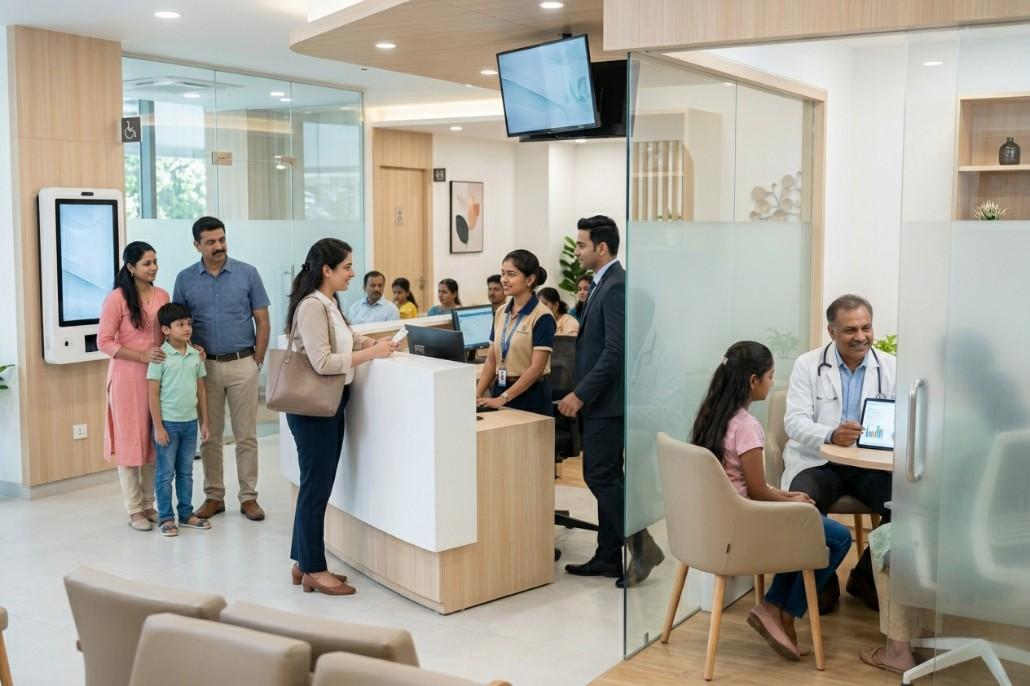
A clinic can have excellent doctors, a clean facility, and a visible location — and still watch patients walk out without booking a follow-up. The gap is rarely clinical. It is experiential. Patient journey consulting exists precisely to close that gap: to map every touchpoint a patient encounters, identify where trust breaks down, and rebuild those moments into ones that convert first-time visitors into long-term patients. This post breaks down the framework that is quietly driving growth for private clinics across India.
Why Clinics With Good Doctors Still Struggle to Grow
The assumption most clinic founders make is that clinical quality drives growth. It does — but only up to a point. Beyond that point, growth is determined by experience, not expertise.
A patient in Chennai or Coimbatore does not choose a specialist solely on credentials. They choose based on how easy it was to book an appointment, how long they waited, whether the front desk made them feel seen, and whether they received a follow-up call. Each of these is a patient acquisition strategy India’s growing clinics have quietly mastered — while others rely on word of mouth and hope.
The hard truth is that most clinics lose patients not because of bad outcomes, but because of friction — small, fixable friction that nobody has mapped out or taken ownership of.
The Patient Journey Framework Chitra Baskar Uses With Clients
Effective patient journey consulting begins with a structured audit of five stages every patient moves through:
- Awareness — How did the patient first hear about the clinic? Was the online presence clear, credible, and easy to find?
- Consideration — What did they see when they searched? Reviews, website, social proof — all of this shapes trust before the first visit.
- First Visit — From parking to registration to consultation to billing, every step either builds or erodes confidence.
- Post-Visit — Did they receive discharge instructions clearly? Was there a follow-up call? Did someone check if they had questions?
- Retention and Referral — What brings them back, and what makes them recommend the clinic to family?
Most clinics invest heavily in Stage 1 — marketing and visibility — while leaving Stages 3, 4, and 5 entirely to chance. Patient journey mapping for hospitals India must cover all five stages to deliver measurable results.
An OPD footfall increase strategy India that focuses only on new patient acquisition without fixing the retention gap is like filling a leaking bucket. The numbers improve temporarily, then plateau.
What Clinics Can Do to Improve Their Patient Journey Right Now
- Map your current journey before assuming what is broken. Walk through your clinic as a patient would — from Google search to post-visit follow-up. Document every step. Most clinic owners are surprised by what they find.
- Fix your front desk before you fix your marketing. The front desk is the highest-impact, lowest-investment improvement most clinics can make. Training on communication, empathy, and basic workflow management changes the patient experience immediately.
- Create a structured follow-up protocol. A simple call or WhatsApp message 48 hours after a visit dramatically improves patient satisfaction scores and return visit rates. Very few private clinics in India do this consistently.
- Audit your digital touchpoints. Your Google Business Profile, website contact page, and appointment booking process should require zero effort from the patient. If they have to call three times to book, many will not.
- Measure what matters. Track OPD revisit rates, referral sources, and patient feedback scores monthly. Without measurement, improvement is guesswork. Patient acquisition strategies for private doctors India that are data-informed consistently outperform those that are not.
Mistakes That Undermine Patient Journey Efforts
Treating patient experience as a one-time project. Journey optimisation is not a rebrand or a training day. It requires ongoing monitoring, quarterly reviews, and a designated owner within the clinic team.
Investing in digital marketing before fixing offline experience. Bringing more patients through the door into a broken experience accelerates negative word of mouth. Fix the journey first, then scale the acquisition.
Assuming all patients have the same journey. A new mother, a senior citizen managing a chronic condition, and a working professional in their thirties all move through a clinic differently. Segmenting the journey by patient profile reveals friction points that a generic audit misses entirely.
The Clinics That Grow Are the Ones That Map First
Patient journey consulting is not about making clinics feel warmer. It is about building systems that turn first visits into lifetime relationships — and lifetime relationships into a referral engine.
If you want to understand how patient journey mapping for hospitals India could apply to your specific clinic context, connect with Chitra Baskar on LinkedIn or book a discovery call. The insight from a structured conversation often reveals more than months of internal guesswork.