


Patient Experience vs Patient Satisfaction — Why Indian Hospitals Confuse the Two and Pay the Price
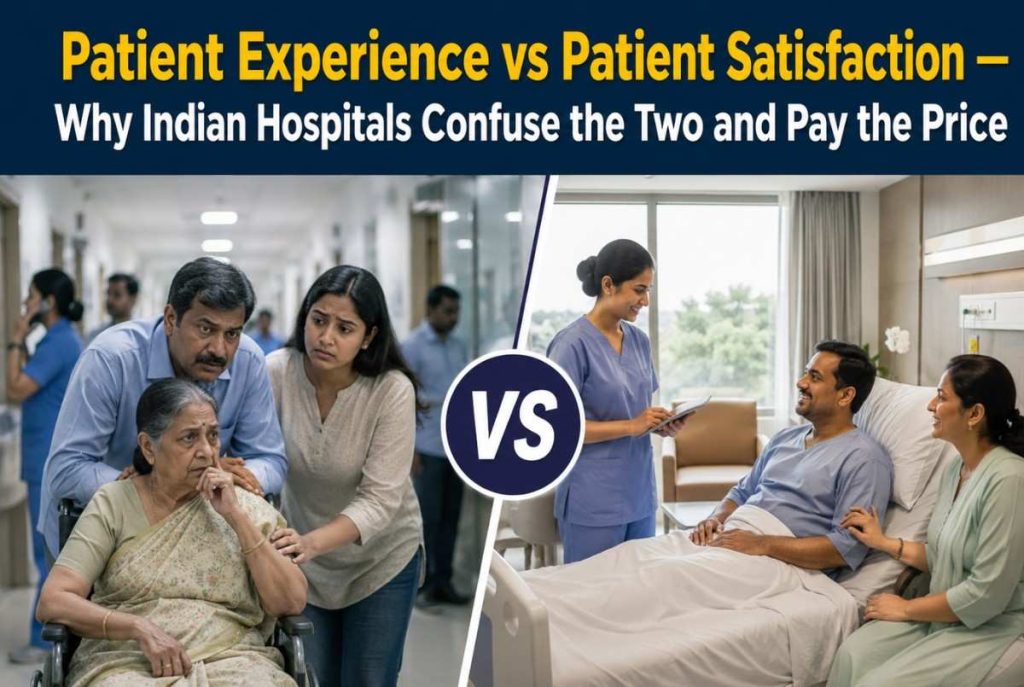
Patient Experience vs Patient Satisfaction — Why Indian Hospitals Confuse the Two and Pay the Price A patient leaves your hospital with a smile, completes a satisfaction survey with top scores, and never returns. No complaint was filed. No bad review was posted. Yet something in that care journey failed to build lasting trust. This pattern plays out across Indian private hospitals every day — and most leadership teams cannot explain it. Every skilled patient experience consultant India healthcare leaders work with will point to the same root cause: satisfaction and experience are not the same thing, and confusing them costs hospitals far more than they realise. Why Satisfaction Scores Are Giving Indian Hospitals a False Sense of Security Hospital patient satisfaction India measurements typically capture how a patient felt at discharge — whether the food was acceptable, whether staff were polite, whether the bill was explained. These are important data points. But they measure a moment, not a journey. Patient experience, by contrast, encompasses every interaction a patient has with a hospital — from the first Google search to the follow-up call three weeks post-discharge. It includes how long they waited, whether they understood their diagnosis, how safe they felt, and whether they trusted the team caring for them. A patient can score a hospital eight out of ten on a satisfaction survey and still choose a different hospital for their next procedure. Satisfaction measures contentment. Experience measures connection. Only one of those drives retention, referrals, and long-term revenue. The Framework: Understanding What Patient Experience Actually Measures Chitra Baskar’s consulting work with medical directors and quality heads across India consistently returns to a foundational distinction — satisfaction is transactional, experience is relational. Building one without the other leaves significant patient retention value on the table. Her framework maps the patient experience across five critical stages: Pre-Arrival — How easy was it to find information, book an appointment, and understand what to expect? Friction here creates anxiety before the patient even enters the building. Arrival and Reception — First physical impressions, waiting time management, and the tone set by front-desk staff. These moments disproportionately shape overall perception. Clinical Interaction — Did the patient feel heard? Was their condition explained in language they understood? Did the care team demonstrate both competence and empathy? Discharge and Transition — Was the discharge process clear? Did the patient leave knowing what to do next, who to call, and when to return? Post-Discharge Follow-Up — Did the hospital reach out proactively? This stage is almost universally neglected by Indian hospitals and represents one of the strongest patient trust building strategies India hospital teams can implement immediately. Patient engagement strategies for Indian hospitals that address all five stages consistently outperform those that focus only on in-hospital satisfaction. Patient journey mapping for hospitals India quality teams conduct is the practical tool that makes this framework actionable. Four Steps to Shift From Satisfaction Measurement to Experience Design Step 1: Replace exit surveys with journey audits. A discharge satisfaction form captures one moment. A patient journey audit maps friction, confusion, and disconnection across every touchpoint. Conduct structured interviews with recently discharged patients — not just forms — to surface what surveys miss. Step 2: Train clinical and non-clinical staff differently. Satisfaction training focuses on politeness. Experience training focuses on communication — explaining procedures, acknowledging anxiety, and making patients feel informed at every stage. The distinction matters in how training is designed and delivered. Step 3: Build a post-discharge contact protocol. A structured follow-up call within 48 to 72 hours of discharge — checking on recovery, answering questions, and confirming medication compliance — does more for patient loyalty than any lobby renovation. Understanding how to improve patient experience in Indian hospitals starts here. Step 4: Close the feedback loop visibly. When patients see that their feedback led to a visible change, trust deepens. Communicate improvements back to the community through social media, notice boards, or newsletters. This signals that the hospital listens — and acts. Mistakes That Keep Hospitals Stuck at Satisfaction Without Reaching Experience Treating NABH accreditation as the finish line. Accreditation sets a compliance baseline. It does not guarantee that patients feel genuinely cared for, understood, or valued. Hospitals that stop at accreditation miss the relational layer entirely. Measuring only what is easy to measure. Net Promoter Scores and discharge ratings are simple to collect. Emotional trust, communication clarity, and care continuity are harder to quantify — but far more predictive of patient retention. What gets measured shapes what gets managed. Assigning experience to one department. Patient experience is not the responsibility of the quality team or the marketing department alone. It is an organisation-wide discipline that requires alignment across clinical, operational, and administrative functions. Siloed ownership produces siloed results. Satisfaction Gets Patients to Leave Quietly — Experience Gets Them to Come Back The hospitals that build sustainable patient loyalty in India are not necessarily the ones with the highest satisfaction scores. They are the ones that design every stage of the patient journey with intention, empathy, and follow-through. That is what a patient experience consultant India healthcare leaders rely on helps build — not just better surveys, but better systems. If your hospital is ready to move beyond satisfaction metrics and build a patient experience framework that drives genuine retention, Chitra Baskar offers focused consulting for medical directors, quality heads, and CEOs across India. Connect with her on LinkedIn or book a discovery call to begin exploring patient journey mapping for hospitals India that creates lasting patient trust. What does a healthcare business growth consultant do? A healthcare business growth consultant helps hospitals, clinics, and healthcare entrepreneurs identify revenue gaps, streamline operations, build leadership capacity, and create clear, actionable strategies to grow their organisation sustainably and profitably. Why do healthcare businesses in India need a growth consultant? India’s healthcare sector is competitive and rapidly evolving. Many providers have clinical excellence but lack the business strategy, systems, and leadership structures to scale. A specialist consultant bridges that
Reasons Indian Hospitals Lose Patients to Competitors — And How to Stop It
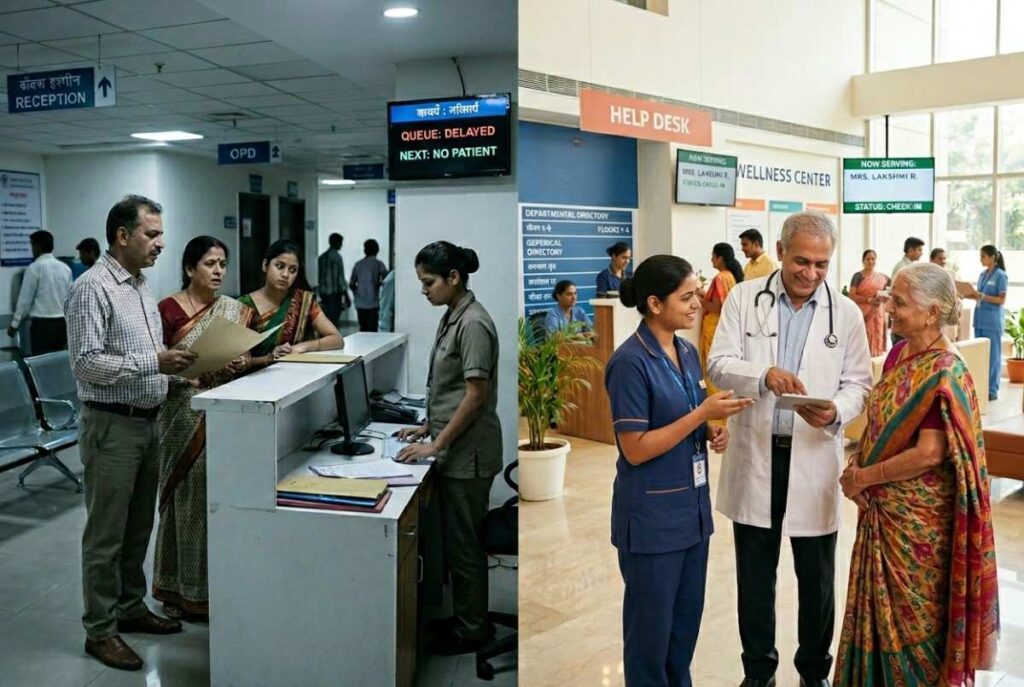
Reasons Indian Hospitals Lose Patients to Competitors — And How to Stop It A patient visits your hospital once, receives good clinical care — and never returns. They go to a competitor for their next consultation, their family member’s surgery, and every follow-up after that. This isn’t uncommon in Indian healthcare. For hospital owners and CEOs, it represents not just lost revenue but a broken relationship. Understanding and implementing effective patient retention strategies for hospitals is no longer optional — it is a business imperative. Why Indian Hospitals Are Losing Patients Without Realising It Most hospital leaders assume patient churn is about clinical outcomes. The reality is more uncomfortable — patients often leave for reasons that have nothing to do with medical quality. Long wait times, unclear billing, indifferent front-desk staff, and zero post-discharge follow-up are driving patients away quietly. They don’t complain. They simply don’t come back. In the current Indian healthcare landscape, patients have more choices than ever before. Tier-2 cities now have multi-speciality options. Corporate hospital chains are expanding aggressively. A poor experience at one touchpoint is enough to send a patient — and their network — to your competitor. This is the core challenge of patient acquisition strategy in India today: acquiring a patient is expensive, but losing them costs far more. The Retention Framework: Where Most Hospitals Get It Wrong Chitra Baskar’s work with hospital owners across India consistently reveals a fundamental gap — hospitals invest heavily in infrastructure and technology, but underinvest in the patient experience ecosystem. Retention is not a single intervention. It is the result of multiple touchpoints working together cohesively. Chitra identifies three layers where hospitals typically fail: The Entry Experience — First impressions at reception, OPD, and inquiry desks set the emotional tone. If patients feel like a number, they disengage immediately. The Clinical Journey — Patients notice how well departments communicate with each other, how clearly doctors explain treatment plans, and whether they feel heard. The Post-Discharge Relationship — This is where most hospitals go completely silent. No follow-up call. No discharge summary in plain language. No reminder for the next visit. As a patient experience consultant working across India, Chitra observes that hospitals which address all three layers consistently outperform competitors on repeat visits and referrals. For those exploring how to retain patients in private hospitals in India, the answer lies in systematising these touchpoints — not leaving them to individual staff initiative. Practical Strategies Hospitals Can Implement Now Closing the retention gap does not require a complete overhaul. It requires deliberate, structured action: Audit your patient journey end-to-end. Map every touchpoint from the first phone call to the third follow-up visit. Identify where patients drop off or report friction. Most hospitals have never done this exercise formally. Train frontline staff as relationship builders. Receptionists, ward attendants, and billing staff interact with patients more than doctors do. Their tone, clarity, and empathy directly influence whether a patient returns. Build a structured follow-up protocol. A call 48 hours post-discharge, a check-in at seven days, and a reminder at 30 days dramatically improves patient loyalty. Automate where possible, but keep the human element for high-value patients. Make billing transparent and explainable. Billing disputes are one of the top reasons patients switch hospitals in India. A dedicated billing counsellor who walks patients through their invoice reduces complaints and builds trust. Capture and act on feedback immediately. Post-visit surveys mean nothing if results sit in a spreadsheet. Assign accountability for resolving negative feedback within 48 hours. Mistakes That Quietly Undermine Retention Efforts Even hospitals that invest in patient experience make avoidable errors: Treating retention as a marketing function alone. Retention is an operations and culture challenge. Marketing can attract patients back, but only if the underlying experience justifies their return. Focusing only on inpatient satisfaction. The bulk of patient volume — and relationship-building — happens in OPD. Hospitals that neglect outpatient experience lose the majority of their potential loyal base. Measuring satisfaction without measuring loyalty. A patient can rate their experience 4 out of 5 and still never return. Track repeat visit rates, referral rates, and lapsed patient reactivation — not just satisfaction scores. Patients today choose hospitals the way they choose any service — based on experience, trust, and how valued they feel. Clinical excellence earns the first visit. Everything else determines whether they return. If your hospital is facing declining repeat visits or rising patient churn, the issue is rarely clinical. It is structural. Implementing focused patient loyalty strategies for Indian hospitals requires an honest look at your systems, your people, and your patient relationships. To explore what a retention audit could reveal about your hospital’s growth gaps, connect with Chitra Baskar on LinkedIn or reach out directly to schedule a discovery conversation.
Why Patient Experience Is the #1 Revenue Lever Most Indian Hospitals Ignore
Why Patient Experience Is the #1 Revenue Lever Most Indian Hospitals Ignore A private hospital in Chennai recently invested heavily in a new OPD wing, upgraded equipment, and a digital marketing campaign. Footfall increased. But repeat visits did not. Neither did referrals. The missing variable was not clinical quality or visibility — it was hospital patient satisfaction India’s private sector continues to treat as a soft metric rather than a business driver. This post makes the case for why that thinking is costing hospitals revenue they cannot see on any balance sheet. The Gap Between Clinical Quality and Patient Loyalty Most hospital leaders in India measure success through bed occupancy, OPD numbers, and surgical volumes. Very few track patient loyalty rates, complaint resolution times, or net promoter scores with the same rigour. The result is a recurring pattern: a hospital delivers clinically sound care, yet patients do not return for follow-ups, do not refer family members, and occasionally leave negative reviews that nobody responds to. A patient experience consultant India engages with sees this gap constantly — not in hospitals that are performing poorly, but in hospitals that are performing well clinically and still not growing. The disconnect is structural. Clinical outcomes and patient experience are tracked by different people, reported in different formats, and rarely connected to the same revenue conversation. That separation is where growth stalls. The Framework That Connects Patient Experience to Revenue Chitra Baskar’s approach to hospital patient satisfaction India begins with a financial reframe: every dissatisfied patient who leaves silently represents not just a lost visit, but a lost referral chain. In Indian private healthcare, where word of mouth remains the most trusted channel of patient acquisition, a single dissatisfied patient who shares their experience with five family members or neighbours creates a ripple that no marketing campaign can easily counter. Patient retention strategies for hospitals must account for this multiplier effect — both positive and negative. The framework operates across three revenue-linked dimensions: Complaint capture and resolution speed. Complaints that are resolved within 24 hours have a statistically higher conversion to loyalty than those left unaddressed. Most Indian hospitals have no formal complaint capture system outside of discharge feedback forms — which patients rarely complete honestly. Staff communication quality. How to improve patient experience in Indian hospitals is not primarily a facility question. It is a communication question. The way nurses explain procedures, the way billing staff handle queries, and the way front desk teams greet patients — these micro-interactions determine whether a patient feels cared for or processed. Post-discharge engagement. A patient who receives a follow-up call within 48 hours of discharge is significantly more likely to return and refer. Patient engagement strategies for Indian hospitals that include structured post-visit communication consistently outperform those that do not. What Hospital Leaders Can Do to Turn Experience Into Revenue Install a real-time feedback mechanism. Move beyond discharge forms. A simple WhatsApp or SMS feedback link sent within two hours of a visit captures honest, actionable data while the experience is still fresh. Create a complaint ownership protocol. Every complaint must have a named owner and a resolution deadline. Patient complaint management hospital India consistently shows that patients who have complaints resolved promptly become more loyal than patients who never complained at all. Train clinical and non-clinical staff together. Experience is not just a front desk issue. Nurses, technicians, housekeeping, and billing staff all shape the patient’s perception. Cross-functional training on communication and empathy delivers faster results than siloed interventions. Track patient retention rates monthly. What percentage of your OPD patients return within 90 days? If this number is not being tracked, the hospital is managing revenue without understanding its largest growth lever. Build a structured referral acknowledgement system. When a patient refers someone, acknowledge it. A simple thank-you message or loyalty recognition creates a feedback loop that encourages more referrals — at zero acquisition cost. Mistakes That Quietly Drain Patient Loyalty Treating complaints as exceptions rather than data. Every complaint is a signal. Hospitals that handle complaints case by case, without analysing patterns, miss the systemic fixes that would prevent the same complaint from recurring across hundreds of patients. Measuring hospital patient satisfaction India through exit surveys alone. Exit surveys capture what patients are willing to say on their way out — which is rarely the full picture. Real satisfaction data comes from follow-up calls, online review patterns, and return visit rates combined. Assuming that good clinical outcomes guarantee loyalty. Patients cannot fully evaluate clinical quality. What they can evaluate — and do, consistently — is how they were treated, how long they waited, and whether anyone followed up. Hospitals that conflate clinical excellence with patient satisfaction miss the experience layer entirely. Experience Is Strategy, Not Service Hospital patient satisfaction India is not a hospitality initiative. It is a revenue strategy. The hospitals that understand this are building referral engines, reducing acquisition costs, and growing without proportional increases in marketing spend. If your hospital is experiencing stagnant repeat visits or declining referral volumes, patient trust building strategies India hospitals are using successfully may reveal exactly where the gap is. Connect with Chitra Baskar on LinkedIn or book a discovery call to explore where patient experience could be unlocking revenue your current metrics are not capturing.
10 Patient Acquisition Strategies Every Private Hospital in India Must Implement in 2026
10 Patient Acquisition Strategies Every Private Hospital in India Must Implement in 2026 Private hospitals across India are spending more on marketing than ever before — and many are seeing diminishing returns. The problem is not the budget. It is the absence of a structured patient acquisition strategy India’s competitive healthcare market now demands. Paid ads without follow-through, websites without trust signals, and referral networks left unmaintained are quietly draining resources. This post outlines ten strategies that actually move the needle — built on what works in Indian healthcare, not imported theory. Why Patient Acquisition Has Become Harder for Private Hospitals A decade ago, a good location and a visible signboard were enough to sustain a private hospital. That era is over. Patients today research before they visit. They read Google reviews, compare specialists, check websites, and ask on WhatsApp groups before making an appointment. The patient acquisition cost hospital owners are absorbing has risen sharply — not because patients are harder to reach, but because more hospitals are chasing the same patient with similar messaging and no differentiation. The clinics and hospitals that are growing are the ones that have moved from random marketing activity to a deliberate, trackable acquisition system. The Strategic Framework Behind Effective Patient Acquisition Chitra Baskar’s approach to patient acquisition strategy India is built on a simple diagnostic: before adding new channels, audit what is already leaking. Most hospitals lose patients at three predictable points — during the first online search, during the first call or walk-in attempt, and after the first visit. Plugging these leaks before scaling acquisition spend is the highest-leverage move available to any hospital or clinic. The framework operates across four layers: Visibility — Can the right patients find you when they search? Credibility — When they find you, do they trust what they see? Conversion — Is booking an appointment frictionless? Retention — Are first-time patients becoming repeat visitors? How to reduce patient acquisition cost in India is not a media buying question. It is a systems question. Hospitals that fix conversion and retention reduce their dependence on paid acquisition over time — and that is where sustainable growth lives. Patient footfall increase hospital results follow naturally when all four layers are working together, not in isolation. 10 Patient Acquisition Strategies to Implement in 2026 Optimise your Google Business Profile. This is the single highest-return, zero-cost action most hospitals have not completed. Accurate hours, updated photos, and consistent responses to reviews directly influence local search rankings. Build condition-specific landing pages. Generic hospital websites do not convert. Pages built around specific conditions — “knee replacement Chennai” or “diabetic care Coimbatore” — attract patients with high intent. Create a structured referral programme with local GPs. Physician referral networks remain one of the strongest patient acquisition strategies for private doctors India has produced. A formal, maintained programme outperforms informal goodwill every time. Use WhatsApp for appointment reminders and follow-ups. The majority of your patients are reachable on WhatsApp. A simple, permission-based communication sequence for appointment reminders reduces no-shows and increases revisits. Publish condition-specific content regularly. Educational content — blog posts, short videos, health tips — builds organic search visibility and positions your specialists as credible voices before a patient even books. Respond to every online review within 48 hours. Review response rate and quality influence both patient trust and Google ranking. This takes ten minutes a day and compounds significantly over months. Train your front desk as a conversion team. The number of patients lost between a first phone inquiry and a confirmed appointment is consistently underestimated. Front desk training focused on communication and booking conversion is measurable and impactful. Run targeted local campaigns, not broad ones. Healthcare lead generation India works best when geographically precise. A 5-kilometre radius campaign targeting the right demographic outperforms a city-wide spend for most private hospitals. Implement a post-discharge follow-up call protocol. A structured call 48 to 72 hours after discharge improves patient satisfaction, generates referrals, and surfaces issues before they become negative reviews. Track acquisition by channel, not just total footfall. Without channel-level data, hospitals cannot identify what is working. Even a basic CRM or intake form asking “how did you hear about us” provides the insight needed to allocate spend intelligently. Mistakes That Make Acquisition More Expensive Than It Should Be Spending on ads before fixing the website. Paid traffic sent to a slow, unclear, or untrustworthy website is wasted spend. The website must convert before acquisition budgets are scaled. Ignoring existing patients as an acquisition channel. A satisfied patient who refers two family members costs far less than a cold lead from digital advertising. Most hospitals underinvest in the retention and referral layer entirely. Measuring footfall instead of revenue per patient. High footfall with low revenue per visit signals a case-mix or pricing problem, not an acquisition success. Track the right metrics. Build the System Before Scaling the Spend A patient acquisition strategy India’s private hospitals can rely on is not built in a campaign — it is built in a system. The ten strategies above are most effective when implemented in sequence, not simultaneously. If you are looking to build patient acquisition for clinics India that is measurable, cost-efficient, and sustainable, connect with Chitra Baskar on LinkedIn or book a discovery call. A focused conversation often reveals the two or three changes that unlock meaningful growth.