


Medical Tourism in India — How Hospitals Can Build a Strategy to Attract International Patients

Medical Tourism in India — How Hospitals Can Build a Strategy to Attract International Patients Hospitals across Chennai, Hyderabad, and Mumbai often assume that NABH or JCI accreditation alone will draw international patients to their door. In reality, accreditation opens the conversation, but it rarely closes it without a deliberate strategy behind it. Working with a medical tourism marketing consultant India hospitals trust helps translate clinical credibility into a steady pipeline of international patients. This piece outlines how that strategy actually comes together. The Problem: Accreditation Alone Doesn’t Attract Patients India’s reputation for advanced, cost-effective healthcare draws patients from across the world, particularly from West Asia, Africa, and neighbouring South Asian countries. Yet many accredited hospitals see far fewer international patients than their clinical capability should justify. The gap usually isn’t quality of care. It’s the absence of a structured hospital revenue growth strategy that treats medical tourism as its own specialized function, rather than an extension of domestic marketing efforts. International patients research hospitals differently than local patients do. They weigh logistics, communication, and trust signals that domestic marketing rarely addresses, which means hospitals relying solely on general visibility efforts miss this audience almost entirely. The Framework: Building Trust Before the First Enquiry Chitra Baskar’s approach to medical tourism strategy draws on decades of hands-on experience within India’s healthcare ecosystem, including senior roles at leading hospital groups. The core insight is that international patients need to trust a hospital long before they ever book a flight. The framework centers on a few connected priorities: – Clear, translated patient information covering procedures, costs, and recovery expectations in the languages of target patient regions. – Visible testimonials and outcome transparency, since international patients rely heavily on the experiences of others who’ve made the same journey. – Dedicated international patient coordination, giving overseas enquiries a single, responsive point of contact rather than a generic hospital helpline. – Partnerships with facilitators and referring physicians abroad, who often influence a patient’s hospital choice more than any advertising campaign. Working alongside a hospital marketing consultant India hospitals rely on for this segment ensures these elements are coordinated rather than scattered across departments. This structured approach reflects how to attract international patients to Indian hospitals in a way that builds lasting trust, not just one-time enquiries. Practical Application: What Hospitals Can Do Turning medical tourism potential into a functioning pipeline requires focused, sequenced action. – Create a dedicated international patient portal or page. Consolidate procedure information, cost transparency, and travel logistics in one clear, accessible place. – Build a responsive international enquiry process. Ensure enquiries from abroad receive prompt, personalized responses rather than generic auto-replies. – Strengthen relationships with medical tourism facilitators. These intermediaries often shape patient decisions and deserve dedicated relationship management. – Showcase outcome data and patient stories transparently. International patients weigh evidence heavily when choosing a hospital far from home. – Prepare staff for cross-cultural patient communication. Small adjustments in language and cultural sensitivity significantly improve the international patient experience. These steps form a practical medical tourism strategy for private hospitals India can implement without requiring a completely separate marketing department. Common Mistakes Hospitals Make Even accredited, capable hospitals often stumble in predictable ways when pursuing international patients. – Treating international patients as an afterthought within domestic marketing. This audience needs dedicated messaging, not repurposed local campaigns. – Underestimating the importance of post-treatment support. International patients remember how well they were cared for after discharge, including recovery guidance and follow-up communication. – Relying solely on accreditation as a marketing message. Credentials build initial trust, but without supporting content and testimonials, they rarely convert enquiries into bookings. Avoiding these missteps positions hospitals as genuinely prepared for international patients, not just clinically qualified for them. Building a Sustainable International Pipeline Attracting international patients consistently requires trust-building infrastructure, not just clinical reputation. Thoughtful marketing for medical tourism hospitals Chennai and other medical hubs invest in tends to outperform ad-hoc outreach by a wide margin. If your hospital is ready to formalize its international patient strategy, connect with Chitra Baskar on LinkedIn or book a discovery call as a trusted healthcare growth consultant India hospitals turn to for this work. Frequently Asked Questions Why is my hospital not showing on Google Maps even after claiming the listing? Claiming a listing is step one, not the finish line. Most hospitals lose visibility due to inconsistent NAP details across directories, a single generic category instead of specific sub-categories, stalled review activity, or a profile that hasn’t been posted to in months. Google reads inactivity as a weak signal of business legitimacy. How often should a hospital post updates on its Google Business Profile? Weekly is the standard I recommend to every hospital I work with. Posts about health camps, doctor availability, OPD timing changes, or seasonal advisories keep your profile active in Google’s eyes and give prospective patients a reason to trust that the information they’re seeing is current. Do patient reviews actually affect hospital ranking on Google Maps? Yes, significantly. Google weighs review velocity — steady, ongoing reviews — more heavily than a large historical count. Responding to every review, especially negative ones, professionally and within NMC advertising guidelines, also strengthens both ranking signals and patient trust. Should a multi-specialty hospital have one Google Business Profile or separate listings per department? One verified profile per physical location, with department-specific categories and attributes added within it. Separate listings for departments at the same address create duplicate-listing conflicts that confuse Google and dilute your ranking rather than strengthening it. Can a small clinic in a semi-urban area compete with larger hospitals on Google Maps? Absolutely, and often more easily than in dense urban markets. Local search favours proximity and active profile management. A well-maintained profile with consistent reviews and accurate details frequently outranks a larger, better-known facility with a neglected listing, especially outside metro-density search areas. Claiming a listing is step one, not the finish line. Most hospitals lose visibility due to inconsistent NAP details across directories, a single
How to Increase OPD Footfall Without Spending More on Advertising — A Strategy for Indian Hospitals
How to Increase OPD Footfall Without Spending More on Advertising — A Strategy for Indian Hospitals When OPD numbers dip, the instinct in most Indian hospitals is to spend more on advertising. Yet the boards that keep budgets tight quickly discover that higher ad spend rarely fixes a footfall problem rooted in something else entirely. An effective OPD footfall increase strategy India hospitals can rely on often has little to do with marketing budgets and everything to do with fixing what’s already broken in the patient journey. Here’s where to look instead. The Problem: Advertising Isn’t the Real Bottleneck Outpatient departments across Indian hospitals frequently face declining footfall despite steady or even increased marketing spend. Operations heads assume the issue is visibility, so they push more campaigns, only to see minimal improvement in actual patient numbers. The real issue often sits upstream of marketing entirely. A weak patient acquisition strategy India hospitals use may be attracting interest, but if appointment booking is confusing or wait times are unpredictable, that interest never converts into a completed visit. Advertising can bring patients to the door, but it cannot fix friction once they’re already there. Hospitals that treat footfall purely as a marketing metric miss the operational gaps quietly driving patients toward competitors. The Framework: Growing Footfall Organically Chitra Baskar’s approach to OPD growth starts with a simple reframe: footfall is not just a top-of-funnel marketing problem — it’s a full-journey experience problem. The framework rests on a few connected principles: – Fix conversion before adding volume. If existing enquiries aren’t converting into booked visits, more advertising simply amplifies the same leak. – Strengthen the follow-up loop. Patients who had a positive first visit are far more likely to return if the hospital stays lightly engaged afterward. – Activate existing patient goodwill. Satisfied patients are an underused growth channel long before any paid campaign becomes necessary. – Align OPD scheduling with real demand patterns. Mismatched scheduling quietly turns away patients who simply couldn’t get a convenient slot. This approach supports patient retention strategies for hospitals working alongside footfall growth, since keeping existing patients engaged is often more cost-effective than constantly chasing new ones. Practical Application: What Hospitals Can Do Improving footfall without a bigger advertising budget requires sharper execution on what’s already in place. – Audit your appointment booking process end to end. Identify every point where a prospective patient could get confused or give up before booking. – Build a structured patient referral program for hospitals India can sustain. Encourage satisfied patients and referring doctors to send new patients through a clear, trackable process. – Review OPD scheduling against actual patient demand. Shift slot availability toward the times patients are actually trying to book. – Re-engage lapsed patients directly. A simple, respectful outreach to patients who haven’t returned in a while can recover footfall without any new spend. – Strengthen staff communication at first contact. The reception team’s tone often determines whether an enquiry becomes a booked appointment. Together, these steps form a practical organic patient growth strategy for Indian hospitals that doesn’t depend on expanding the marketing budget. Common Mistakes Hospitals Make Hospitals chasing footfall growth tend to repeat a few avoidable patterns. – Increasing ad spend before fixing conversion gaps. This drives more enquiries into a broken booking process, wasting the additional spend entirely. – Ignoring the referral potential of existing patients. Many hospitals never formally ask satisfied patients to refer others, leaving a natural growth channel untapped. – Failing to track where footfall is actually being lost. Without visibility into where prospective patients drop off, hospitals keep guessing instead of fixing the real gap. Recognising these patterns turns footfall growth into a solvable operational challenge rather than an ongoing budget debate. Growing Footfall the Sustainable Way Sustainable OPD growth comes from fixing the patient journey, not from spending harder on the same broken funnel. A low-cost patient acquisition for clinics India approach built on referrals, follow-up, and smoother booking often outperforms bigger campaigns. If your OPD numbers have plateaued, connect with Chitra Baskar on LinkedIn or book a discovery call to identify where your hospital’s growth is quietly leaking. Frequently Asked Questions Why is my hospital not showing on Google Maps even after claiming the listing? Claiming a listing is step one, not the finish line. Most hospitals lose visibility due to inconsistent NAP details across directories, a single generic category instead of specific sub-categories, stalled review activity, or a profile that hasn’t been posted to in months. Google reads inactivity as a weak signal of business legitimacy. How often should a hospital post updates on its Google Business Profile? Weekly is the standard I recommend to every hospital I work with. Posts about health camps, doctor availability, OPD timing changes, or seasonal advisories keep your profile active in Google’s eyes and give prospective patients a reason to trust that the information they’re seeing is current. Do patient reviews actually affect hospital ranking on Google Maps? Yes, significantly. Google weighs review velocity — steady, ongoing reviews — more heavily than a large historical count. Responding to every review, especially negative ones, professionally and within NMC advertising guidelines, also strengthens both ranking signals and patient trust. Should a multi-specialty hospital have one Google Business Profile or separate listings per department? One verified profile per physical location, with department-specific categories and attributes added within it. Separate listings for departments at the same address create duplicate-listing conflicts that confuse Google and dilute your ranking rather than strengthening it. Can a small clinic in a semi-urban area compete with larger hospitals on Google Maps? Absolutely, and often more easily than in dense urban markets. Local search favours proximity and active profile management. A well-maintained profile with consistent reviews and accurate details frequently outranks a larger, better-known facility with a neglected listing, especially outside metro-density search areas. Claiming a listing is step one, not the finish line. Most hospitals lose
The Complete Guide to Healthcare Marketing for Clinic Founders in India
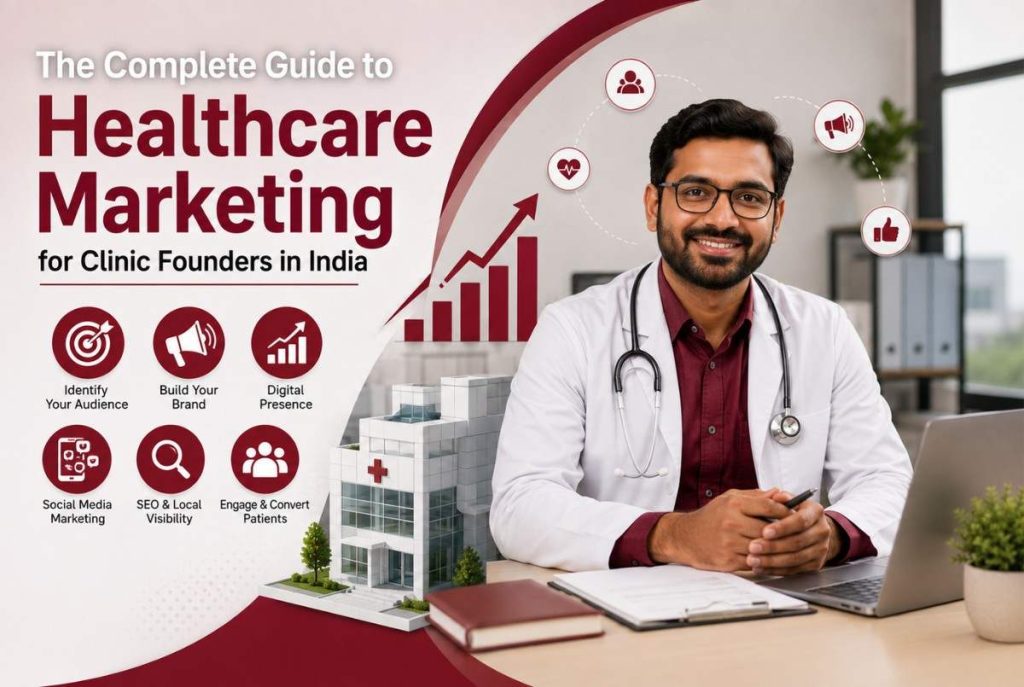
The Complete Guide to Healthcare Marketing for Clinic Founders in India Opening a clinic is often the easy part — filling it with patients who keep coming back is where most new founders get stuck. Many doctors step into ownership with strong clinical training but no real healthcare marketing strategy India guide to follow, and it shows in empty appointment slots during the first few months. This guide walks new clinic founders through what to prioritize before and after opening day. The Problem: Clinical Training Doesn’t Cover Marketing Medical school and residency prepare doctors to diagnose and treat, not to build a patient base from scratch. Yet across India’s metro and Tier Two cities, an increasing number of physicians are opening independent practices without any structured marketing plan in place. The result is predictable. Founders spend heavily on interiors and equipment, then treat marketing as an afterthought once the clinic is already open. Working with a clinic growth consultant India founders can rely on early in the process often prevents months of slow, uncertain patient inflow. The deeper challenge is that new founders don’t yet know which marketing efforts will actually convert into booked appointments versus which ones simply feel productive without moving the needle. The Framework: Building Marketing Around the Founder Journey Chitra Baskar’s approach to healthcare marketing strategy India founders can use starts before the clinic doors open, not after. Marketing built into the launch phase performs far better than marketing bolted on as a rescue effort later. The framework centers on a few connected stages: – Pre-launch positioning — Defining exactly who the clinic serves and what makes it a credible choice in a crowded local market. – Launch-phase visibility — Ensuring the clinic is discoverable at the exact moment nearby patients are searching for the relevant specialty. – Early patient experience design — Creating a first-visit experience strong enough to generate word-of-mouth referrals from the earliest patients. – Retention groundwork — Setting up simple systems for follow-up and repeat visits before patient volume grows too large to manage manually. This sequencing supports patient acquisition for clinics India founders need in the early months, while also laying groundwork for long-term growth rather than short bursts of attention. Practical Application: What New Founders Can Do Founders don’t need a large budget to get marketing right — they need the right priorities in the right order. – Claim and optimize your online listings first. Ensure your clinic appears accurately on maps and directories before spending on any paid promotion. – Build a simple, informative website. Patients researching a new clinic want clarity on services, location, and the doctor’s background before they call. – Ask early patients for feedback and reviews. Genuine reviews from your first patients carry more weight than any advertising in building local trust. – Set up a basic follow-up system. Even a simple reminder process for repeat visits keeps early patients engaged rather than lost to a competitor. – Track where new patients actually come from. Knowing which channel brought each patient helps you invest future effort where it works. Treating this as a healthcare marketing checklist for new clinics India founders can revisit monthly keeps early-stage marketing focused rather than scattered. Common Mistakes New Clinic Founders Make Even motivated founders tend to repeat the same avoidable errors in their first year. – Spending on advertising before fixing the basics. Paid promotion sends patients to a clinic that isn’t yet easy to find or book with online. – Underestimating the value of healthcare lead generation India systems. Relying purely on walk-ins leaves founders with no visibility into their own patient pipeline. – Neglecting the patient experience in favor of clinical setup. A polished treatment room means little if the booking and waiting experience feels disorganized. Avoiding these missteps early saves founders from having to rebuild trust with patients who had a rocky first impression. Starting Strong From Day One A thoughtful healthcare marketing strategy India clinic founders build early creates momentum that’s far harder to manufacture later. Founders who understand how to market a new clinic in India from the outset spend less time chasing patients and more time treating them. If you’re preparing to open or grow a new practice, connect with Chitra Baskar on LinkedIn or book a discovery call to build your founder-stage patient acquisition strategies for new clinic founders India plan. Frequently Asked Questions Why is my hospital not showing on Google Maps even after claiming the listing? Claiming a listing is step one, not the finish line. Most hospitals lose visibility due to inconsistent NAP details across directories, a single generic category instead of specific sub-categories, stalled review activity, or a profile that hasn’t been posted to in months. Google reads inactivity as a weak signal of business legitimacy. How often should a hospital post updates on its Google Business Profile? Weekly is the standard I recommend to every hospital I work with. Posts about health camps, doctor availability, OPD timing changes, or seasonal advisories keep your profile active in Google’s eyes and give prospective patients a reason to trust that the information they’re seeing is current. Do patient reviews actually affect hospital ranking on Google Maps? Yes, significantly. Google weighs review velocity — steady, ongoing reviews — more heavily than a large historical count. Responding to every review, especially negative ones, professionally and within NMC advertising guidelines, also strengthens both ranking signals and patient trust. Should a multi-specialty hospital have one Google Business Profile or separate listings per department? One verified profile per physical location, with department-specific categories and attributes added within it. Separate listings for departments at the same address create duplicate-listing conflicts that confuse Google and dilute your ranking rather than strengthening it. Can a small clinic in a semi-urban area compete with larger hospitals on Google Maps? Absolutely, and often more easily than in dense urban markets. Local search favours proximity and
Hospital Digital Transformation in India — Where to Start and What to Prioritize
Hospital Digital Transformation in India — Where to Start and What to Prioritize Every hospital CEO in India has heard the pitch for going digital, yet most transformation efforts stall somewhere between the vendor demo and actual adoption on the floor. Bringing in a hospital digital transformation consultant India hospitals trust often makes the difference between a scattered rollout and a system that staff and patients actually use. This piece outlines where to start and what genuinely deserves priority. The Problem: Technology Without a Strategy Private hospitals across India have invested heavily in electronic health records, patient apps, and automated billing systems over recent years. Yet many of these systems sit half-used, with staff reverting to paper workarounds within months of a supposedly successful launch. The gap rarely comes from the technology itself. It comes from treating digital transformation as an IT purchase rather than an operational shift that touches every department, from the front desk to the pharmacy. This is where healthcare digital marketing India efforts often get ahead of the operational reality — hospitals promote digital convenience to patients before the internal systems can reliably support it. The result is a credibility gap between what’s marketed and what’s actually delivered on the ground. The Framework: Sequencing Transformation the Right Way Chitra Baskar’s approach to hospital digital transformation rests on a simple principle: sequence matters more than speed. Hospitals that try to digitize everything at once tend to overwhelm staff and lose momentum quickly. A more sustainable sequence typically follows this order: – Start with operational bottlenecks, not flashy patient-facing features. Fix what slows staff down internally before adding new patient touchpoints. – Build data foundations early. Clean, connected data across departments makes every future digital initiative easier and cheaper to implement. – Layer in patient-facing tools gradually, once internal workflows can reliably support them without breaking under demand. – Involve clinical and administrative staff in tool selection, not just the IT department, so adoption feels collaborative rather than imposed. Acting as a digital health strategy consultant, Chitra Baskar frequently finds that hospitals underestimate the change-management work required. A hospital digital transformation roadmap India hospitals can actually follow needs as much attention on staff buy-in as on the technology stack itself. Practical Application: What Hospitals Can Prioritize Turning strategy into execution means choosing a manageable starting point and building outward. – Audit current systems for redundancy. Many hospitals run overlapping software tools that create confusion rather than efficiency — consolidate before adding anything new. – Digitize scheduling and patient flow first. This area typically delivers the fastest visible improvement in both staff workload and patient experience. – Train staff in phases, not all at once. Rolling out training department by department reduces resistance and allows early wins to build momentum. – Set clear ownership for each digital initiative. Without a named owner, digital projects tend to lose priority against daily operational demands. – Measure adoption, not just installation. Track whether staff are actually using the new systems consistently, not just whether the software has been deployed. These steps reflect a practical approach to how to digitize hospital operations in India without overwhelming teams already stretched thin by daily patient care demands. Common Mistakes Hospitals Make Even well-resourced hospitals repeat the same missteps during digital transformation efforts. – Choosing technology before defining the problem. Selecting a platform because a competitor uses it, rather than because it solves a specific operational gap, wastes budget and staff patience. – Underinvesting in training and change management. The best software fails if staff don’t understand how it fits into their daily workflow. – Ignoring healthcare operations efficiency India benchmarks. Hospitals often skip measuring baseline efficiency, making it impossible to prove whether the transformation actually delivered results. Recognising these patterns early helps hospital leadership avoid costly, demoralising false starts. Moving Forward with Clarity Digital transformation succeeds when it’s sequenced around real operational needs, not vendor promises. A thoughtful digital health strategy for private hospitals India leadership teams can commit to starts with clarity, not complexity. If your hospital is weighing where to begin, connect with Chitra Baskar on LinkedIn or book a discovery call to map out a realistic starting point for your team. Frequently Asked Questions Why is my hospital not showing on Google Maps even after claiming the listing? Claiming a listing is step one, not the finish line. Most hospitals lose visibility due to inconsistent NAP details across directories, a single generic category instead of specific sub-categories, stalled review activity, or a profile that hasn’t been posted to in months. Google reads inactivity as a weak signal of business legitimacy. How often should a hospital post updates on its Google Business Profile? Weekly is the standard I recommend to every hospital I work with. Posts about health camps, doctor availability, OPD timing changes, or seasonal advisories keep your profile active in Google’s eyes and give prospective patients a reason to trust that the information they’re seeing is current. Do patient reviews actually affect hospital ranking on Google Maps? Yes, significantly. Google weighs review velocity — steady, ongoing reviews — more heavily than a large historical count. Responding to every review, especially negative ones, professionally and within NMC advertising guidelines, also strengthens both ranking signals and patient trust. Should a multi-specialty hospital have one Google Business Profile or separate listings per department? One verified profile per physical location, with department-specific categories and attributes added within it. Separate listings for departments at the same address create duplicate-listing conflicts that confuse Google and dilute your ranking rather than strengthening it. Can a small clinic in a semi-urban area compete with larger hospitals on Google Maps? Absolutely, and often more easily than in dense urban markets. Local search favours proximity and active profile management. A well-maintained profile with consistent reviews and accurate details frequently outranks a larger, better-known facility with a neglected listing, especially outside metro-density search areas. Claiming a listing is step one,
7 Reasons Indian Hospitals Lose Patients to Competitors — And How to Stop It
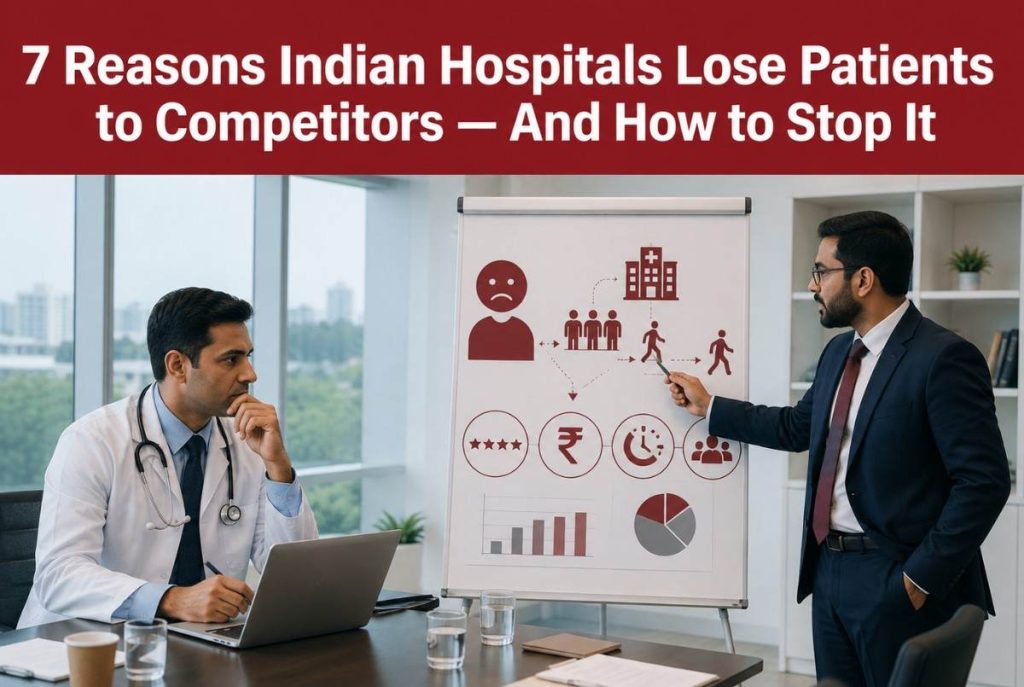
7 Reasons Indian Hospitals Lose Patients to Competitors — And How to Stop It A patient who leaves happy after one visit and never returns is not a success story — it’s a warning sign. Many hospital owners focus so heavily on filling beds that they overlook a quieter problem: patients slipping away to competitors without complaint. Strong patient retention strategies for hospitals address this silent churn before it erodes revenue and reputation. This piece breaks down why patients switch and what leadership teams can do about it. The Problem: Patients Are Leaving Quietly Across private hospitals in Chennai, Hyderabad, and other major Indian cities, patient churn rarely shows up as a formal complaint. Instead, it shows up as declining repeat visits, thinning follow-up appointment books, and referral patterns that quietly shift toward a competing facility. Hospital leadership often assumes clinical quality alone secures loyalty. In reality, a well-rounded patient acquisition strategy India hospitals rely on to bring patients in must be matched by an equally strong strategy to keep them. Acquisition without retention is a leaky bucket — new patients arrive while existing ones exit through the back door. The deeper issue is visibility. Most hospitals lack a structured way to track why patients don’t return, which means the problem stays invisible until it shows up in the financial reports. The Framework: Understanding Why Patients Switch Chitra Baskar’s work with hospital leadership teams points to a consistent pattern: patients rarely leave over clinical outcomes alone. They leave over the experience surrounding the clinical encounter. The core reasons tend to cluster around a few themes: Long, unpredictable wait times that make patients feel their time isn’t respected. Poor communication between visits, leaving patients unsure about follow-up care or next steps. Inconsistent staff behaviour, where one warm interaction is followed by a cold or dismissive one. Billing confusion or perceived lack of transparency around costs. Weak digital touchpoints, making it harder for patients to book, reschedule, or reach the hospital compared to competitors. Acting as a patient experience consultant India hospitals bring in to diagnose these gaps, Chitra Baskar often finds that hospitals already have the clinical strength to retain patients — they simply lack the systems to translate that strength into loyalty. This is where a clear approach to why patients switch hospitals in India becomes essential reading for any leadership team serious about retention. Practical Application: What Hospitals Can Do Retention improves when hospitals treat it as a deliberate discipline, not an afterthought. Map the post-visit experience. Look closely at what happens after a patient leaves — is follow-up communication timely, clear, and personal, or does it fall through the cracks? Standardise front-line staff training. Ensure every patient-facing team member, from security to billing, delivers a consistently respectful experience. Simplify billing communication. Explain costs clearly before and after treatment to remove one of the most common sources of patient frustration. Build a structured follow-up system. Use reminders and check-ins that feel caring rather than transactional, especially for chronic or long-term patients. Create feedback loops that actually get reviewed. Collecting patient feedback is meaningless if leadership never acts on the patterns it reveals. These steps form the foundation of how to retain patients in private hospitals India leadership teams can realistically implement without overhauling their entire operation at once. Common Mistakes Hospitals Make Even hospitals with strong clinical reputations fall into avoidable retention traps. Treating patient satisfaction surveys as a formality. Surveys collected but never analysed or acted upon send the message that feedback doesn’t matter. Focusing marketing spend only on new patient acquisition. Retention campaigns often receive little to no budget, despite costing far less than acquiring new patients. Assuming loyalty is automatic after a good clinical outcome. Patients weigh the entire experience, not just the treatment result, when deciding whether to return. Avoiding these patterns requires hospital leadership to treat hospital patient satisfaction India benchmarks as an ongoing priority, not a one-time initiative. Turning Insight Into Action Patients don’t usually announce why they leave — they simply stop coming back. Building thoughtful patient loyalty strategies for Indian hospitals starts with understanding the quiet friction points patients experience long before they choose a competitor. If patient churn has been a persistent concern at your hospital, connect with Chitra Baskar on LinkedIn or book a discovery call to explore where a retention audit could help. Frequently Asked Questions Why is my hospital not showing on Google Maps even after claiming the listing? Claiming a listing is step one, not the finish line. Most hospitals lose visibility due to inconsistent NAP details across directories, a single generic category instead of specific sub-categories, stalled review activity, or a profile that hasn’t been posted to in months. Google reads inactivity as a weak signal of business legitimacy. How often should a hospital post updates on its Google Business Profile? Weekly is the standard I recommend to every hospital I work with. Posts about health camps, doctor availability, OPD timing changes, or seasonal advisories keep your profile active in Google’s eyes and give prospective patients a reason to trust that the information they’re seeing is current. Do patient reviews actually affect hospital ranking on Google Maps? Yes, significantly. Google weighs review velocity — steady, ongoing reviews — more heavily than a large historical count. Responding to every review, especially negative ones, professionally and within NMC advertising guidelines, also strengthens both ranking signals and patient trust. Should a multi-specialty hospital have one Google Business Profile or separate listings per department? One verified profile per physical location, with department-specific categories and attributes added within it. Separate listings for departments at the same address create duplicate-listing conflicts that confuse Google and dilute your ranking rather than strengthening it. Can a small clinic in a semi-urban area compete with larger hospitals on Google Maps? Absolutely, and often more easily than in dense urban markets. Local search favours proximity and active profile management. A well-maintained profile with consistent reviews and accurate details frequently outranks a larger,
How to Grow a Specialty Clinic in India — A Revenue-First Framework
How to Grow a Specialty Clinic in India — A Revenue-First Framework Specialist doctors rarely struggle with clinical skill — they struggle with turning that skill into a thriving practice. A sound medical practice growth strategy is often missing, replaced instead by scattered marketing efforts, referral dependency, and guesswork. This piece lays out a revenue-first framework that helps specialty clinic founders build predictable, sustainable growth. The Problem: Clinical Excellence Isn’t Enough Anymore Across Chennai, Bengaluru, Mumbai, and smaller tier-two cities, specialty clinics in dermatology, orthopedics, dental care, and fertility are opening at a rapid pace. Patients now compare providers online before they ever step into a clinic. Yet many founders still rely on word-of-mouth referrals as their sole growth engine. This creates fragile revenue. When referral patterns shift or a key referring doctor retires, patient inflow drops sharply with no backup system in place. Working with an experienced clinic growth consultant India-based founders trust can help identify these blind spots before they become existential threats to the practice. The deeper issue is that most clinics treat marketing and operations as separate functions. Growth, however, is a single connected system — spanning patient experience, pricing, staff training, and digital visibility together. The Framework: A Revenue-First Approach to Clinic Growth Chitra Baskar’s approach to how to grow a specialty clinic in India starts with a simple but often overlooked idea: growth should be engineered around revenue outcomes, not vanity metrics like social media followers or website traffic alone. The framework rests on a few core pillars: – Patient journey mapping — Understanding every touchpoint a patient experiences, from first search to follow-up visit, and removing friction at each stage. – Service-line profitability review — Identifying which specialties or procedures actually drive margin, and reallocating marketing and staff focus accordingly. – Referral system design — Building structured, trackable referral partnerships instead of relying on informal goodwill. – Digital visibility audit — Ensuring the clinic appears where patients are actually searching, particularly for high-intent, condition-specific queries. This is not a one-size-fits-all template. A specialty clinic marketing strategy India clinics adopt must reflect the specific specialty, city, and patient demographic the practice serves. What works for a dental chain in a metro will not work for a solo fertility specialist in a smaller city. Practical Application: What Clinic Founders Can Do Now Turning this framework into action doesn’t require a large team or a complex overhaul. It requires disciplined, sequenced execution. – Audit your current patient sources. List where your last several months of patients actually came from — referrals, search, walk-ins, or social media — and note which source brings the highest-value patients. – Fix the weakest link in your patient journey. Whether it’s a slow appointment booking process or a confusing follow-up system, resolve the single biggest friction point first. – Strengthen your online presence around patient intent. Focus content and listings on the specific conditions and treatments patients search for, not generic clinic branding. – Build a referral tracking system. Move beyond informal thank-you calls to a structured process that shows which referring doctors bring consistent, quality patients. – Invest in staff training for patient communication. Front-desk and nursing staff often make or break the first impression — train them as part of your patient acquisition for specialty clinics India strategy, not as an afterthought. Each of these steps is designed to compound. Together, they shift the clinic from reactive patient intake to a deliberate, revenue-first growth engine. Common Mistakes Clinics Make Even well-run clinics fall into predictable traps when trying to grow. – Chasing visibility without strategy. Running ads or posting on social media without a clear patient-acquisition goal wastes budget and rarely converts into consistent bookings. – Ignoring the economics of each service line. Many clinics keep offering low-margin procedures out of habit, without examining whether they support long-term financial health. – Treating growth as a marketing-only problem. Sustainable growth touches pricing, staff training, patient experience, and operations — not just advertising spend. Recognising these patterns early saves founders considerable time, stress, and missed revenue down the line. Building Growth That Lasts A specialty clinic grows sustainably when strategy, operations, and patient experience move together — not when marketing is treated as a quick fix. This revenue growth framework for Indian clinics gives founders a starting point to diagnose gaps and build a plan suited to their specialty and market. If you’re ready to turn this framework into a tailored growth plan for your clinic, connect with Chitra Baskar on LinkedIn or book a discovery call to discuss where your practice stands today. Frequently Asked Questions Why is my hospital not showing on Google Maps even after claiming the listing? Claiming a listing is step one, not the finish line. Most hospitals lose visibility due to inconsistent NAP details across directories, a single generic category instead of specific sub-categories, stalled review activity, or a profile that hasn’t been posted to in months. Google reads inactivity as a weak signal of business legitimacy. How often should a hospital post updates on its Google Business Profile? Weekly is the standard I recommend to every hospital I work with. Posts about health camps, doctor availability, OPD timing changes, or seasonal advisories keep your profile active in Google’s eyes and give prospective patients a reason to trust that the information they’re seeing is current. Do patient reviews actually affect hospital ranking on Google Maps? Yes, significantly. Google weighs review velocity — steady, ongoing reviews — more heavily than a large historical count. Responding to every review, especially negative ones, professionally and within NMC advertising guidelines, also strengthens both ranking signals and patient trust. Should a multi-specialty hospital have one Google Business Profile or separate listings per department? One verified profile per physical location, with department-specific categories and attributes added within it. Separate listings for departments at the same address create duplicate-listing conflicts that confuse Google and dilute your ranking rather than strengthening it. Can a small clinic in a semi-urban area compete with
Google Business Profile for Hospitals: How to Rank #1 on Google Maps and Get More Patient Calls
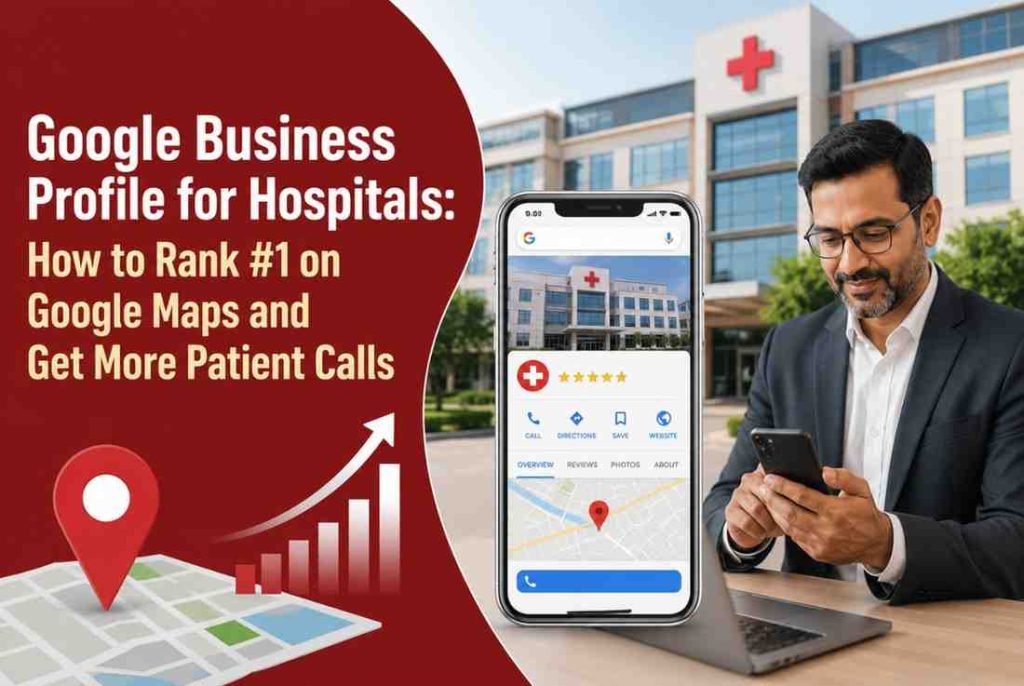
Google Business Profile for Hospitals: How to Rank #1 on Google Maps and Get More Patient Calls I once sat across from a hospital administrator in Chennai who was convinced his Google Ads budget was the problem. Three lakhs a month, he said, and patients still weren’t calling. I asked him one question before we even opened the ad account: “When did you last check your Google Business Profile?” He didn’t know what that was. His front office team had claimed it two years earlier and never touched it since. Wrong phone number. Photos from a hospital that had since renovated its entire lobby. Zero replies to reviews, including three one-star complaints about waiting times. That hospital was spending money to drive traffic to a digital front door that looked abandoned. This is, without exception, the single most common and most fixable problem I see when I walk into a hospital’s marketing setup. A properly optimised Google Business Profile for hospitals in India is not a technical checkbox. It is often the first, and sometimes only, impression a patient forms of your facility before they decide whether to call. The Real Problem: Everyone Optimises the Website, Nobody Optimises the Front Door Here is what the industry keeps getting backwards. Hospital marketing teams pour budget and attention into the website — SEO agencies, content calendars, backlinks — while the Google Business Profile sits neglected in the background, managed by whoever happened to have Gmail access when the listing was first claimed. But think about actual patient behaviour in India. A patient in Coimbatore searching for “orthopaedic hospital near me” at 11 PM with a swollen ankle is not browsing your website’s About page. They are looking at the Google Maps pack — three listings, star ratings, distance, and whether you’re open now. They decide in under fifteen seconds whether to call, and that decision is made almost entirely on what your Business Profile shows them, not your website. I want to challenge something the SEO agencies rarely say out loud: a hospital with a mediocre website and an excellent, active Google Business Profile will out-perform a hospital with a beautiful website and a neglected profile, every single time, for local patient acquisition. This isn’t opinion. I have watched it happen across dozens of hospitals, from ten-bed nursing homes in semi-urban Tamil Nadu to large multi-specialty facilities in Chennai. The website builds long-term trust and brand. The Business Profile drives the phone to ring today. Most hospitals have this priority completely inverted, and it costs them real patients every week. The Framework: What Actually Moves a Hospital to the Top of Google Maps Ranking on Google Maps for healthcare terms comes down to three factors Google itself has confirmed for years — relevance, distance, and prominence — but almost nobody in Indian healthcare marketing explains what “prominence” actually means for a hospital specifically. Let me break it down properly, because this is where the competitor content out there stays frustratingly generic. Step 1: Category and NAP accuracy, done at the department level. Most hospitals set one broad category — “Hospital” — and stop there. If you run a multi-specialty facility, you need department-specific attributes, correct sub-categories where Google allows them, and absolute consistency of your Name, Address, and Phone number across every directory, from Practo and Justdial to your own website footer. Inconsistent NAP data is one of the quietest rank-killers I encounter, and it usually traces back to different departments creating separate, uncoordinated listings for the same facility. Step 2: Review velocity and review response, not just review count. A hospital with 40 reviews collected steadily over a year will consistently outperform one with 200 reviews all collected in a single burst three years ago. Google reads velocity as a signal of an active, real business. Equally important — and almost universally ignored — is responding to every review, especially the negative ones. A calm, professional response to a one-star review about wait times does more for prospective patient trust than ten generic five-star reviews with no replies. I have seen hospitals get defensive or ignore criticism entirely in this space. Both are mistakes. NMC guidelines and Indian advertising standards require restraint here too — no soliciting fake reviews, no promising outcomes in your responses, no comparative claims against named competitors. Step 3: Photo and Q&A management as an ongoing job, not a one-time upload. Photos should be updated quarterly at minimum — reception area, OT standards where permissible, doctor profiles, parking and entrance visuals for first-time visitors. The Q&A section on your profile is public and editable by anyone, which means competitors or confused patients can post incorrect information that sits there unanswered for months. I make it standard practice for every hospital I work with to seed their own accurate Q&A entries proactively. Step 4: Posts and updates that mirror real search behaviour. Google Business Profile allows weekly posts — health camps, new doctor onboarding, OPD timing changes, festival holiday hours. Hospitals that post consistently see measurably better visibility in the local pack than those that set up their profile and never return to it. Here is a quick framework I use with clients to diagnose where their profile actually stands: Profile Health Signal Weak Hospital Profile Strong Hospital Profile Category setup Single generic category Primary plus relevant sub-categories, department attributes filled Reviews Burst-collected, unanswered Steady monthly growth, every review answered within 48 hours Photos Uploaded once at setup Refreshed quarterly, department-wise galleries Posts None or dormant Weekly updates tied to real hospital activity NAP consistency Conflicting across directories Identical across Google, Practo, Justdial, website Q&A section Empty or outdated Proactively seeded with accurate answers The competitor content ranking for this keyword right now largely stops at “claim your listing and add photos.” It rarely addresses the department-level category problem multi-specialty hospitals face, almost never discusses review velocity as distinct from review count, and never touches the compliance angle around NMC guidelines in review responses. That gap is
Fractional CMO vs Full-Time CMO for Hospitals: Which One Makes More Business Sense in India
Fractional CMO vs Full-Time CMO for Hospitals: Which One Makes More Business Sense in India I started my career at Apollo Hospitals in 1993. Back then, the idea that a hospital needed to think about marketing at all was considered slightly undignified in some circles. Thirty years later, I sit in hospital board meetings where the argument isn’t whether to invest in marketing leadership — it’s whether to hire a full-time CMO or bring someone in fractionally. I’ve sat on both sides of that table, and I’ve watched hospitals get this decision wrong in both directions. The honest answer to fractional CMO vs full time CMO hospital India isn’t a universal one. It’s a question about your hospital’s stage, complexity, and — this is the part nobody tells you — your internal team’s actual maturity. Get the match wrong, and you either overpay for a role you don’t need yet, or underinvest in leadership your growth stage demands. This isn’t a theoretical comparison. It’s the exact conversation I have with hospital boards and doctorpreneurs scaling from a single facility to multiple locations, and I want to walk you through how I actually think about it — not the sanitized agency version. The Real Problem: Nobody Talks About Readiness, Only Cost Most content comparing fractional and full-time CMOs frames this purely as a cost decision — fractional is cheaper, full-time is more committed, pick your budget. That framing misses the actual variable that determines success: organizational readiness. Here’s what I disagree with, based on what I’ve watched happen inside Indian hospitals: hiring a full-time CMO before your marketing function has basic infrastructure — a functioning CRM, a content pipeline, a digital presence beyond a static website — is one of the most expensive mistakes a hospital board can make. I’ve seen hospitals recruit an experienced full-time CMO at a strong salary, only to watch that person spend their first year building infrastructure a fractional leader could have set up in three months at a fraction of the cost. The CMO ends up doing foundational work instead of strategic work, and the board wonders why the “expensive hire” isn’t moving the needle. The opposite mistake also happens. Multi-location hospital chains with real operational complexity — multiple service lines, referral networks, several markets across Tamil Nadu or beyond — try to run indefinitely on a fractional model because it looks cheaper on paper, and end up with disjointed strategy because no one is embedded enough to catch cross-departmental blind spots. Both mistakes come from the same root: treating this as a budget decision instead of a readiness decision. The Framework: How to Actually Decide I evaluate this across four dimensions, not just cost. Here’s the breakdown I walk boards through. 1.Cost Reality, Without the Vagueness A full-time hospital CMO in India, at the senior level a multi-specialty or chain hospital actually needs, typically commands a total compensation package well into seven figures annually — salary, benchmarks, and retention incentives included, often in the ₹40 lakh to over ₹1 crore range depending on the hospital’s scale and market. A fractional healthcare marketing leader, by contrast, is typically engaged on a monthly retainer, working a defined number of days or hours per week, at a fraction of that annual cost — commonly landing between one-quarter and one-half of the full-time total cost, depending on scope and time commitment. The comparison isn’t just salary versus retainer. A full-time hire also carries recruitment cost, onboarding time (often four to six months before they’re fully productive), benefits, and the risk of a mis-hire, which in a senior marketing role can cost a hospital a full year of lost momentum. A fractional engagement can typically start within weeks and be restructured or exited far more easily if it isn’t the right fit. 2.Scope of Involvement Factor Fractional CMO Full-Time CMO Time commitment Typically 1–3 days/week 5 days/week, embedded Best for Single hospital, growth-stage clinic chain, or pre-infrastructure marketing function Multi-location hospital groups, complex referral networks, large annual ad spend Onboarding speed Weeks 4–6 months to full productivity Cost structure Monthly retainer, flexible exit Salary + benefits + retention cost Risk of mis-hire Low — engagement can be restructured High — recruitment and severance cost if wrong fit Depth of embedded team leadership Moderate, depends on hours allocated Full daily ownership of team and vendors 3. What a Fractional CMO Cannot Do I’ll say this plainly because most fractional CMO content won’t: if your hospital has a marketing team of eight or more people, multiple facilities, and needs someone attending clinical department meetings weekly to catch service-line-specific opportunities, a fractional leader working two days a week cannot give you that depth. This is where full-time leadership genuinely earns its cost — in day-to-day team development and cross-functional presence a part-time arrangement structurally cannot replicate. 4. What a Full-Time CMO Wastes If Hired Too Early Conversely, if your hospital doesn’t yet have basic marketing systems — no CRM tracking patient enquiries, no content calendar, no clear brand positioning — a full-time CMO’s first six months get consumed building what a fractional leader could set up faster and cheaper, before you’ve even confirmed the strategic direction that full-time leadership should execute against. The decision point I actually use with clients: if your marketing function needs to be built, start fractional. If your marketing function needs to be run at scale, daily, across departments, go full-time. Trying to skip the fractional stage is the single most common expensive mistake I see boards make. What This Changes Get this match right, and the near-term impact is immediate — you stop paying senior-level cost for foundational work, or under-resourcing a complex, multi-location marketing function that genuinely needs daily leadership. Medium-term, hospitals that sequence correctly — fractional to build, full-time to scale — end up with marketing infrastructure that’s actually usable by whoever leads it next, instead of a patchwork built by an underutilized or overwhelmed hire. Long-term, this decision directly affects patient acquisition cost,
How AI, Trust, and Strategy Will Redefine Hospital Growth
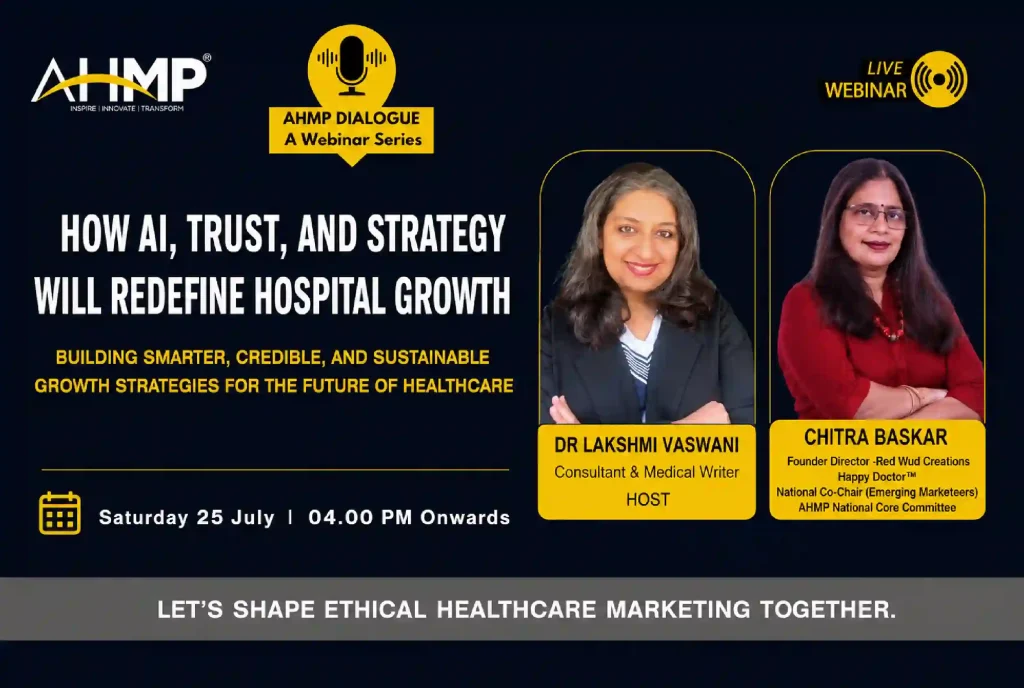
How AI, Trust, and Strategy Will Redefine Hospital Growth — Join the Conversation A few months ago, a hospital administrator described a challenge to me that I’ve since heard in different words from at least a dozen others. His hospital had adopted an AI-based diagnostic support tool — technically sound, clinically validated, well received by the doctors using it. And yet patient uptake was slower than expected. Not because the technology didn’t work. Because nobody had explained it to patients in a way they trusted. That conversation stayed with me, and it’s part of what I’ll be exploring at an upcoming session in the AHMP Dialogue Webinar Series, titled “How AI, Trust, and Strategy Will Redefine Hospital Growth.” The session will be hosted by Dr. Lakshmi Vaswani, Consultant & Medical Writer, on Saturday, 25th July, at 4:00 PM. Beyond preparing for this conversation, it’s a question I find myself returning to often in my work at Red Wud Creations: what does hospital growth actually require in an era where AI is everywhere, but trust is still earned the old-fashioned way? AI Is Moving Faster Than Trust Can Follow Healthcare AI has moved from pilot programs to daily use in a relatively short span. Predictive analytics now inform triage decisions. Diagnostic tools flag anomalies faster than a radiologist scanning manually. Chatbots handle appointment scheduling and preliminary symptom checks. From a pure capability standpoint, this is progress that would have seemed distant even a few years ago. But capability and acceptance are different things. Patients don’t evaluate AI the way engineers do. They evaluate it through a much simpler lens: do I trust the outcome, and do I understand why I’m being asked to trust it? A hospital can implement the most sophisticated AI system available and still watch adoption stall if patients feel like decisions are happening to them rather than with them. This is the gap I keep coming back to — not a technology gap, but a communication gap. And it’s precisely the kind of gap that healthcare marketing, done well, is positioned to close. Why Strategy Is the Missing Middle Ground If AI is the tool and trust is the goal, strategy is what connects them. Without it, hospitals tend to adopt technology in isolated bursts — a new AI system here, a digital patient portal there — without a coherent plan for how these pieces fit into the patient’s overall experience or how they’re communicated. A strategic approach asks different questions before implementation: How will this be explained to patients? Who is responsible for that explanation? What happens when the AI gets something wrong, and how is that handled transparently? These aren’t marketing questions in the traditional sense. They’re trust questions, and increasingly, healthcare marketing teams are the ones best equipped to answer them, because this is the work marketing does by nature — translating complexity into something people can understand and act on with confidence. What Trust Actually Looks Like in a Hospital Setting Trust in healthcare isn’t abstract. It shows up in specific, observable ways: a patient who understands why an AI tool flagged something in their scan. A family that isn’t confused by automated communication after a procedure. A hospital that acknowledges the limits of a technology rather than overselling it. In my experience, hospitals that build trust well tend to share a common trait — they treat explanation as part of the clinical and marketing process, not an afterthought bolted on once the technology is already in use. This requires marketing and communication teams to be involved early, not brought in after the fact to “announce” a new system. The Collaboration Healthcare Growth Actually Requires None of this works if it sits with one department alone. Clinicians understand the medical reasoning behind AI tools. Administrators understand operational constraints and patient volume. Marketers understand how to communicate complex ideas clearly and empathetically. Technology teams understand the tool’s actual capabilities and limitations. Hospital growth strategies that succeed tend to involve all four groups from the early stages, not sequentially, but simultaneously. This is slower and occasionally more difficult than letting one department drive the process alone. It’s also, in my experience, the only version of AI adoption that holds up once patients start asking questions — and they always do. Why Ethical Communication Isn’t Optional There’s a temptation in any competitive industry to market technology in the most impressive terms possible. Healthcare cannot afford that temptation, because the claims involved touch people’s decisions about their own care. Ethical healthcare communication means being precise about what an AI tool does and doesn’t do. It means not implying certainty where there is probability, and not using technical sophistication as a substitute for clear explanation. This isn’t just good practice — it’s the foundation on which long-term patient trust, and by extension long-term hospital growth, is actually built. Why I’m Looking Forward to This Conversation None of the perspectives I’ve shared here came from working in isolation. They’ve come from conversations — with hospital administrators, doctors, fellow marketers, and technology teams navigating the same questions from different angles. That’s exactly the kind of exchange I’m expecting at this AHMP Dialogue session. I don’t think sessions like this work best when someone arrives with definitive answers. They work when a room full of people, each holding a different piece of the puzzle, compare notes and leave with a slightly more complete picture than they started with. That’s what I’m hoping for on 25th July, and it’s why I’d genuinely like as many perspectives in that room as possible — hospital leaders, doctors, marketers, and technology professionals alike. Join the Conversation If any of this resonates with the work you do — whether you’re running a hospital, leading a marketing team, practicing medicine, or building healthcare technology — I’d love for you to join us. Session: How AI, Trust, and Strategy Will Redefine Hospital Growth Series: AHMP Dialogue – A Webinar Series Date: Saturday, 25th July Time: 4:00 PM
Healthcare Marketing Leadership and AHMP CON2026: My Thoughts

Healthcare Marketing Leadership and AHMP CON2026: My Thoughts Healthcare marketing has changed a great deal since I first started working in this space. What used to be signage, brochures, and the occasional newspaper ad has now become something far more layered — a discipline that sits at the intersection of patient trust, clinical credibility, and digital communication. As I prepare to attend AHMP CON2026 – Healthcare Marketing Summit, Chennai Edition, in my capacity as National Co-Chair, Emerging Marketeers, AHMP National Core Committee (2026–2028), I find myself reflecting on a question that has stayed with me throughout my career: how does healthcare communicate honestly, effectively, and meaningfully with the people it serves? A Career Rooted in Healthcare Communication Through Red Wud Creations, my focus has always been on helping healthcare providers communicate clearly with their patients and communities. Healthcare branding carries a different weight than branding in most other industries. A hospital’s messaging touches decisions about health, trust, and sometimes urgency — it isn’t just about visibility, it’s about responsibility. Over the years, working closely with doctors, hospitals, and healthcare organizations has shaped the way I think about this work. I don’t see communication as a purely commercial exercise. I see it as something that carries real consequence for the people on the receiving end of it. This thinking eventually led me to start Happy Doctor™ — an initiative built around helping doctors and healthcare practices present themselves to patients in a way that stays true to clinical integrity, without stretching into marketing appeal for its own sake. Understanding My Role as National Co-Chair, Emerging Marketeers Being appointed National Co-Chair, Emerging Marketeers, with the AHMP National Core Committee (2026–2028) is a role I take seriously, and honestly, it isn’t about individual recognition. It’s about coordination — connecting marketers, hospital administrators, and healthcare communicators who are all navigating fairly similar challenges, often without any shared playbook to lean on. Emerging marketers in healthcare face a very specific tension. There’s a real need to build visibility for a practice or hospital, but that has to happen within the ethical boundaries healthcare demands. Part of what this committee tries to do is create space for these conversations to happen constructively, rather than leaving individual marketers to figure it out alone. What AHMP CON2026 Means to Me AHMP CON2026 is scheduled for 6th September 2026 at Sri Ramachandra Medical College & Research Institute, Chennai, and it brings together healthcare marketers, hospital leaders, and industry professionals for a day centered on shared learning. In my experience, events like this matter less for what gets announced on stage and more for the conversations that happen in between — comparing notes with a hospital administrator from a different city, or hearing how another clinic owner approached a communication challenge I’ve faced myself. For me, attending AHMP CON2026 is a continuation of something I’ve tried to stay close to throughout my career: these grounded, practical exchanges, rather than treating industry events as one-off appearances on a calendar. Why I Believe Collaboration Is the Foundation of Healthcare Marketing If there’s one thing I keep coming back to, it’s that healthcare marketing works best as a collaborative discipline. Hospitals, doctors, marketers, and technology providers each hold a piece of the puzzle when it comes to communicating healthcare services responsibly. No single agency or professional has a complete view of patient behavior, clinical nuance, and digital trends all at once — I certainly don’t claim to. That’s part of why platforms like AHMP matter to me. They create a shared space where healthcare marketing professionals can compare approaches and, where it makes sense, align on practices that ultimately serve patients better. On Ethics in Healthcare Communication Healthcare marketing carries obligations that other sectors simply don’t have to think about. What we say in this space can influence decisions about someone’s care, which is why accuracy and restraint matter to me — they aren’t optional extras. I’ve tried to keep this at the center of my own work: healthcare communication should inform and reassure, not exaggerate or mislead. This is a value I see echoed in the broader mission of committees like AHMP’s, which are built around encouraging responsible marketing practices for hospitals, clinics, and healthcare brands operating in an increasingly competitive digital environment. Looking Ahead As healthcare organizations continue adapting to digital-first patient journeys, I believe the need for thoughtful, ethical marketing guidance is only going to grow. My continued involvement with AHMP, alongside my ongoing work through Red Wud Creations, comes from a genuine, long-term interest in strengthening how India’s healthcare sector communicates — one conversation, one committee meeting, and one summit at a time. In Closing For me, attending AHMP CON2026 isn’t a standalone milestone — it’s part of an ongoing commitment to India’s healthcare marketing community. Through my work at Red Wud Creations and my role with the AHMP National Core Committee, I hope to keep advocating for a version of healthcare marketing that prioritizes clarity, trust, and collaboration. These are values I believe matter as much to hospitals and clinics as they do to the patients we’re all ultimately here to serve.