


Event Marketing for Hospitals: How to Plan Community Events That Build Trust and Referrals
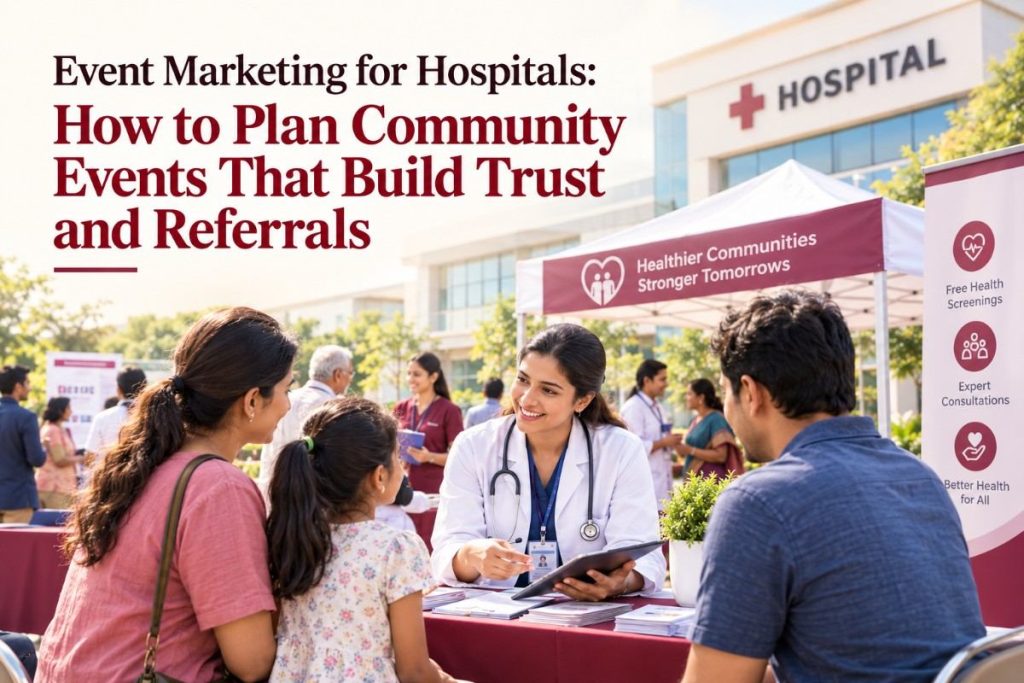
Event Marketing for Hospitals: How to Plan Community Events That Build Trust and Referrals Many hospitals run a health camp or a community talk, take photographs and move on. A few months later, nobody can say whether it changed anything. Good event marketing for hospitals works differently. It treats each event as a way to earn trust with a specific group of people, and then follows through so that trust turns into relationships with patients and referring doctors. This guide is for hospital owners, medical directors and marketing heads who want community events that are useful to the public, defensible under current advertising norms and measurable in a sensible way. Why Community Events Still Work Healthcare decisions are personal and often urgent. People ask relatives, neighbours and their family doctor before they choose a hospital. Hospital community events put your clinicians in front of those networks in a setting where they can explain something useful, answer questions and be seen as approachable. An event cannot create trust by itself. It gives people a reason to remember you when a need arises, and it gives referring doctors a reason to keep you in mind. Start With the Rules The National Medical Commission recently issued guidelines on ethical advertising and public communication. Based on press coverage, doctors may take part in health awareness programmes and public health campaigns, provided these do not promote a personal practice, solicit patients or become a vehicle for promotional marketing. The coverage I reviewed does not separately address hospital-run camps, and it flags concern about discounts, free procedures and contests that could encourage unnecessary consultations or tests. For hospitals planning events, I would treat this as a design brief: make the event educational, keep claims factual, and avoid anything that looks like an inducement. Please read the official notice and take legal advice before finalising your calendar. Choose the Right Type of Event A sound healthcare event marketing strategy matches each event to an audience and a purpose. Some hospital event marketing ideas that suit India: Health education sessionsat resident associations, schools, workplaces and senior citizens’ groups, led by clinicians on common local concerns. Clinical update meetingsfor general practitioners and nearby clinics, which build referral relationships directly. Awareness dayslinked to recognised health observances, held with community partners. Screening campswhere clinically appropriate, with proper consent, privacy and a clear follow-up path. Community walks or runsthat bring the hospital into public life without selling anything. Not every event should target the public. In many cases the most valuable audience is the local doctor community. Plan Before You Promote Set a Purpose You Can Measure Decide what the event is for. Trust with a particular neighbourhood, stronger relationships with referring doctors, awareness of a service line and early detection are different goals and need different designs. Write it down before anything else. Prepare the Clinical Side Confirm clinician availability, equipment, consent processes, privacy of records and referral pathways for anyone who needs further care. A camp that detects a concern but has no follow-up route harms trust more than it builds it. Make Attendance Easy Choose a convenient venue, a suitable time and a simple registration route. Brief every front-line team member so they can answer questions consistently. How to Promote a Health Camp for a Hospital If your question is how to promote a health camp for a hospital, start with the people who already hold local trust rather than with paid advertising. Work through resident associations, schools, employers, community groups and local doctors, who can invite their own people credibly. Share clear details: purpose, venue, date, who the event is for, what will and will not be offered, and how to register. Use messaging channels only with people who have agreed to hear from you. Keep the tone informative. Avoid fear-based messaging, exaggerated claims and superlatives. Make sure doctors named on materials are listed with accurate qualifications and registration details, as the guidelines expect for communications on electronic media. Turn Attendance Into Relationships The event ends, but the work continues. Within a few days, send a short thank-you and useful health information to those who consented to hear from you. Follow up with referring doctors who attended, and give them a simple way to contact your team. Pass any individual health concerns to the appropriate clinicians through proper channels. Do not wait for patients to appear in bulk. Trust builds slowly, and your measurement should reflect that. How to Measure ROI of a Hospital Event Many hospitals measure only footfall. That tells you who came, not whether the event achieved its purpose. A more useful approach: Reach and quality:attendance against the intended audience, and feedback on usefulness. Follow-through:how many attendees completed recommended follow-up, and how many consented to further contact. Relationships:new referring doctors engaged, and referrals received over time. Enquiries:appointment requests that attendees initiated, with the source recorded. Cost:total spend on staff time, materials and venue, compared with the outcomes above. Be careful with attribution. Because the guidelines discourage solicitation at events, the cleanest approach is to record outcomes that arise naturally and with consent, rather than to set patient-conversion targets for a camp. Review the measurement plan with your legal adviser, and accept that some value, such as goodwill, can only be tracked over a longer period. Frequently Asked Questions Should a hospital offer free tests at a camp? Only where clinically justified. Free offers that could encourage unnecessary care are a concern under the reported guidelines, so take advice before you proceed. Who should speak at the event? Clinicians who can explain topics clearly. Keep the content educational and avoid promotional language about the hospital or any individual doctor. Planning Your Event Calendar? The strongest community programmes are planned around a clear purpose, a trusted set of partners and a realistic way to measure results. If you lead a hospital and want help designing an event programme that is practical and compliant, I would be glad to hear from you. I am Chitra Baskar,
How Tier 2 City Hospitals in India Can Compete with Corporate Chains
How Tier 2 City Hospitals in India Can Compete with Corporate Chains The arrival of a corporate hospital chain in a Tier 2 city does not have to signal the decline of independent healthcare. Many hospital owners respond with anxiety — cutting prices, rushing renovations, or simply hoping loyalty holds. None of these work consistently. What works is a structured clinic expansion strategy Tier 2 cities India independent hospitals can own — one that plays to their genuine strengths rather than imitating what corporate chains already do better. Why Independent Hospitals Are Losing Ground — And What Is Actually Driving It The challenge from chains of hospitals is real, but it is frequently misunderstood. Patients are not leaving independent hospitals purely because corporate facilities are clinically superior. In many cases, they are not Apollo, Fortis, and Manipal. What corporate chains offer is a packaged confidence — consistent signage, structured communication, digital convenience, and the reassurance of a nationally expanded name. Independent hospitals, despite decades of service and strong community relationships, often fail to communicate their value with the same clarity. This is fundamentally a private hospital marketing India challenge. Owners who diagnose it correctly stop trying to match corporate infrastructure and start investing in differentiated positioning that corporate chains genuinely cannot replicate at scale. The gap is not in capability or care quality. It is in how that quality is perceived, communicated, and experienced by patients at every touchpoint. The Strategic Framework: Four Advantages Independent Hospitals Must Own Chitra Baskar’s work with independent hospitals across Tier 2 and Tier 3 cities consistently identifies four areas where independent owners hold structural advantages — if they choose to develop them intentionally. Proximity and Personalised Care Corporate chains optimise for throughput. Independent hospitals can optimise for relationship. Direct consultant access, familiar faces at reception, personalised discharge calls — these details matter enormously to patients in smaller cities and cannot be systematised at corporate scale. Community Trust Accumulated Over Years An independent hospital that has served three generations of local families holds social capital that no marketing budget can manufacture. The strategy is to make that trust visible — through patient stories, community health initiatives, and consistent local presence. Specialty Focus Over Spread Rather than competing across every department, a focused clinic expansion strategy Tier 2 cities India owners implement successfully tends to anchor on one or two high-demand, high-trust specialties. Depth of reputation in one area outperforms breadth across many. Agility in Decision-Making Independent owners can respond to community needs, adjust pricing structures, onboard specialists, and redesign patient pathways far faster than a corporate chain bound by national protocols. This agility is a competitive asset that rarely gets leveraged. Working with a hospital branding consultant India owners trust can translate these four advantages into a positioning strategy that is both distinctive and credible. A well-executed hospital marketing plan for South India, for instance, must account for language preferences, community health priorities, and local referral dynamics — none of which a national corporate template addresses well. Four Practical Steps to Start Competing More Effectively Step 1: Clarify your clinical identity. Identify the one or two specialties where your hospital has the strongest outcomes, consultant depth, or community reputation. Make these the centrepiece of all external communication and referral outreach. Step 2: Redesign the patient experience at key touchpoints. Map the patient journey from first call to post-discharge follow-up. Identify where experience breaks down. Corporate chains set a baseline — independent hospitals can exceed it through personalisation, not infrastructure spend. Step 3: Activate your referral network formally. Most independent hospitals in Tier 2 cities have informal referral relationships with local GPs and specialists. Formalising these — with structured engagement, clinical feedback loops, and regular communication — converts goodwill into consistent patient flow. Step 4: Build a credible digital presence. Understanding how to compete with corporate hospitals in Tier 2 India requires being findable where patients search. A complete Google Business Profile, specialty-specific content, and genuine patient reviews are foundational — and entirely within reach for independent hospitals. Three Mistakes That Accelerate the Decline Competing on price. Discounting in response to a corporate entrant communicates insecurity, not value. It attracts price-sensitive patients while eroding the margins needed to sustain quality. Copying the corporate aesthetic. Repainting lobbies or adding digital screens without fixing clinical communication or patient experience delivers no strategic benefit. Patients notice substance, not surface. Remaining invisible locally. Independent hospitals that do not actively manage their community reputation — through events, health camps, social media, or local media — cede perception to competitors who do. The Independent Hospital’s Position Is Stronger Than It Feels Corporate chains bring capital and brand recognition. Independent hospitals bring something built over years that capital cannot shortcut — community trust, clinical relationships, and local knowledge. A focused clinic expansion strategy Tier 2 cities India owners execute with clarity can convert those assets into a durable competitive position. If you are an independent hospital owner navigating corporate competition and want a strategy built around your specific market, Chitra Baskar offers focused consulting for founders and owners across India. Connect with her on LinkedIn or book a discovery call — and begin building healthcare branding for independent hospitals Tier 2 cities that genuinely sets you apart. What does a healthcare business growth consultant do? A healthcare business growth consultant helps hospitals, clinics, and healthcare entrepreneurs identify revenue gaps, streamline operations, build leadership capacity, and create clear, actionable strategies to grow their organisation sustainably and profitably. Why do healthcare businesses in India need a growth consultant? India’s healthcare sector is competitive and rapidly evolving. Many providers have clinical excellence but lack the business strategy, systems, and leadership structures to scale. A specialist consultant bridges that gap — delivering growth without compromising patient care quality. Who is Chitra Baskar? Chitra Baskar is a healthcare business growth consultant based in India, working with hospitals, clinic owners, and healthcare entrepreneurs to scale revenue, build strong teams, and create future-ready healthcare organisations through personalised strategy and
Patient Referral Programs That Work for Indian Hospitals — A Practical Guide
Patient Referral Programs That Work for Indian Hospitals — A Practical Guide Word-of-mouth has always driven patient decisions in India — but most hospitals leave it entirely to chance. A well-designed patient referral program for hospitals India can transform an informal trust network into a structured, measurable growth channel. Yet the majority of hospital owners and clinic founders have no formal system in place. This guide breaks down what an effective referral program looks like, why most attempts fail, and what it takes to build one that consistently delivers new patients. Why Most Indian Hospitals Do Not Have a Working Referral System Referrals happen at every hospital — the problem is that they are untracked, unmanaged, and unrecognised. A patient recommends a specialist to a neighbour. A general physician sends cases to a surgeon. Neither interaction is recorded, acknowledged, or nurtured. This is a significant gap in patient acquisition strategy India hospitals cannot afford to ignore. In Tier 1 cities, digital advertising costs are rising sharply. In Tier 2 cities, trust still drives decisions more than search rankings. In both markets, a referral from a known source carries more conversion weight than any paid campaign. The challenge is not that referrals do not exist — it is that hospitals have no infrastructure to capture, track, or grow them. Chitra Baskar’s Framework for Building a Referral Program That Holds A referral program is not a WhatsApp group for doctors or a discount coupon for patients. It is a structured system with defined pathways, clear communication, and consistent follow-through. Chitra Baskar’s approach separates referral strategy into two distinct channels — each requiring its own design. Channel 1: Doctor-to-Doctor Referrals This is the highest-value referral channel for most Indian hospitals, particularly for surgical specialties and tertiary care. Building it requires: Identifying the top 20 general physicians and specialists in your catchment area who are already referring — and those who should be. Creating a formal engagement programme — not just visits, but value exchange. CMEs, clinical updates, and case discussion forums build trust over time. Establishing a feedback loop. Referring doctors need timely updates on patients they send. When that loop breaks, referrals stop. A structured doctor referral program strategy India hospitals implement must go beyond relationship management — it needs accountability and tracking built in. Channel 2: Patient-to-Patient Referrals Satisfied patients are an underutilised asset. Building a healthcare lead generation India channel through patient referrals requires a different approach — one focused on experience, not incentives alone. Hospitals that perform well here do three things consistently: they follow up with patients post-discharge, they make sharing easy (through digital reviews or direct referral prompts), and they recognise and acknowledge patients who refer others. How to build a patient referral network for hospitals in India starts with identifying your highest-satisfaction touchpoints and creating structured moments to ask for referrals at those points. Four Steps to Launch Your Referral Programme Step 1: Audit your current referral sources. Before building anything new, map where your existing patients come from. What percentage arrived through a doctor referral? A patient recommendation? This baseline shapes your strategy. Step 2: Assign referral ownership. Referral programmes fail when no one owns them. Designate a specific person — a marketing manager, patient relations executive, or business development lead — responsible for programme execution and reporting. Step 3: Build the tracking infrastructure. Every referral must be recorded at registration. Whether through your HMS, a CRM, or a simple structured register, data capture is non-negotiable. You cannot grow what you cannot measure. Step 4: Create a recognition system. For doctors, timely clinical communication and professional acknowledgement matter more than gifts. For patients, a simple thank-you call or a note goes further than most hospitals expect. To increase hospital footfall through referrals India-based hospitals must move from transactional thinking to relationship thinking. Mistakes That Undermine Referral Programmes Launching without a tracking system. Many hospitals announce a referral initiative, distribute materials, and then have no way to measure outcomes. Without data, the programme quietly dies. Treating all referral sources the same. A general physician referring 15 patients a month needs a different engagement approach than a patient who referred one friend. Segmenting by referral value allows for proportionate effort and investment. Focusing only on acquisition, not retention. A referred patient who has a poor experience does not refer others — they actively warn people away. Referral strategy and patient experience strategy are inseparable. Referrals Are a System, Not a Coincidence A strong patient referral program for hospitals India does not build itself — it requires design, ownership, and consistent execution across both clinical and operational teams. The hospitals that get this right create a compounding growth channel that paid marketing cannot replicate. If you are ready to build or strengthen your referral network and want a practical implementation plan, Chitra Baskar works with hospital owners and clinic founders across India to design referral systems that generate measurable patient footfall. Connect with her on LinkedIn or book a discovery call — and take the first step toward a structured approach to how to build a patient referral network for hospitals in India. What does a healthcare business growth consultant do? A healthcare business growth consultant helps hospitals, clinics, and healthcare entrepreneurs identify revenue gaps, streamline operations, build leadership capacity, and create clear, actionable strategies to grow their organisation sustainably and profitably. Why do healthcare businesses in India need a growth consultant? India’s healthcare sector is competitive and rapidly evolving. Many providers have clinical excellence but lack the business strategy, systems, and leadership structures to scale. A specialist consultant bridges that gap — delivering growth without compromising patient care quality. Who is Chitra Baskar? Chitra Baskar is a healthcare business growth consultant based in India, working with hospitals, clinic owners, and healthcare entrepreneurs to scale revenue, build strong teams, and create future-ready healthcare organisations through personalised strategy and executive coaching. What services does Chitra Baskar offer? Chitra Baskar offers revenue growth strategy, hospital business consulting, brand positioning,
Digital Marketing for Hospitals in India — What Actually Works in 2026
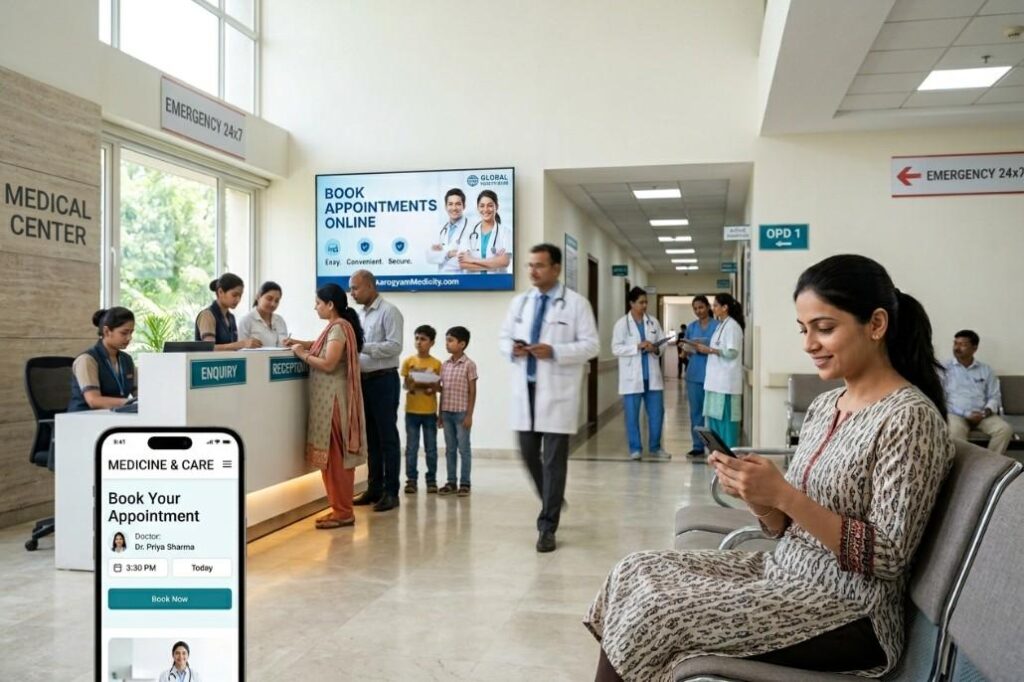
Digital Marketing for Hospitals in India — What Actually Works in 2026 Many private hospitals in India are spending between two and five lakhs a month on digital marketing and seeing little they can measure beyond likes and impressions. The agency sends reports. The numbers look busy. But OPD footfall stays flat. Hospital healthcare digital marketing India has matured significantly — and the gap between what works and what merely looks like work has never been wider. This post cuts through the noise and focuses on what is actually driving results. Why Most Hospital Digital Marketing Spends Underdeliver The core problem is not the channel — it is the strategy. Most digital marketing for doctors and clinics India is built around visibility metrics: followers, reach, and ad impressions. These are easy to report and difficult to connect to revenue. A hospital’s real digital marketing goal is straightforward: the right patient, searching for the right service, finds the hospital, trusts what they see, and books an appointment. Every rupee spent should be evaluated against that chain of events — not against vanity metrics that look good in a monthly slide deck. The secondary problem is generic execution. Hospitals running the same awareness content, the same health tip posts, and the same festive day creatives as every competitor in their city are indistinguishable in the feed. Patients scroll past. The brand registers nothing. The Framework for Digital Marketing That Actually Converts Chitra Baskar’s approach to hospital healthcare digital marketing India separates activity from outcomes. The framework is built on four questions that every hospital marketing team should answer before spending: Are you visible where patients search? Google search — specifically local search and condition-specific search — remains the highest-intent channel for patient acquisition. A well-optimised Google Business Profile and condition-specific landing pages outperform broad social media spend for most private hospitals. Does your digital presence build trust before the first visit? Social media marketing for hospitals India works best when it functions as a trust-building channel, not a promotional one. Specialist introductions, patient education content, and transparent communication about services create credibility that paid ads cannot manufacture. Can a patient book an appointment in under three clicks? If the answer is no, every marketing rupee is leaking at the conversion point. Website speed, mobile optimisation, and a clear appointment pathway are non-negotiable prerequisites for any digital spend. Are you tracking cost per appointment, not cost per click? Healthcare marketing ROI India must be measured at the outcome level. A digital marketing strategy for private hospitals India that cannot answer “how much did this campaign cost per confirmed appointment” is not a strategy — it is activity. How to generate leads for hospitals through digital marketing India is not a complex question once these four foundations are in place. Most hospitals are simply missing one or two of them. What Hospitals Can Do Right Now to Improve Digital Performance Audit your Google Business Profile this week. Confirm that your specialties, hours, photos, and contact details are accurate and complete. Enable messaging. Respond to every review. This single action improves local search visibility at zero cost. Build three to five condition-specific landing pages. Identify your top procedures or specialties and create dedicated pages optimised for how patients actually search — “orthopaedic surgeon Coimbatore” or “diabetic care clinic Chennai.” These pages convert far better than a generic homepage. Shift social media content from promotion to education. Healthcare content marketing India that answers real patient questions — what to expect before a procedure, how to manage a chronic condition, when to see a specialist — builds organic reach and positions specialists as credible voices. Set up a lead tracking system before the next campaign. Every inquiry from digital channels — form submissions, calls, WhatsApp messages — should be logged, tracked, and followed up within two hours. Without this, even well-performing campaigns generate leads that evaporate. Review your ad targeting quarterly. Healthcare audiences in India are highly localised. A campaign that worked in Q1 may be reaching the wrong demographic by Q3 due to audience saturation or seasonal shifts. Regular reviews prevent budget from being quietly wasted. Digital Marketing Mistakes That Cost Indian Hospitals the Most Running paid campaigns without fixing the website first. Paid traffic sent to a slow, unclear, or mobile-unfriendly website is wasted spend. The website must convert before any campaign scales. Outsourcing strategy entirely to a generalist agency. Most digital agencies serving hospitals in India are skilled at execution but not at healthcare strategy. The brief, the messaging, and the outcome definitions must come from within the hospital — or from a consultant who understands the sector. Measuring success monthly instead of quarterly. Digital marketing in healthcare has longer conversion cycles than e-commerce. A patient who sees a specialist introduction video in January may book in March. Monthly reporting creates false negatives that cause hospitals to abandon channels prematurely. Spend Smarter, Not More Hospital healthcare digital marketing India does not require a larger budget — it requires a clearer strategy. The hospitals seeing real returns in 2026 are those that have connected their digital activity to patient outcomes, not just platform metrics. If your current digital spend is not delivering measurable results, a structured review of your digital marketing strategy for private hospitals India could reveal exactly where the gap is. Connect with Chitra Baskar on LinkedIn or book a discovery call to explore what a focused digital strategy could look like for your hospital.