Need help now? Call for a same-day consultation
Chitra Baskar | Healthcare Marketing Consultant India


Event Marketing for Hospitals: How to Plan Community Events That Build Trust and Referrals
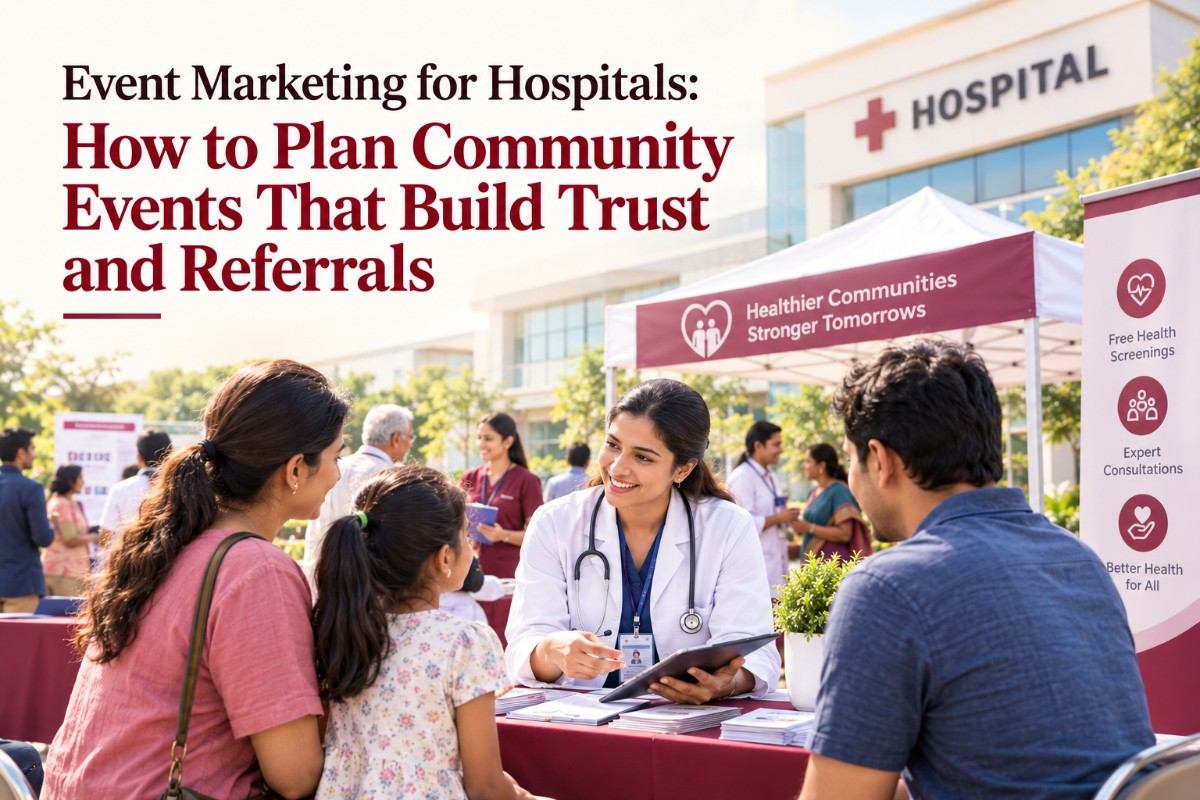
Many hospitals run a health camp or a community talk, take photographs and move on. A few months later, nobody can say whether it changed anything. Good event marketing for hospitals works differently. It treats each event as a way to earn trust with a specific group of people, and then follows through so that trust turns into relationships with patients and referring doctors.
This guide is for hospital owners, medical directors and marketing heads who want community events that are useful to the public, defensible under current advertising norms and measurable in a sensible way.
Why Community Events Still Work
Healthcare decisions are personal and often urgent. People ask relatives, neighbours and their family doctor before they choose a hospital. Hospital community events put your clinicians in front of those networks in a setting where they can explain something useful, answer questions and be seen as approachable.
An event cannot create trust by itself. It gives people a reason to remember you when a need arises, and it gives referring doctors a reason to keep you in mind.
Start With the Rules
The National Medical Commission recently issued guidelines on ethical advertising and public communication. Based on press coverage, doctors may take part in health awareness programmes and public health campaigns, provided these do not promote a personal practice, solicit patients or become a vehicle for promotional marketing. The coverage I reviewed does not separately address hospital-run camps, and it flags concern about discounts, free procedures and contests that could encourage unnecessary consultations or tests.
For hospitals planning events, I would treat this as a design brief: make the event educational, keep claims factual, and avoid anything that looks like an inducement. Please read the official notice and take legal advice before finalising your calendar.
Choose the Right Type of Event
A sound healthcare event marketing strategy matches each event to an audience and a purpose. Some hospital event marketing ideas that suit India:
- Health education sessionsat resident associations, schools, workplaces and senior citizens’ groups, led by clinicians on common local concerns.
- Clinical update meetingsfor general practitioners and nearby clinics, which build referral relationships directly.
- Awareness dayslinked to recognised health observances, held with community partners.
- Screening campswhere clinically appropriate, with proper consent, privacy and a clear follow-up path.
- Community walks or runsthat bring the hospital into public life without selling anything.
Not every event should target the public. In many cases the most valuable audience is the local doctor community.
Plan Before You Promote
Set a Purpose You Can Measure
Decide what the event is for. Trust with a particular neighbourhood, stronger relationships with referring doctors, awareness of a service line and early detection are different goals and need different designs. Write it down before anything else.
Prepare the Clinical Side
Confirm clinician availability, equipment, consent processes, privacy of records and referral pathways for anyone who needs further care. A camp that detects a concern but has no follow-up route harms trust more than it builds it.
Make Attendance Easy
Choose a convenient venue, a suitable time and a simple registration route. Brief every front-line team member so they can answer questions consistently.
How to Promote a Health Camp for a Hospital
If your question is how to promote a health camp for a hospital, start with the people who already hold local trust rather than with paid advertising.
- Work through resident associations, schools, employers, community groups and local doctors, who can invite their own people credibly.
- Share clear details: purpose, venue, date, who the event is for, what will and will not be offered, and how to register.
- Use messaging channels only with people who have agreed to hear from you.
- Keep the tone informative. Avoid fear-based messaging, exaggerated claims and superlatives.
- Make sure doctors named on materials are listed with accurate qualifications and registration details, as the guidelines expect for communications on electronic media.
Turn Attendance Into Relationships
The event ends, but the work continues. Within a few days, send a short thank-you and useful health information to those who consented to hear from you. Follow up with referring doctors who attended, and give them a simple way to contact your team. Pass any individual health concerns to the appropriate clinicians through proper channels.
Do not wait for patients to appear in bulk. Trust builds slowly, and your measurement should reflect that.
How to Measure ROI of a Hospital Event
Many hospitals measure only footfall. That tells you who came, not whether the event achieved its purpose. A more useful approach:
- Reach and quality:attendance against the intended audience, and feedback on usefulness.
- Follow-through:how many attendees completed recommended follow-up, and how many consented to further contact.
- Relationships:new referring doctors engaged, and referrals received over time.
- Enquiries:appointment requests that attendees initiated, with the source recorded.
- Cost:total spend on staff time, materials and venue, compared with the outcomes above.
Be careful with attribution. Because the guidelines discourage solicitation at events, the cleanest approach is to record outcomes that arise naturally and with consent, rather than to set patient-conversion targets for a camp. Review the measurement plan with your legal adviser, and accept that some value, such as goodwill, can only be tracked over a longer period.
Frequently Asked Questions
Should a hospital offer free tests at a camp?
Only where clinically justified. Free offers that could encourage unnecessary care are a concern under the reported guidelines, so take advice before you proceed.
Who should speak at the event?
Clinicians who can explain topics clearly. Keep the content educational and avoid promotional language about the hospital or any individual doctor.
Planning Your Event Calendar?
The strongest community programmes are planned around a clear purpose, a trusted set of partners and a realistic way to measure results. If you lead a hospital and want help designing an event programme that is practical and compliant, I would be glad to hear from you. I am Chitra Baskar, a Healthcare Marketing Consultant associated with Redwud Creations in Chennai. Please get in touch through the contact details on this website.