
Need help now? Call for a same-day consultation

Chitra Baskar | Healthcare Marketing Consultant India

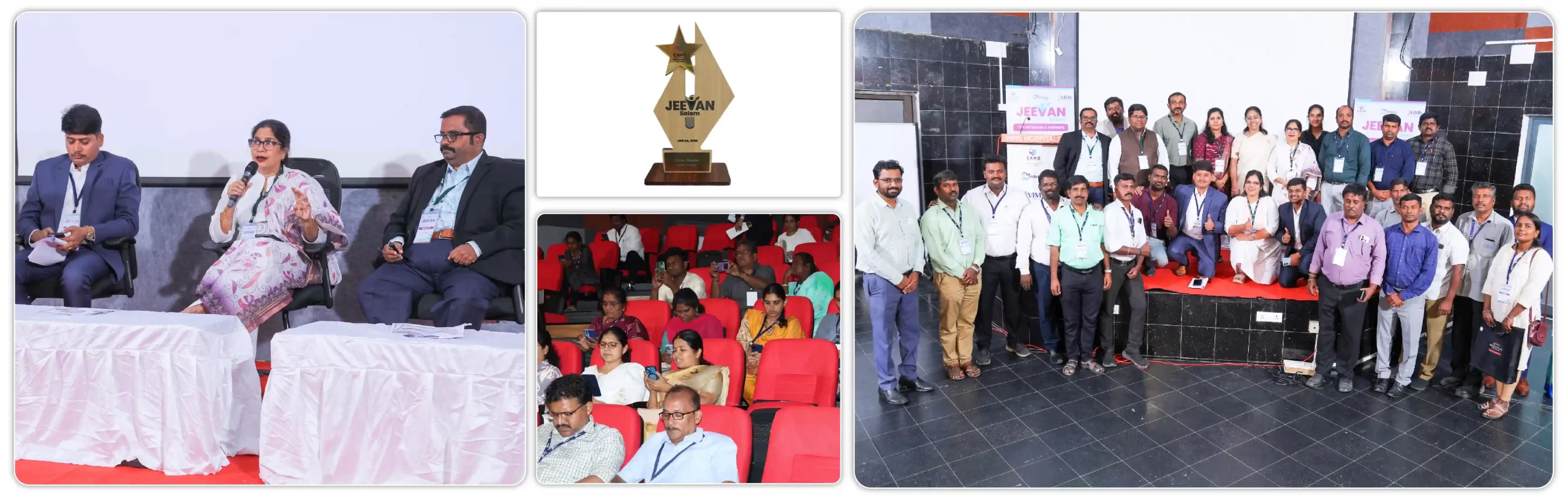
When I stepped onto the stage at VIMS Hospital in Salem on January 24th as the moderator for the panel discussion on “Marketing Nuances and Financial Management Shape SHCO’s Sustainability,” I was acutely aware of the weight this topic carries. Standalone Healthcare Organizations across India are facing what I’d call an existential paradox—they’re needed more than ever, yet their survival has never been more uncertain.
After three decades of working with healthcare organizations through periods of growth, crisis, and transformation, I’ve witnessed firsthand how the right combination of strategic marketing and financial acumen can mean the difference between thriving and merely surviving. This panel discussion, featuring distinguished healthcare leaders R. Srinivasan Ramachandran from BCC Healthcare Branding and Venkatesh K K from VIMS Salem, brought these critical issues into sharp focus.
The SHCO Crisis Nobody Talks About Enough
Let’s be direct about something the healthcare industry often discusses in hushed tones: standalone healthcare organizations are struggling. While corporate hospital chains expand aggressively and capture headlines with multi-billion dollar valuations, smaller independent hospitals face mounting pressures that threaten their very existence.
The numbers tell a sobering story. India’s healthcare market continues explosive growth, projected to reach over six hundred thirty-eight billion dollars by the end of this fiscal year. Yet this growth isn’t distributed evenly. Private hospitals are adding over four thousand beds with investments exceeding eleven thousand five hundred crore rupees—but the majority of this expansion comes from large corporate chains targeting tier-two and tier-three cities, the very markets where standalone hospitals have traditionally dominated.
For standalone facilities, the challenge isn’t simply competing with larger organizations on resources or brand recognition. It’s navigating a fundamentally transformed healthcare landscape where patient expectations, regulatory requirements, technology adoption, and financial pressures have all intensified simultaneously. These organizations often lack the corporate infrastructure, capital reserves, and economies of scale that their larger competitors leverage as competitive advantages.
Where Marketing Meets Financial Reality
The central question our panel explored cuts to the heart of healthcare management: Can strategic marketing and disciplined financial management create a sustainable pathway for standalone healthcare organizations? The answer, I’ve learned through decades of experience, is an unequivocal yes—but only when both functions work in genuine integration rather than operating as separate departmental silos.
Too often, I encounter healthcare organizations where marketing operates as a cost center focused primarily on promotional activities, while finance functions as a gatekeeper restricting spending. This adversarial dynamic creates organizational paralysis precisely when agility and strategic alignment matter most.
Effective healthcare marketing isn’t about glossy advertisements or expensive campaigns. It’s about understanding your patient population deeply, communicating genuine value propositions clearly, and building trust that translates into patient loyalty and advocacy. For standalone hospitals, these marketing fundamentals become even more critical because their competitive advantage rarely comes from superior technology or infrastructure—it comes from relationships, accessibility, and personalized care that larger institutions struggle to replicate.
The Patient Has Evolved—Have We?
One of the most striking transformations in healthcare over the past decade involves how patients make decisions about where to seek care. The traditional model where patients passively accepted doctor referrals or relied solely on proximity has given way to healthcare consumerism, where informed patients actively research, compare, and select providers based on multiple criteria.
Recent data shows that over seventy-five percent of urban internet users in India will access online health services by this year. Patients are reading online reviews, comparing treatment costs, evaluating facility amenities, and seeking transparency about outcomes before ever walking through hospital doors. This shift fundamentally changes what effective marketing means for healthcare organizations.
For standalone hospitals, this evolution presents both challenge and opportunity. The challenge comes from limited digital infrastructure and marketing expertise compared to corporate chains with dedicated digital teams. The opportunity lies in the authentic patient relationships and community trust that smaller organizations build more naturally than large institutional brands.
During our panel discussion, we explored how standalone facilities can leverage these inherent advantages through strategic marketing that emphasizes what makes them distinctive: personalized physician relationships, faster service delivery, flexibility in care approaches, and genuine community engagement. These aren’t just marketing messages—they’re authentic value propositions that resonate deeply with patients who feel like numbers in larger hospital systems.
Financial Sustainability Beyond Survival Mode
While marketing attracts patients, financial management determines whether an organization can deliver on its promises while remaining viable. The financial pressures facing standalone healthcare organizations in India have intensified dramatically in recent years.
Research examining private hospitals operating under government insurance schemes reveals that facilities can achieve breakeven within four years and sustain profitability thereafter—but only with strategic financial planning, operational efficiency, and appropriate revenue diversification. The initial years require careful capital management, as profit margins may not meet expectations while infrastructure investments are amortized.
The challenge becomes more complex when considering reimbursement rates from insurance schemes that often fall below the actual cost of care. Many standalone hospitals initially priced their packages well below cost, and while subsequent revisions have addressed some gaps, the decentralized nature of healthcare governance limits uniform application of these corrections across states.
For standalone organizations, financial sustainability requires moving beyond reactive cost-cutting toward proactive revenue optimization. This means strategic service line development based on community needs and institutional capabilities, disciplined pricing strategies that reflect value rather than simply undercutting competitors, and operational excellence that reduces waste without compromising quality.
The Integration Imperative
What emerged most powerfully from our panel discussion was the recognition that marketing and financial management cannot function effectively in isolation. Sustainable healthcare organizations integrate these functions into a cohesive strategic framework where marketing decisions inform financial planning and financial realities shape marketing strategies.
Consider a common scenario: A standalone hospital identifies an opportunity to develop a specialized cardiology program. The marketing perspective might focus on competitive gaps and patient demand in the catchment area. The financial perspective examines capital requirements, reimbursement rates, and expected patient volumes needed for profitability. Neither perspective alone provides sufficient basis for decision-making.
True integration means analyzing this opportunity through a unified lens that considers patient needs, competitive positioning, capital allocation, operational requirements, revenue potential, and strategic fit simultaneously. This integrated analysis often reveals opportunities that either function alone might miss—or prevents costly mistakes that looked promising from a single vantage point.
Technology as Enabler, Not Solution
Throughout the panel discussion, we addressed the role of technology in SHCO sustainability. There’s considerable pressure in healthcare to adopt the latest digital tools, electronic health records, telemedicine platforms, and AI-powered diagnostics. While technology offers genuine benefits, I’ve observed too many organizations pursuing technology for its own sake rather than as a strategic enabler of clearly defined objectives.
For standalone hospitals with limited capital, technology decisions carry particularly high stakes. The right investments enhance operational efficiency, improve patient experience, and create competitive differentiation. Poor technology choices drain resources without delivering corresponding value, potentially weakening the organization’s financial position.
The key is approaching technology strategically rather than opportunistically. Start by identifying specific operational or clinical challenges that technology could address. Evaluate solutions based on demonstrable return on investment, not just features or vendor promises. Implement in phases that allow learning and adjustment rather than massive one-time deployments that carry excessive risk.
India’s digital health market is projected to grow at nearly eighteen percent annually, reaching over four trillion rupees by the end of this decade. Standalone hospitals can participate in this growth without matching the technology budgets of corporate chains by focusing selectively on technologies that directly support their core value propositions and competitive advantages.
Building Trust in a Skeptical Environment
One of the most valuable insights from our discussion involved the critical importance of trust in healthcare marketing. Patients approach healthcare decisions with natural anxiety and skepticism, particularly regarding smaller independent facilities that may lack the brand recognition of major hospital chains.
Marketing strategies that prioritize transparency, authentic patient testimonials, clear communication about capabilities and limitations, and consistent delivery on promises build the trust foundation that drives patient preference and loyalty. This approach requires patience and discipline—trust accumulates slowly through repeated positive experiences and consistent demonstration of values.
For standalone healthcare organizations, trust-building marketing offers a sustainable competitive advantage that’s difficult for larger competitors to replicate through advertising spend alone. Patients remember personalized attention from physicians who know their names and medical histories. They value healthcare teams that answer questions thoroughly rather than rushing through appointments. They appreciate administrative staff who help navigate insurance complexities rather than creating additional bureaucratic hurdles.
These trust-building elements require organizational culture and operational systems more than marketing budgets. They represent areas where well-managed standalone facilities can genuinely outperform larger institutional competitors.
The Talent Challenge
An issue we explored during our panel that often receives insufficient attention involves healthcare workforce management. Standalone hospitals face significant challenges attracting and retaining skilled physicians, nurses, and specialized staff who may be drawn to corporate chains offering higher compensation, advanced facilities, and career development opportunities.
The marketing and financial implications of workforce challenges intertwine significantly. Talented healthcare professionals function simultaneously as service delivery resources and powerful marketing assets. Patients often choose facilities based on specific physician reputations and clinical expertise. Losing key physicians to competitors directly impacts both revenue and market positioning.
Financial constraints limit compensation competitiveness for standalone organizations. However, creative approaches to physician recruitment and retention can partially offset financial limitations. These include offering greater clinical autonomy than corporate environments typically allow, providing equity participation opportunities, creating flexible scheduling arrangements, and fostering collaborative practice cultures where physicians feel genuinely valued rather than treated as interchangeable resources.
Regional Strategy and Local Advantage
One strategic opportunity for standalone healthcare organizations that our discussion highlighted involves leveraging local market knowledge and community relationships that larger competitors cannot easily replicate. While corporate chains pursue standardized approaches across multiple locations, independent hospitals can adapt services, marketing messages, and operational practices to reflect specific community needs and preferences.
India’s healthcare landscape varies dramatically across regions, with different disease patterns, cultural health beliefs, insurance penetration rates, and competitive dynamics. Standalone organizations embedded in specific communities can respond to these variations more nimbly than corporate entities operating according to centralized policies.
This local advantage extends to marketing effectiveness as well. Community-based marketing through local events, partnerships with area employers, relationships with referring physicians, and participation in regional health initiatives often delivers better return on investment for standalone facilities than expensive mass media campaigns that corporate chains employ.
The key is approaching local market strategy systematically rather than simply maintaining the status quo. This means conducting rigorous analysis of community health needs, competitive positioning, and service gaps. It requires disciplined resource allocation toward initiatives that strengthen market position and support financial sustainability rather than spreading limited resources across too many directions.
Government Policy and Opportunity
Government healthcare initiatives create both challenges and opportunities for standalone organizations. Schemes like Ayushman Bharat significantly expand healthcare access for underserved populations, but reimbursement rates and administrative requirements sometimes create financial strain for participating facilities.
Our panel discussion explored how standalone hospitals can approach government programs strategically. For some organizations, participating in government schemes provides essential patient volume that supports financial sustainability despite reimbursement concerns. These facilities focus on operational efficiency and appropriate case selection to manage margins while serving populations that might otherwise lack access to quality care.
Other standalone facilities determine that government scheme participation doesn’t align with their financial models or strategic positioning. Rather than participating half-heartedly, these organizations focus resources on private pay patients and corporate insurance relationships where reimbursement better supports their cost structures.
Neither approach is inherently superior—the right strategy depends on specific organizational circumstances, capabilities, and goals. The critical mistake involves drifting into government scheme participation without clear strategic rationale or adequate operational preparation to manage the financial implications effectively.
The Path Forward
As I reflected on our panel discussion, several strategic imperatives emerged for standalone healthcare organizations navigating sustainability challenges:
Develop Authentic Differentiation: Identify and emphasize what makes your organization genuinely distinctive rather than trying to compete on dimensions where larger competitors hold inherent advantages. Smaller size, community relationships, physician accessibility, and service flexibility represent potential sources of competitive advantage.
Integrate Marketing and Finance: Break down organizational silos that separate marketing strategy from financial planning. Sustainable organizations make decisions through an integrated lens that considers both market positioning and financial implications simultaneously.
Build Trust Systematically: Recognize that healthcare marketing ultimately depends on consistent delivery of positive patient experiences that build institutional trust over time. Invest in operational excellence and patient experience improvement as foundational marketing strategies.
Manage Capital Strategically: With limited financial resources, every capital allocation decision carries outsized importance. Develop disciplined capital planning processes that prioritize investments supporting core competitive advantages and strategic differentiation.
Leverage Technology Selectively: Adopt digital tools and health information technology based on clear strategic objectives and demonstrable return on investment rather than simply following industry trends or responding to vendor marketing.
Cultivate Talent: Develop creative approaches to physician recruitment and retention that leverage non-financial factors like clinical autonomy, practice culture, and equity participation to partially offset compensation limitations.
Remain Agile: Standalone organizations’ potential competitive advantage involves ability to make decisions and adjust strategies more quickly than large corporate bureaucracies. Cultivate this agility through streamlined governance and willingness to experiment with new approaches.
A Personal Reflection on Healthcare Leadership
Moderating this discussion reminded me why I’ve dedicated three decades to healthcare marketing and management. The stakes in this industry aren’t simply financial—they’re fundamentally about community health and human wellbeing. Every standalone hospital that closes represents lost healthcare access for the patients who depended on that facility. Every struggling organization that finds its sustainable pathway represents continued care for the families who rely on those services.
The integration of strategic marketing and financial discipline isn’t merely a business optimization exercise. It’s about ensuring that healthcare organizations can fulfill their essential mission of serving community health needs while remaining financially viable enough to continue that service into the future.
Standalone healthcare organizations play a vital role in India’s healthcare ecosystem that corporate chains cannot entirely replace. They provide personalized care, community connection, and service flexibility that larger institutions often struggle to maintain. Supporting these organizations’ sustainability through effective marketing strategy and financial management serves not just institutional interests but broader societal needs for accessible, high-quality healthcare.
The healthcare landscape will continue evolving, bringing new challenges and opportunities for standalone organizations. Those that approach these changes with strategic clarity, operational excellence, and genuine commitment to patient care will not only survive but can thrive in ways that create lasting value for the communities they serve.
About the Author: Chitra Baskar is a Healthcare Marketing Expert and Hospital Growth & Turnaround Specialist with 30 years of experience transforming healthcare brands. As Founder and CEO of Red Wud Creations, she partners with healthcare organizations across India to develop strategic marketing approaches and financial management frameworks that drive sustainable growth. Chitra serves as a sought-after moderator and speaker at healthcare industry conferences, bringing practical insights from three decades of hands-on experience helping hospitals navigate complex challenges. Connect with Chitra to explore how integrated marketing and financial strategy can strengthen your healthcare organization’s sustainability and competitive position.
 Optimized by Seraphinite Accelerator