Need help now? Call for a same-day consultation


Social Media for Hospitals in India — A Practical Strategy That Converts Followers Into Patients
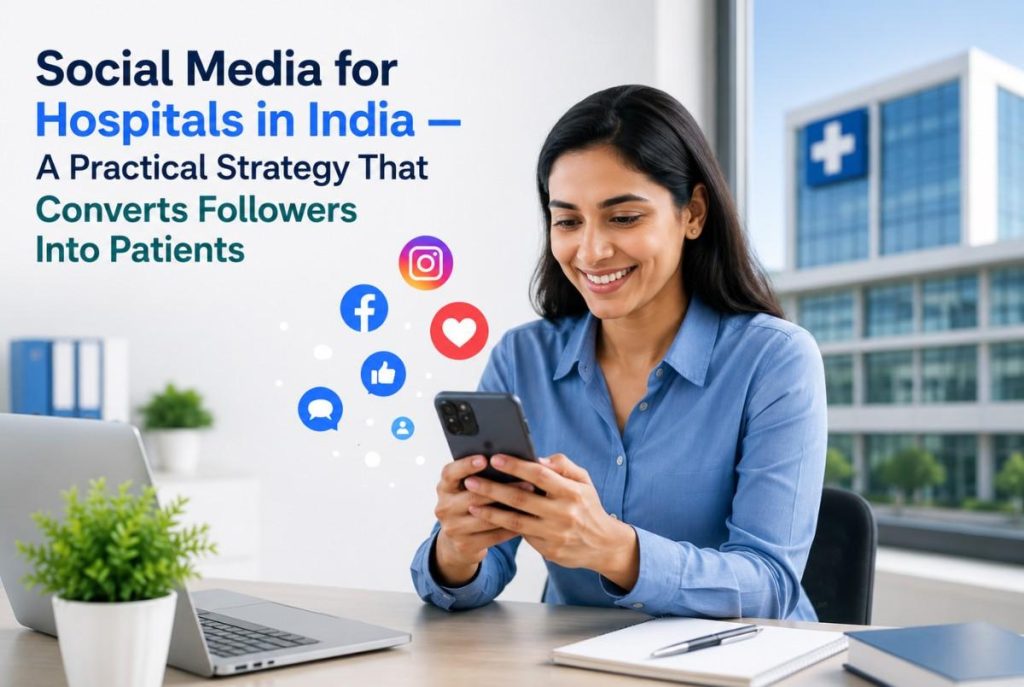
Most hospital social media pages in India share one thing in common — activity without outcomes. Posts go up regularly, likes trickle in, and follower counts grow slowly. But appointment inquiries stay flat. The issue is not effort — it is strategy. Social media marketing for hospitals India requires a fundamentally different approach than general brand content. This guide outlines what actually works, why most hospital pages underperform, and how to build a content system that moves patients from scroll to consultation.
Why Hospital Social Media in India Is Not Working
Walk through the Instagram or Facebook page of almost any private hospital in India and the pattern is familiar. Doctor introduction posts. World Health Day graphics. Facility photographs. Occasional patient testimonials. All of it posted without a conversion goal in mind.
This is not a content volume problem. It is a strategy problem. Digital marketing for doctors and clinics India-wide suffers from the same root cause — content is created for visibility, not for patient decisions. There is no clear pathway from a post to an inquiry, and no content architecture designed to build trust progressively.
The result is a social media presence that looks active but generates no measurable patient acquisition value. Marketing budgets get spent. Reports show reach and impressions. But the phone does not ring differently.
The Framework: Content That Builds Trust and Drives Action
Chitra Baskar’s approach to social media strategy for healthcare separates content into three distinct layers — each serving a different role in the patient decision journey. Together they form the foundation of effective healthcare digital marketing India hospitals can implement without a large team.
Layer 1: Trust-Building Content (60% of output) This is educational, condition-specific content that answers the questions patients are already searching for. Posts that explain symptoms, debunk myths, describe treatment options, or clarify when to see a specialist — this content earns credibility and reach organically.
A Facebook and Instagram strategy for Indian hospitals that leads with education performs consistently better than one that leads with promotion. Patients do not follow hospitals for updates — they follow for information they find useful.
Layer 2: Credibility Content (25% of output) Doctor profiles, clinical milestones, patient outcome stories (with appropriate consent), and behind-the-scenes content that humanises the hospital. This layer answers the implicit question every prospective patient has: can I trust this place with my health?
Short video introductions from consultants, procedure explainers, and staff spotlights build familiarity. Familiarity reduces hesitation. Reduced hesitation converts to inquiries.
Layer 3: Conversion Content (15% of output) Direct calls to action — appointment booking prompts, free health check offers, seasonal health camp announcements, and inquiry links. This layer only works when the first two layers have done their job. Conversion content posted without trust content behind it generates almost no response.
Understanding how to use social media to attract patients in India means accepting that the sale happens at Layer 3 but the decision happens across all three.
Five Steps to Build a Hospital Social Media System That Works
Step 1: Define one primary platform. Most hospital teams spread effort across Facebook, Instagram, YouTube, and LinkedIn simultaneously. Pick the platform where your target patient demographic is most active — for most Indian hospitals, Facebook and Instagram together — and build depth before expanding.
Step 2: Create a monthly content calendar. Consistency matters more than volume. A structured social media content plan for clinics India-based teams can sustain means planning content themes weekly — one educational post, one credibility post, and one conversion prompt per week as a baseline.
Step 3: Invest in short-form video. Reels and short videos consistently outperform static posts across Indian healthcare audiences. A 60-second consultant explaining a common condition, recorded on a mobile phone with clear audio, generates more trust than a professionally designed graphic.
Step 4: Make the inquiry pathway frictionless. Every conversion post must have a direct next step — a WhatsApp link, a booking button, or a phone number. Removing friction between interest and contact is one of the fastest ways to improve social media ROI.
Step 5: Track what matters. Reach and likes are vanity metrics. Track link clicks, shares, WhatsApp initiations, and appointment bookings attributed to social media. Without outcome tracking, there is no way to improve.
Mistakes That Keep Hospital Social Media Stuck
Posting without a patient persona in mind. Content created for “everyone” resonates with no one. Every post should be written for a specific patient — their age, concern, and decision context.
Delegating entirely to a junior executive or agency without strategic oversight. Social media for hospitals requires clinical accuracy and brand alignment. Without senior input, content drifts into generic territory that builds no real audience.
Ignoring comments and messages. Unresponded inquiries in DMs and comment sections represent lost patients. Social media is a two-way channel — responsiveness is part of the strategy, not an afterthought.
Social Media Works — When It Is Built Around Patient Decisions
A social media presence that converts is not built on more posts — it is built on the right structure, the right content mix, and a clear pathway from awareness to appointment. Social media marketing for hospitals India done well is one of the most cost-effective patient acquisition channels available to independent hospitals today.
If you want to build a content strategy that generates real inquiries — not just followers — Chitra Baskar works with hospital marketing teams and clinic owners across India to design and implement digital strategies that deliver measurable results. Connect with her on LinkedIn or book a discovery call to explore a tailored approach to how to use social media to attract patients in India for your specific hospital or clinic.
What does a healthcare business growth consultant do?
A healthcare business growth consultant helps hospitals, clinics, and healthcare entrepreneurs identify revenue gaps, streamline operations, build leadership capacity, and create clear, actionable strategies to grow their organisation sustainably and profitably.
Why do healthcare businesses in India need a growth consultant?
India’s healthcare sector is competitive and rapidly evolving. Many providers have clinical excellence but lack the business strategy, systems, and leadership structures to scale. A specialist consultant bridges that gap — delivering growth without compromising patient care quality.
Who is Chitra Baskar?
Chitra Baskar is a healthcare business growth consultant based in India, working with hospitals, clinic owners, and healthcare entrepreneurs to scale revenue, build strong teams, and create future-ready healthcare organisations through personalised strategy and executive coaching.
What services does Chitra Baskar offer?
Chitra Baskar offers revenue growth strategy, hospital business consulting, brand positioning, leadership and executive coaching, operational excellence frameworks, strategic business planning, and healthcare startup mentoring for clients across India.