Need help now? Call for a same-day consultation
Chitra Baskar | Healthcare Marketing Consultant India


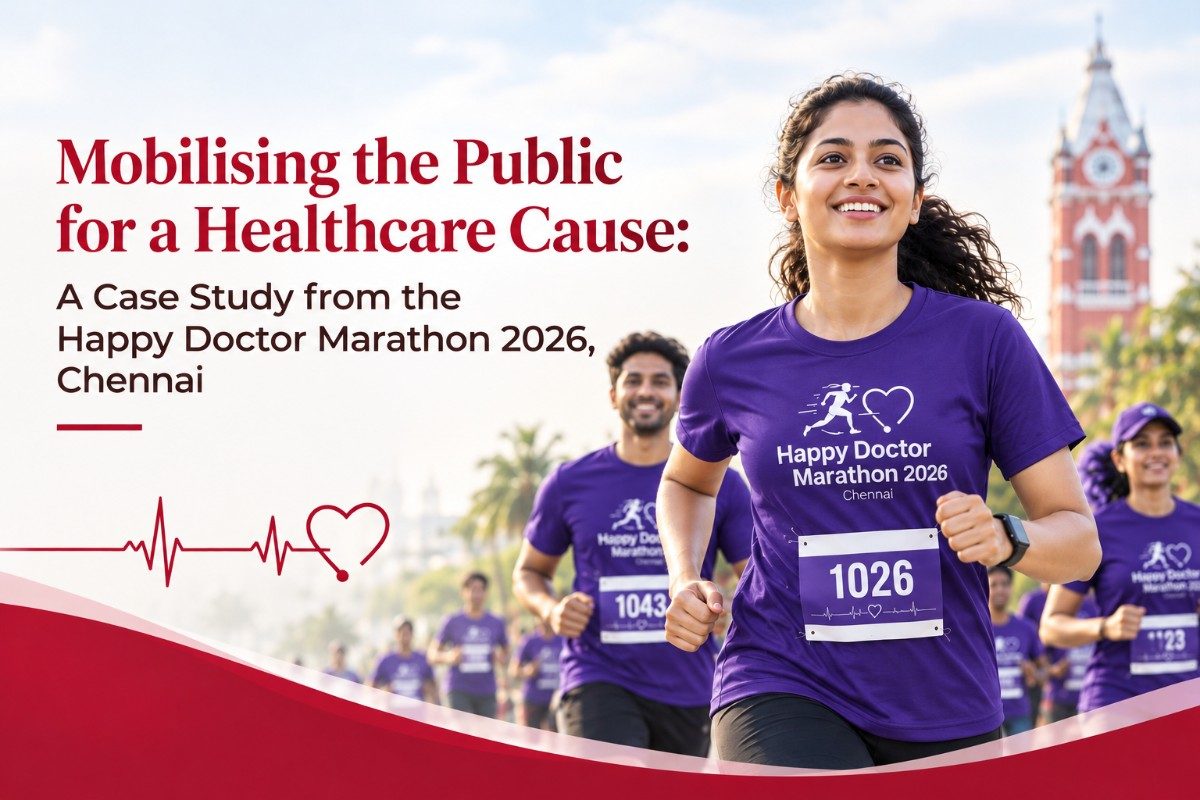
Mobilising the Public for a Healthcare Cause: A Case Study from the Happy Doctor Marathon 2026, Chennai
The National Medical Commission (NMC) has issued fresh guidelines on ethical advertising and public communication, and they took effect immediately. For hospital owners, medical directors and marketing heads, the NMC advertising guidelines are not a distant compliance topic. They affect the website you publish today, the reel your agency posted last week and the review request your front desk sends after discharge.
This guide explains what the guidelines cover, what is now off limits, what you can still do, and how to rebuild your communication on safe ground. It is based on press coverage of the notice. Please read the official notice and take legal advice before changing live campaigns.
Project Background
The Happy Doctor Marathon took place in early October at Island Grounds, Chennai, with a virtual option open to participants anywhere in India. The organiser describes it as a community marathon built around gratitude for the medical community, alongside an award recognising doctors who make healthcare more humane.
I am named in the founder and organising team on the official event website, and Redwud Creations, the agency I am associated with, developed that website. The page does not state individual roles, and this article does not claim credit for every decision described here. Where I describe the event, I am describing what is publicly visible.
Please note that the figures and claims below are organiser-published and were available before or around the event. They are not independently audited.
The Challenge
not. Nobody needs to attend. The audience has to feel the cause belongs to them, and the effort required has to be small enough that agreeing is easy.
There was also competition. Running calendars show several other Chennai runs scheduled within weeks of this one, many with their own causes. A community run in a crowded season cannot rely on the cause alone.
What the Event Design Shows
A Cause People Already Feel
Gratitude is a simple, positive idea. Nearly everyone has a doctor they would like to thank, so the cause needs no explanation. It also keeps the focus on the profession rather than on any single hospital, which makes it easier for strangers, companies and other institutions to take part.
A Place for Every Kind of Participant
The event offered a short distance aimed at first-timers, children and families, a middle distance for casual runners, and a longer one for more committed participants. The two shorter distances had no age limit, with adult accompaniment for younger children and parental consent for minors.
The event page lists runners, families, students, working professionals, patients and their families, and doctors as intended participants. This is community marathon marketing at its most practical: widen the number of people who can honestly say “this is for me”.
Low-Friction Registration
The registration journey was designed to remove reasons to hesitate:
- Registration was presented as free, with instant confirmation and a race number.
- Bib collection was spread across sports retail outlets in the city instead of a single location.
- A virtual option let people outside Chennai take part and receive their items by post.
- Group and corporate registrations were available on request.
One caution: the registration page also refers to payment and refunds, so the exact terms should be confirmed with the organisers before anyone treats this as a model.
Visible Credibility
The event page reports that the state health minister recognised the event and received its brochure, and presents this as government backing. A retail sports partner served as a collection point. For a public audience, signals like these reduce the sense of risk in joining an unfamiliar event.
Lessons for Other Healthcare Organisations
If you are wondering how to get the general public to register for a health run, the design above suggests a few principles:
- Lead with a cause, not your institution.People join causes. They rarely join brand events.
- Offer an entry point for every fitness level and age.Families and first-timers are often your largest untapped audience.
- Take steps out of the journey.Instant confirmation and nearby collection points are small details that protect registrations.
- Recruit through groups.Audience acquisition for events usually works better through employers, schools, resident associations and professional bodies than through individuals one by one.
- Show credible backing early,whether from officials, associations or reputable local partners.
For anyone planning how to market a community marathon in Chennai, I would add a local point. In a city with a busy running calendar, convenience and clarity of purpose matter as much as reach. A healthcare awareness run marketing campaign should make the cause obvious in a single glance, then make joining effortless.
What Is Not Yet Documented
A credible case study separates what is known from what is not. Final on-ground turnout, the performance of individual promotion channels and the cost of acquiring each participant have not been published in the sources I reviewed. The organiser’s own pages also quote different registration totals in different places, so I am deliberately not building any conclusion on those numbers.
Treat headline figures with caution until a post-event summary is released. When one is available, the useful questions are how many registrants actually attended, which channels brought them, and how many came through groups.
The Takeaway
Mobilising the public for a healthcare cause is less about shouting louder and more about lowering the cost of saying yes. A clear, positive cause, a place for every kind of participant, and a registration path with almost no friction carry most of the work.
If you lead a hospital, association or foundation and are planning a public health event, I would be glad to talk through how to build the audience for it. I am Chitra Baskar, a Healthcare Marketing Consultant associated with Redwud Creations in Chennai. Please reach out through the contact details on this website.