


Navigating the Future: Key Takeaways from the National Conference on Healthcare and Hospital Management Trends
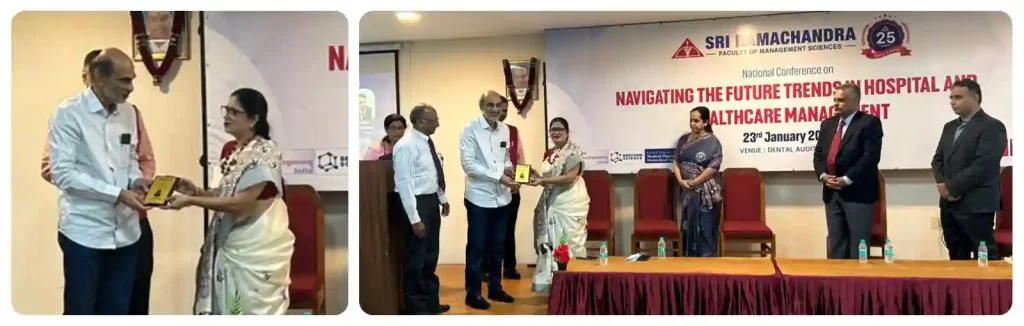
The healthcare landscape is undergoing unprecedented transformation. As I recently had the honor of attending the National Conference on “Navigating the Future Trends in Hospital and Healthcare Management” at Sri Ramachandra Faculty of Management Sciences, I was struck by the convergence of visionary thinking, practical innovation, and collaborative leadership that defined the event. This gathering of academicians, industry leaders, and healthcare professionals illuminated the path forward for healthcare delivery in an era defined by technological disruption, evolving patient expectations, and systemic challenges. Here are the critical insights and trends that emerged from this transformative conference. The Digital Transformation Imperative Healthcare organizations can no longer treat digital transformation as a future consideration—it has become an immediate necessity. During the conference, discussions consistently highlighted how healthcare lags behind industries like retail and finance in adopting digital technologies. Many systems still rely on outdated workflows, fax machines, and manual processes that compromise both efficiency and patient care quality. The integration of artificial intelligence and machine learning represents perhaps the most transformative shift in healthcare management. Current implementations demonstrate AI’s capacity to enhance diagnostic accuracy, optimize resource allocation, and predict patient outcomes with remarkable precision. Healthcare administrators now face the challenge of governing AI implementation while balancing innovation with risk management and data security. Remote patient monitoring through wearables and digital health platforms emerged as a permanent fixture in care delivery models. These technologies enable continuous tracking of vital signs and health indicators, particularly beneficial for patients managing chronic conditions like diabetes and hypertension. The global telehealth market continues expanding at approximately twenty-five percent annually, driven by patient demand for convenient, accessible healthcare services. Value-Based Care: Redefining Healthcare Delivery The transition from volume-based to value-based care models represents a fundamental shift in how healthcare organizations operate and how leaders must think strategically. This model emphasizes quality outcomes over service quantity, promoting preventive care, early intervention, and wellness initiatives that ultimately reduce total healthcare expenditures while improving patient satisfaction. For healthcare managers and administrators, this shift requires sophisticated data analytics capabilities to measure patient outcomes accurately, track performance metrics, and demonstrate value delivery. Organizations must develop comprehensive data management systems that capture real-time patient information while ensuring regulatory compliance and data security. Leadership in Crisis: Addressing Workforce Challenges One of the most pressing concerns discussed at the conference centered on workforce sustainability and leadership retention. Current data reveals that approximately forty-six percent of healthcare executives plan to leave their organizations within twelve months—a staggering statistic that demands immediate attention from healthcare leaders. The root causes extend beyond compensation issues. Organizational culture emerged as the primary factor influencing leadership retention, cited by forty-four percent of respondents overall and fifty-two percent of C-suite executives. Healthcare organizations must prioritize creating positive work environments, fostering strong colleague relationships, and providing clear career advancement pathways. Clinician burnout and staff shortages continue challenging healthcare systems globally. Forward-thinking leaders are implementing innovative approaches including mental health support programs, flexible work arrangements, and virtual nursing models that enable remote clinical work possibilities. Generative AI and automation technologies offer promising solutions, potentially reducing revenue cycle staff workload by half and giving bedside nurses twenty percent more time for direct patient care. https://www.youtube.com/watch?v=q2T3COg5YRM Interoperability and Data Excellence The conference emphasized that seamless data exchange across healthcare systems has become critical for improving patient access and care quality. Healthcare administrators must focus on creating unified patient records accessible across care settings, enhancing real-time data sharing for faster decision-making, and implementing patient portals with integrated scheduling, billing, and medical history access. Organizations that excel in data analytics can identify performance gaps, strengthen risk stratification, and enable proactive interventions that reduce costs while improving outcomes. Predictive analytics helps healthcare leaders spot high-risk patients earlier, allocate resources more effectively, and make evidence-based strategic decisions. Patient-Centric Innovation and Consumerism The healthcare consumer landscape is fragmenting into distinct segments requiring tailored approaches. Organizations must deliver personalized, technology-enabled experiences for tech-savvy consumers while ensuring affordable digital care for mainstream populations and partnering with communities to support under-resourced patients. Younger generations are leading the shift toward nontraditional care delivery models. More than forty percent of millennials and Gen Z individuals now utilize virtual visits, reflecting changing expectations around healthcare accessibility and convenience. Healthcare leaders must adapt their strategies to meet these evolving preferences while maintaining care quality and accessibility across all patient demographics. Cybersecurity: The Non-Negotiable Priority Recent high-profile cyberattacks have underscored the critical importance of robust digital security measures. Healthcare systems must invest in proactive security infrastructure, real-time monitoring capabilities, and comprehensive regulatory compliance to protect sensitive patient data and maintain uninterrupted care delivery. Strong cybersecurity implementations not only protect organizations from devastating breaches but also increase patient trust and engagement. Healthcare leaders must view cybersecurity as a foundational element of operational excellence rather than a technical afterthought. The Path Forward: Strategic Imperatives for Healthcare Leaders As we navigate these transformative trends, several strategic imperatives emerged from the conference discussions: Embrace Continuous Learning: Healthcare management requires leaders who proactively expand their knowledge and skills, staying current with emerging trends and innovations. This commitment to ongoing education enables leaders to anticipate future changes and prepare their organizations effectively. Foster Adaptive Leadership: The ability to respond swiftly to regulatory changes, public health crises, and shifting patient needs defines successful healthcare leadership in 2025. Adaptive leaders encourage innovation cultures where experimentation and learning from failure are valued. Invest in Technology Thoughtfully: While technology offers transformative possibilities, implementation requires careful governance, staff training, and alignment with organizational goals. Leaders must balance enthusiasm for innovation with practical considerations around integration, compliance, and user adoption. Prioritize Organizational Culture: The most successful healthcare organizations will be those that create environments where staff feel valued, supported, and connected to meaningful work. Culture cannot be an afterthought—it must be a strategic priority for retention and performance. Build Strategic Partnerships: The complexity of modern healthcare demands collaboration across traditional boundaries. Partnerships with technology companies, pharmaceutical firms, academic institutions, and community organizations will be essential for delivering comprehensive, coordinated care. Reflections on
